Proton e.MAS 5 dethrones petrol cars in 60 days
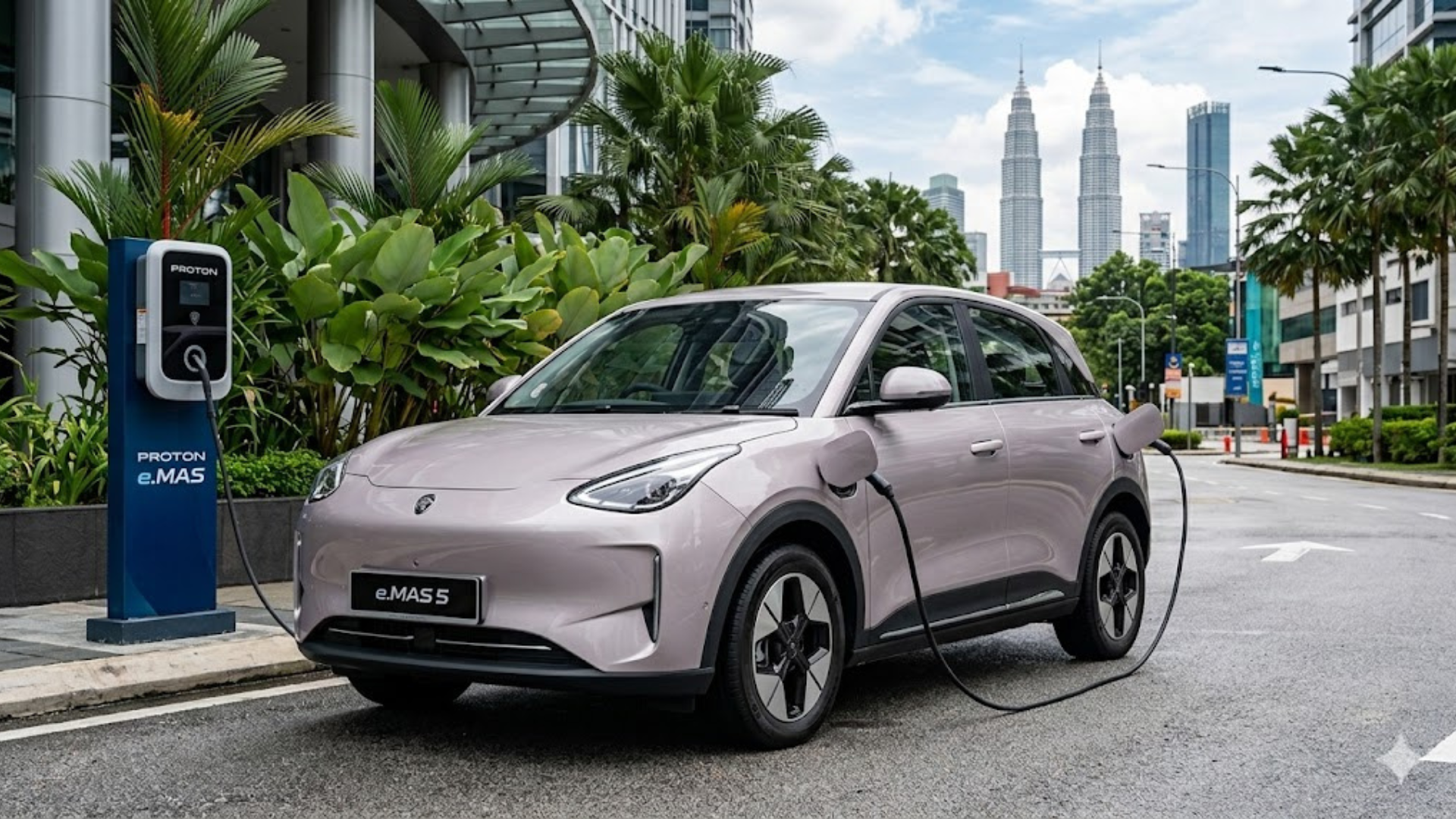
If you’re still comparing fuel prices every week and budgeting for rising servicing costs, you’re not alone.
Malaysian drivers have long relied on petrol favourites like the Proton Saga and Perodua Myvi. But in just 60 days, the Proton e.MAS 5 has flipped the script. The shocking part? It’s not just hype. The e.MAS 5 is outselling several entry-level petrol models in key urban markets — and it’s doing so because it makes financial sense.
Let’s break down how this EV became Malaysia’s new king in record time.
Why the Proton e.MAS 5 took over so quickly
1. Price parity with petrol cars
For years, EVs felt out of reach. The Proton e.MAS 5 changed that.
Positioned competitively against models like:
Proton Saga
Perodua Myvi
Perodua Bezza
The e.MAS 5 entered the market with:
Government-backed EV tax exemptions (2026 still benefits from import and excise incentives)
Lower road tax structure for EVs
Attractive financing packages from local banks
When buyers realised the monthly instalment difference was minimal, the switch became logical.
2. Real-world savings that Malaysians feel
Here’s where petrol cars started losing ground.
Fuel vs Electricity Cost Comparison
Average monthly driving (1,500km):
Petrol (RON95 car): ~RM250–RM350/month
e.MAS 5 home charging: ~RM80–RM120/month
That’s potential savings of RM2,000–RM3,000 per year.
Add to that:
No engine oil changes
Fewer moving parts
Lower maintenance frequency
For urban drivers in Klang Valley, Penang, and Johor Bahru, this wasn’t just marketing — it was math.
Charging anxiety? Not in 2026
A major barrier to EV adoption used to be charging infrastructure. That’s no longer the case.
Malaysia now has:
Thousands of public charging points nationwide
DC fast chargers along PLUS highways
Condo and landed home charging installations becoming common
For city commutes of under 60km per day, the e.MAS 5’s range easily covers daily use with overnight home charging.
Practical tip: Before buying, check if your condo management allows wallbox installation and ensure TNB load capacity approval is in place.
Performance that surprised traditional drivers
Many petrol loyalists assumed EVs lacked power. The e.MAS 5 proved otherwise.
Instant Torque Advantage
Unlike petrol engines that need revving:
EVs deliver instant torque
Smooth acceleration in traffic
Quieter cabin experience
In stop-and-go traffic (which Malaysians know too well), this makes daily driving significantly more comfortable.
Why petrol models struggled
The dethroning wasn’t random. It happened because:
Rising long-term ownership costs
Stricter emission conversations in urban areas
Younger buyers preferring tech-forward cars
Strong brand trust in Proton as a national carmaker
Proton leveraged its local brand strength and EV partnership technology to position the e.MAS 5 as a practical, not experimental, choice.
Ownership in Malaysia: what you must know
Switching to EV isn’t just emotional — it’s procedural.
JPJ & road tax
EV road tax is calculated differently (based on power output)
Registration remains through Jabatan Pengangkutan Jalan
No special driving license required
Insurance Considerations
Battery coverage is critical
Always compare EV-specific policies
Ensure authorised Proton service centres handle warranty claims
Who should consider the Proton e.MAS 5?
The e.MAS 5 makes the most sense for:
Urban commuters
First-time car buyers
Families with a second car
Tech-savvy drivers upgrading from entry-level petrol cars
It may not suit:
Frequent interstate drivers without charging planning
Rural drivers with limited infrastructure access
But for city Malaysia? It’s nearly ideal.
Is this the beginning of the end for entry-level petrol cars?
The first 60 days showed something powerful:
Malaysians are no longer asking “Should I consider EV?” They’re asking “Why am I still paying for petrol?”
While petrol cars won’t disappear overnight, the e.MAS 5 has clearly disrupted the B-segment market.
Expect more competition from Perodua and other regional players soon.
Frequently asked questions [FAQ]
1. Is the Proton e.MAS 5 cheaper than a petrol car in Malaysia?
Upfront pricing is competitive, but long-term ownership is significantly cheaper due to lower energy and maintenance costs.
2. How long does it take to charge the Proton e.MAS 5?
Home AC charging typically takes overnight (6–8 hours). DC fast charging can provide substantial range in under an hour, depending on charger output.
3. Is EV maintenance expensive in Malaysia?
Generally no. EVs have fewer moving parts, no engine oil, and less frequent servicing requirements compared to petrol vehicles.
4. What happens if the battery degrades?
Proton provides battery warranty coverage. Always confirm warranty duration and kilometre limits before purchase.
5. Can I sell an EV easily in Malaysia?
Yes. EV resale demand is increasing, especially for affordable city models. Proper documentation and battery health records improve resale value.
Selling Your Petrol Car? Let Motorist Malaysia Handle It
If the rise of the e.MAS 5 has you thinking about selling your petrol car, don’t deal with the hassle alone.
Motorist Malaysia offers:
Free car valuation within 24 hours
Access to 2,100+ certified dealer partners
Full handling of JPJ and Puspakom paperwork
A 100% hassle-free AutoConcierge service
No endless negotiations. No paperwork stress. No time wasted.
Download the Motorist Super App today or visit www.motorist.my to sell your car for the best possible price — quickly and confidently.
The EV era is here. Make your move smarter.
Read More: EV life in Malaysia: charge, cruise, and smile
Download the Motorist App now. Designed by drivers for drivers, this all-in-one app lets you receive the latest traffic updates, gives you access to live traffic cameras, and helps you manage vehicle related matters.