Stop doing this 3 common habits that are secretly killing your gearbox
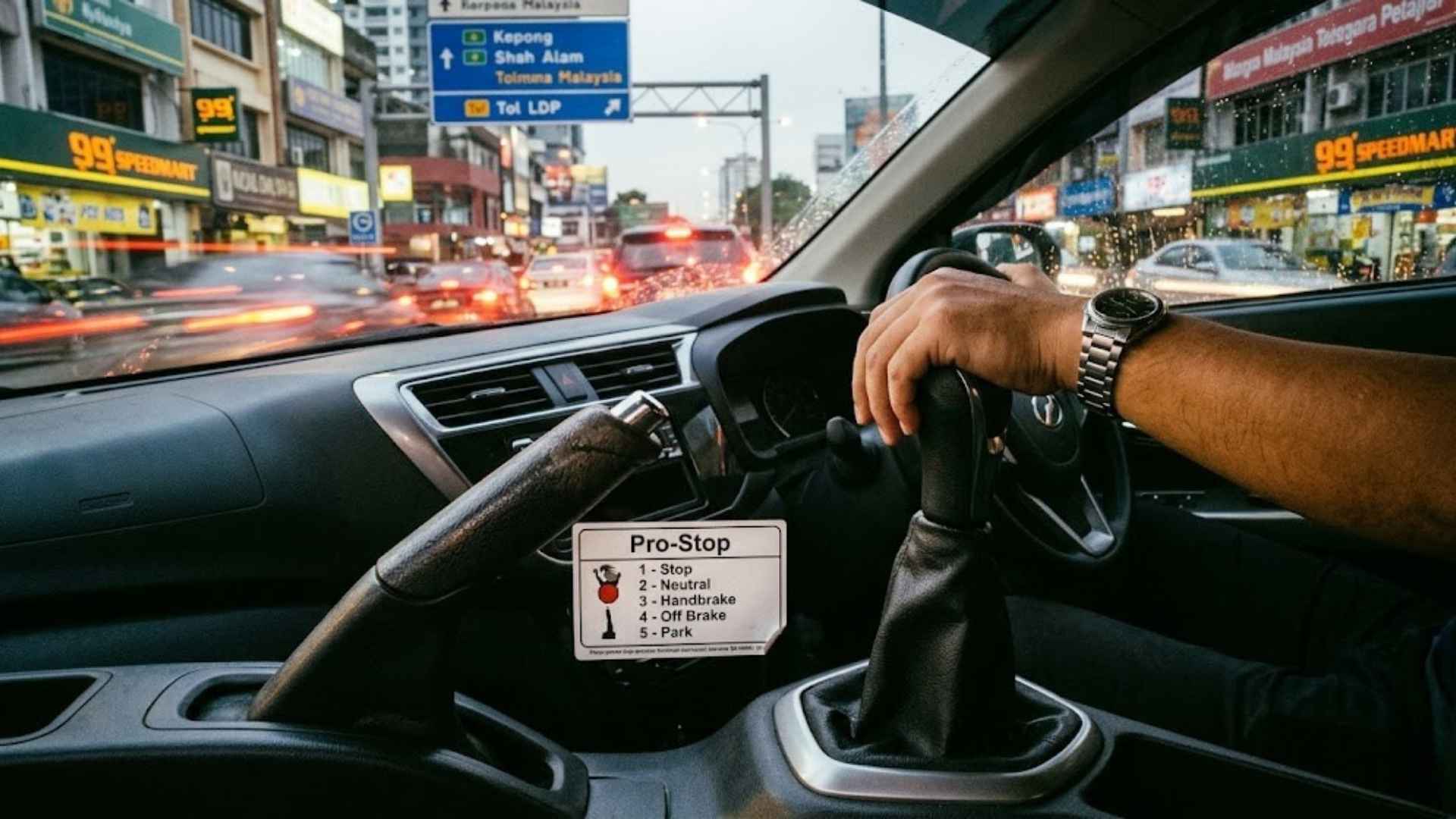
While most Malaysian drivers are preoccupied with rising fuel prices or the soul-crushing congestion in Mutiara Damansara, a silent victim sits beneath the gear lever. Your gearbox is one of the most sophisticated and expensive components in your vehicle. In 2026, a full transmission replacement in Malaysia can range from RM2,000 for basic models to over RM15,000 for high-performance or European variants.
The alarming reality is that most transmission failures are not caused by manufacturing defects but by small, repetitive daily habits that accumulate into catastrophic mechanical failure.
Understanding the gearbox requires a basic definition of its function. The transmission acts as a torque multiplier, ensuring the engine stays within its optimal power band while providing the necessary force to move the wheels at varying speeds. Whether you drive a traditional Automatic, a fuel-efficient CVT (Continuously Variable Transmission), or a sophisticated Dual-Clutch Transmission (DCT), the following three habits are likely compromising your vehicle's longevity.
1. Shifting to Park without using the handbrake
The most widespread habit among local drivers involves coming to a stop, shifting the lever directly to Park (P), and releasing the foot brake before engaging the handbrake. This sequence is a recipe for mechanical disaster. According to The Brake Report, the global authority for the braking industry, relying solely on the Park gear to hold a vehicle's weight puts immense stress on the Parking Pawl. This component is essentially a small metal pin that locks the transmission's output shaft.
When you allow the car to roll into the Park gear on a slope, such as the steep parking ramps at Sunway Pyramid, that tiny metal pin bears the entire multi-ton weight of your vehicle. Over time, this causes the pin to shear or the transmission to become jammed. Experts recommend the Pro-Stop sequence to avoid this. First, bring the car to a full stop with your foot on the brake. Second, shift to Neutral (N). Third, engage your handbrake or Electronic Parking Brake (EPB). Fourth, release the foot brake to let the car settle on the handbrake. Finally, shift to Park. This ensures the handbrake does the heavy lifting while the gearbox remains unloaded.
2. Shifting directions while the vehicle is rolling
In the rush of exiting a tight parking spot in Bangsar or making a quick three-point turn, many drivers shift from Reverse (R) to Drive (D) while the car is still slowly moving backward. Your transmission is designed to facilitate movement, not to act as a braking system. Shifting directions while rolling forces the internal clutch plates and bands to frictionally arrest the vehicle's momentum.
This creates massive internal heat and sheds microscopic metal particles into the transmission fluid. For those driving CVTs, which are common in Perodua and Honda models, this habit is particularly damaging to the steel belt and pulley system. The mechanical rule is absolute: never move the gear lever until the car has reached a 100% dead stop. A two-second pause is significantly cheaper than a five-figure repair bill.
3. Staying in Drive during prolonged traffic stops
The "Traffic Light Dilemma" is a frequent debate among Malaysian motorists. Should you stay in Drive or shift to Neutral during a long wait? The PTT Lubricants International Engineering Guide clarifies that for stops exceeding sixty seconds, shifting to Neutral (N) and engaging the handbrake is the most secure method. This practice manages the thermal load on the transmission fluid by disconnecting the engine's power from the wheels.
In stop-and-go city traffic, heat is the primary enemy of transmission oil. When you stay in Drive with your foot on the brake, the torque converter is constantly churning oil to generate force that is then wasted against the brakes. For short stops under thirty seconds, staying in Drive is acceptable. However, for those long lights at major intersections, shifting to Neutral prevents the car from creeping and reduces unnecessary heat buildup. Note that you should never shift to Park at a traffic light; if a vehicle rear-ends you while you are in Park, the impact will shatter the internal locking mechanism of your gearbox.
Expert advice for downhill driving
Whether descending from Genting Highlands or Cameron Highlands, your gearbox usage becomes a safety factor. Many drivers mistakenly shift to Neutral to coast downhill, thinking it saves petrol. This is a dangerous myth. In Neutral, you lose engine braking, forcing your wheel brakes to handle all the kinetic energy. This leads to brake fade, where the pads overheat and lose stopping power.
Instead, follow the advice of professional technicians from Altimat Auto Garage and use the engine's compression. By shifting to a lower gear—marked as L, S, or the minus sign on paddle shifters—the engine naturally slows the car. This preserves your brake pads and ensures the gearbox remains properly lubricated throughout the descent. Your gearbox does not simply die; it wears out from a thousand small mistakes. By adopting these expert-backed sequences, you can effectively double the lifespan of your transmission.
Frequently Asked Questions
1. What is the Pro-Stop sequence for parking?
The Pro-Stop sequence involves stopping the car, shifting to Neutral, engaging the handbrake, releasing the foot brake so the car settles, and finally shifting to Park. This prevents the weight of the car from resting on the fragile internal parking pawl of the gearbox.
2. Is it bad to shift from Drive to Reverse while the car is moving?
Yes, shifting directions while the car is rolling causes extreme friction and heat within the transmission. It can shred internal clutch plates and is a leading cause of premature gearbox failure in both automatic and CVT vehicles.
3. Should I shift to Neutral at a red light in Malaysia?
For short stops under thirty seconds, you should stay in Drive. For long stops exceeding sixty seconds, it is better to shift to Neutral and pull the handbrake to reduce heat buildup in the transmission fluid and prevent the car from creeping forward.
4. Why shouldn't I shift to Park at a traffic light?
Shifting to Park at a traffic light is dangerous because the parking pawl locks the transmission. If another vehicle hits you from behind, the force of the impact will likely shatter the internal components of your gearbox, leading to a total loss of the transmission.
5. Does coasting in Neutral save fuel?
Coasting in Neutral does not provide significant fuel savings in modern cars and is highly dangerous. It removes your ability to use engine braking, which can cause your brakes to overheat and fail during downhill descents like those in Genting Highlands.
Protect your vehicle with Motorist Malaysia
Maintaining your gearbox is just one part of responsible vehicle ownership. If you are concerned about your car's health or considering an upgrade to a newer model with better reliability, Motorist Malaysia is here to help. We provide expert vehicle valuations and a seamless platform for buying and selling cars without the usual stress. Visit Motorist Malaysia today to ensure you get the best value for your vehicle and stay updated with the latest automotive maintenance tips for the local driving landscape.
Read More: https://www.motorist.my/article/5667/over-15m-vehicles-in-malaysia-with-road-tax-expired
I want to find the highest selling price for my car within 24 hours!
Download the Motorist App now. Designed by drivers for drivers, this all-in-one app lets you receive the latest traffic updates, gives you access to live traffic cameras, and helps you manage vehicle related matters.