EV road tax Malaysia 2026 explained: How much should you pay?
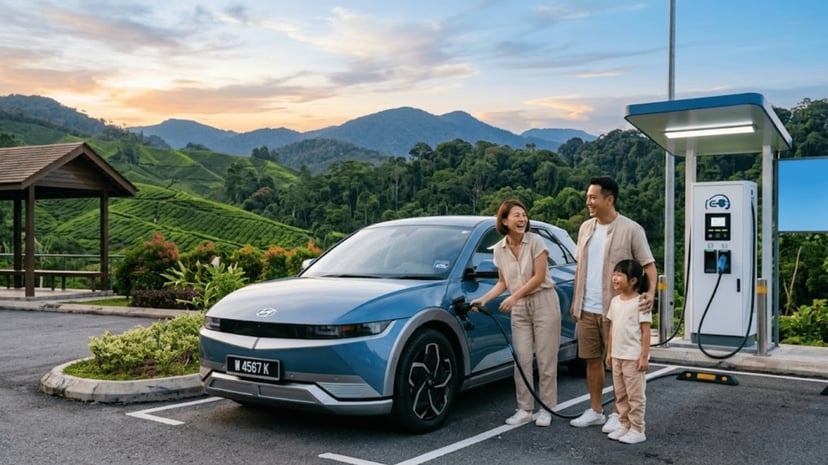
The EV road tax exemption period in Malaysia officially ended on 31 December 2025, and all battery electric vehicles (BEVs) are now subject to the country's new kilowatt-based road tax structure in 2026. If you own an electric vehicle or are planning to buy one, understanding how the new calculation method works can help you estimate your annual ownership costs accurately.
Unlike petrol and diesel vehicles that are taxed according to engine capacity, EV road tax in Malaysia is determined entirely by the electric motor's power output, measured in kilowatts (kW). The higher the motor output, the more road tax you are required to pay annually. However, the current framework remains relatively affordable for many mainstream EV models available in Malaysia.
How EV road tax is calculated in Malaysia
Malaysia's EV road tax framework uses a tiered pricing system. Vehicles are grouped according to their total motor power output in kW. Each group comes with a base rate and an incremental fee that applies for every additional 9.999 kW above the group's threshold.
This means EV owners cannot calculate road tax based on battery size. Many drivers mistakenly confuse kWh and kW, but these two measurements are completely different. Battery capacity is measured in kilowatt-hours (kWh), while road tax calculations only use motor power output measured in kilowatts (kW).
Where to find your EV's motor power output
You can easily find your EV's official kW rating through your Vehicle Ownership Certificate (VOC), the MyJPJ application, or the manufacturer's official specifications sheet. For dual-motor vehicles, the total combined maximum output should be used when determining the applicable road tax category.
Malaysia's EV road tax rates for 2026
The current EV road tax framework starts from RM20 annually for electric vehicles producing up to 100 kW. Vehicles producing between 100.001 kW and 210 kW begin with a base rate of RM80 before incremental charges are applied.
Higher-performance EVs are placed into progressively more expensive categories. Ultra-high-performance electric hypercars producing more than 1,010 kW are subject to a flat annual road tax rate of RM20,000. The structured approach ensures that owners of everyday EVs continue to enjoy lower taxation compared to premium performance models.
Example calculation for a 150 kW EV
A practical example is a 150 kW electric vehicle. Under Malaysia's 2026 framework, it falls within Group B, which covers vehicles producing between 100.001 kW and 210 kW.
The calculation begins with the Group B base rate of RM80. Since 150 kW exceeds the base threshold, four incremental blocks are added at RM20 per block. This results in an additional RM80 charge, bringing the total annual road tax payable to RM160.
This example highlights how relatively affordable EV road tax remains for many popular electric SUVs and sedans currently sold in Malaysia.
Why the new EV road tax system matters
The Malaysian government introduced temporary road tax exemptions to encourage EV adoption during the early stages of market development. With EV ownership growing rapidly across the country, the introduction of a permanent and transparent road tax framework provides consumers with predictable ownership costs.
The tiered structure also encourages buyers to compare motor output specifications when shopping for a new EV. Choosing a lower-powered variant can significantly reduce annual road tax expenses without compromising practicality for everyday driving.
Things EV buyers should know
Electric vehicle road tax rates are standardised nationwide. Unlike conventional vehicles, there are no reduced rates for East Malaysian states such as Sabah and Sarawak. Every EV owner in Malaysia pays according to the same kW-based structure regardless of location.
Single-motor variants are generally more affordable to own from a taxation perspective. Dual-motor all-wheel-drive models combine the power output of both motors, often placing them in higher road tax categories.
Prospective buyers should therefore consider road tax costs as part of their overall vehicle ownership budget before making a purchase decision. Reviewing the vehicle's official motor output specification can help avoid unexpected renewal costs later on.
FAQ
1. What is EV road tax based on in Malaysia?
EV road tax is calculated using the vehicle's total electric motor power output in kilowatts (kW), not its battery capacity.
2. Is EV road tax still free in Malaysia in 2026?
No. The EV road tax exemption ended on 31 December 2025, and the new kW-based taxation framework is now fully implemented.
3. How do I check my EV's kW rating?
You can find it through your Vehicle Ownership Certificate, the MyJPJ application, or the manufacturer's official specifications.
4. Does battery size affect EV road tax?
No. Battery capacity measured in kWh does not affect road tax calculations.
5. Are EV road tax rates the same throughout Malaysia?
Yes. The current framework applies uniformly nationwide, including Sabah and Sarawak.
Understanding your EV's road tax is an important part of planning your ownership costs. Whether you're renewing your road tax, comparing electric vehicle models, or looking for the best automotive deals in Malaysia, Motorist Malaysia makes car ownership simpler. Visit Motorist Malaysia for the latest automotive insights, vehicle services, and tools designed to help you make smarter driving decisions every step of the way.
Read More: RM20,000 for a full tank: Singaporean driver fined over Budi95 fraud
I want to find the highest selling price for my car within 24 hours!
Download the Motorist App now. Designed by drivers for drivers, this all-in-one app lets you receive the latest traffic updates, gives you access to live traffic cameras, and helps you manage vehicle related matters.