Installing a home EV wallbox charger in Malaysia: What TNB requires and what it costs
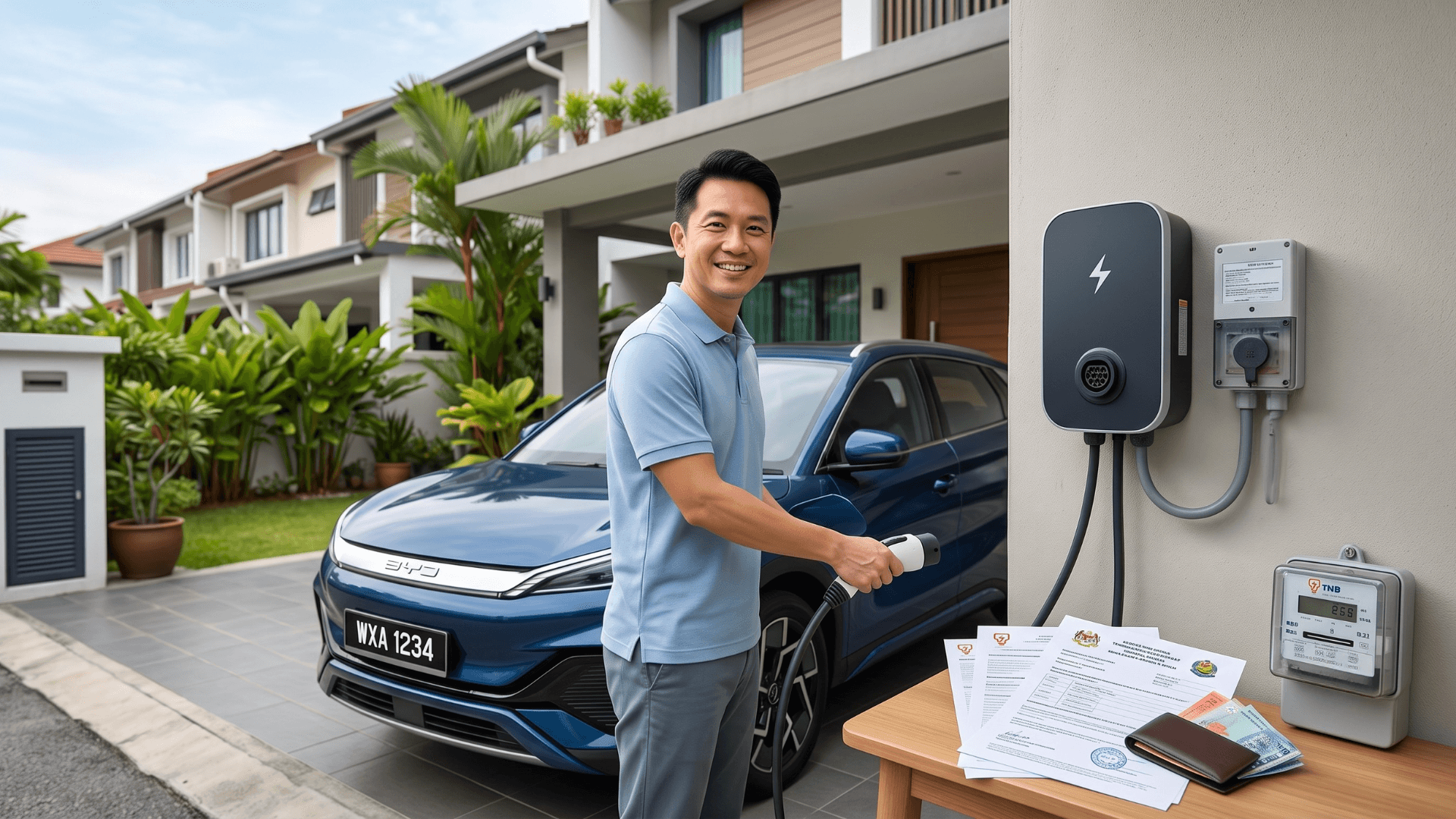
Installing a home EV wallbox can make electric vehicle ownership much more convenient because the car can recharge while parked overnight. However, a wallbox places a significant and sustained electrical load on a home, which means the existing electricity supply, wiring and safety protection should be assessed before installation.
In Malaysia, Tenaga Nasional Berhad oversees electricity supply matters, while Suruhanjaya Tenaga sets requirements relating to electrical safety and EV charging systems. TNB's latest home EV charger guidance states that homeowners do not need TNB approval simply to install a home charger. TNB approval becomes necessary when the property requires an electricity supply upgrade, such as changing from single-phase to three-phase supply.
What are TNB's requirements for a home EV charger?
TNB advises homeowners to appoint a wireman or electrical contractor registered with Suruhanjaya Tenaga before installing a charger. The contractor should assess the home's existing electricity demand, distribution board and the additional electrical load created by EV charging.
According to TNB, single-phase electricity is suitable when the total household load, including the EV charger, does not exceed 10 kW. If the total load exceeds 10 kW, the household should upgrade to three-phase supply. TNB indicates that residential three-phase supply can support loads above 10 kW and up to 37 kW.
This means installing a 7 kW wallbox does not automatically mean the house needs three-phase electricity. The decision depends on the combined electrical demand of the entire home, including the EV charger and other high-load appliances. A qualified contractor should therefore calculate the expected load before recommending an upgrade.
What electrical safety rules apply?
Suruhanjaya Tenaga's current guidelines on Electric Vehicle Charging System require electrical wiring work to be carried out by a competent person. TNB also states that Mode 1 charging is not allowed. Home charging should instead use compliant Mode 2 equipment or Mode 3 charging equipment such as a dedicated AC wallbox.
The EV charger must have a dedicated electrical circuit rather than simply sharing an existing household circuit. Suruhanjaya Tenaga requires dedicated final circuits to use appropriately sized cables and suitable cable protection. TNB also specifies 30 mA residual-current protection, using Type A with DC detection or Type B protection as appropriate for the equipment.
Homeowners should also ensure the wallbox is approved for use in Malaysia. TNB recommends ST-SIRIM approved equipment. Suruhanjaya Tenaga's guideline specifies a minimum IP41 enclosure rating for indoor EV supply equipment and at least IP44 for equipment installed outdoors.
How much does a home EV wallbox cost in Malaysia?
There is no standard nationwide installation price. The cost depends on the charger model, charging power, distance between the distribution board and parking area, existing wiring condition and whether additional electrical work is necessary.
Current Malaysian installer pricing indicates that a relatively straightforward 7 kW home wallbox installation can cost around RM1,500 to RM3,500 when the charger and standard installation work are included. Costs may rise when longer cable runs, distribution-board upgrades or more complicated three-phase installations are required. These figures should be treated as market estimates rather than regulated prices, so homeowners should obtain a site-specific quotation before proceeding.
A three-phase TNB supply upgrade can create additional costs. TNB provides an example in which upgrading a terrace house from an existing single-phase overhead supply to three-phase overhead supply results in a RM300 connection-charge difference. Another example involving a bungalow changing from overhead single-phase supply to underground three-phase supply results in a RM1,250 difference. Actual charges can vary, and TNB notes that additional works, security deposits and internal wiring costs may apply.
Do you need a permit to install a home EV charger?
For a private domestic installation, TNB does not require separate approval simply for installing the wallbox. However, homeowners who need to change their electricity supply must submit the appropriate upgrade application to TNB.
Suruhanjaya Tenaga states that EV charging system licensing applies to non-domestic applications, particularly operations involving Charge Point Operators. A private residential charger is therefore treated differently from a commercially operated charging point.
Condominium and other strata owners may face additional requirements. Management consent may be relevant when installation involves common parking spaces, electrical infrastructure or shared areas. Malaysia's local authority EV charging processes can also require documents such as JMB or Management Corporation consent where applicable. Homeowners in strata developments should therefore speak to building management before appointing an installer.
What should you check before installation?
The safest approach is to arrange an electrical assessment before choosing a wallbox solely based on its advertised charging speed. The charger should match the home's electrical capacity as well as the maximum AC charging capability of the vehicle.
TNB also recommends obtaining a testing and commissioning report from the appointed competent person after installation. The charging equipment and electrical installation should then be inspected and maintained according to the manufacturer's recommendations to keep the system in safe working condition.
FAQ
1. Can I install a 7 kW EV charger on single-phase power in Malaysia?
Yes, it may be possible. TNB states that single-phase supply is suitable when the total household load, including the EV charger, does not exceed 10 kW. A qualified contractor should assess the home's total electrical load before confirming whether the existing supply is sufficient.
2. Do I need TNB permission for a home EV charger?
Not for the wallbox installation itself. TNB says an application is necessary when the home requires an electricity supply upgrade, such as moving from single-phase to three-phase supply.
3. Can I use a normal 13A wall socket for daily EV charging?
TNB states that Mode 1 direct wall-socket charging is not allowed and advises EV owners to use compliant Mode 2 charging equipment or a properly installed Mode 3 wallbox.
4. Do condo owners need management approval?
Approval may be required when the installation affects common property, shared electrical systems, parking areas or cable routes. Condo owners should check with their JMB or Management Corporation before installation begins.
Make EV ownership simpler with Motorist Malaysia
Whether you are considering your first EV or planning to sell your current car before making the switch, Motorist Malaysia can help simplify your next step. Request a free car valuation, compare competitive offers from trusted buyers and manage your car-selling journey through a straightforward and convenient process. Get started with Motorist Malaysia today.
Read More: "Special Perils" add-on: Is flood coverage worth it in Malaysia?
I want to find the highest selling price for my car within 24 hours!
Download the Motorist App now. Designed by drivers for drivers, this all-in-one app lets you receive the latest traffic updates, gives you access to live traffic cameras, and helps you manage vehicle related matters.