What dealers notice in the first 10 minutes of inspecting your car
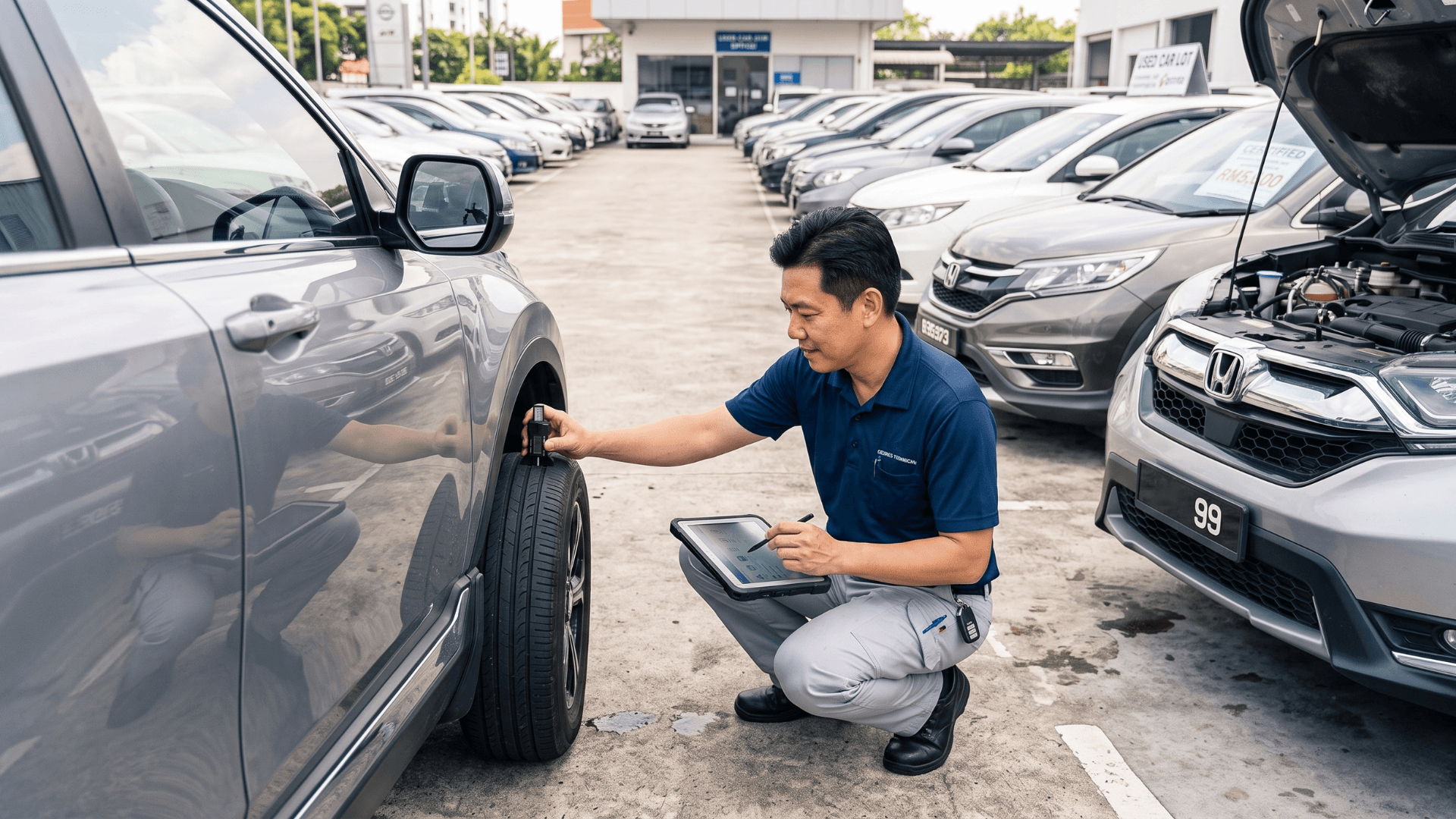
The first 10 minutes of a used car inspection can shape a dealer’s initial view of your vehicle. Dealers are usually trying to determine whether the car matches its stated condition, whether there are signs of expensive repairs and how much preparation may be needed before resale.
Not every dealer follows the same sequence, and a complete appraisal can take longer than 10 minutes. However, the first checks often focus on exterior condition, tyres, interior wear, basic mechanical signs and vehicle identity.
What is a dealer car inspection?
A dealer car inspection is an appraisal used to assess a vehicle’s overall condition, resale potential and possible reconditioning costs. It is different from an official vehicle inspection required for regulatory or ownership-transfer purposes.
In Malaysia, certain vehicle transactions may require an inspection before the ownership transfer process can be completed. These inspections generally focus on confirming the vehicle’s identity, condition and relevant registration details to ensure that it meets the necessary requirements.
The exterior usually comes first
A dealer may begin with a walkaround, looking for dents, scratches, faded paint, cracked trim, damaged bumpers and uneven panel gaps. Differences in paint shade or finish may suggest that a panel has previously been repaired or repainted.
A repaired panel does not automatically mean the car has suffered serious damage. Minor cosmetic repairs are common on used vehicles. Dealers are generally more concerned when the condition suggests significant repair costs or possible structural issues.
Tyres and wheels reveal useful clues
Tyres can quickly provide clues about how a vehicle has been maintained. Dealers may look for worn tread, uneven wear, sidewall damage, mismatched tyres or damaged wheels. Uneven tyre wear may also encourage closer examination of the alignment or suspension.
PUSPAKOM’s voluntary vehicle inspection covers tyre condition, suspension, side-slip, lights, brakes and an undercarriage examination. These areas are important when assessing a vehicle’s overall safety and roadworthiness.
Interior wear can affect the first impression
Inside the car, dealers can assess the seats, steering wheel, dashboard, carpets, door panels and controls. Heavy wear may reduce the car’s presentation and can suggest more intensive use.
The odometer also receives attention. Dealers may compare the displayed mileage with the vehicle’s age, service history and visible condition. If the mileage appears inconsistent with the amount of wear, the vehicle may receive closer scrutiny.
A clean interior will not hide serious mechanical problems, but good presentation can make it easier for a dealer to assess the vehicle and understand how it has been maintained.
Starting the engine provides more information
Starting the vehicle allows the dealer to check whether the engine starts smoothly and whether warning lights remain illuminated after the normal start-up sequence.
The dealer may also listen for unusual noises, observe how the engine idles and test basic functions such as the air-conditioning, windows, lights and other electrical features.
However, a short inspection cannot confirm the full mechanical condition of a vehicle. Diagnostic scanning, a road test or a more detailed mechanical inspection may still be required before the final offer is confirmed.
Under the bonnet, visible issues matter
A dealer may open the bonnet to check for obvious fluid leaks, damaged components, corrosion, poor repair work or signs of neglected maintenance.
Visible modifications may also attract attention. PUSPAKOM states that certain vehicles with changes to the engine, chassis, components or body may require a special inspection, depending on the type of modification.
These findings can influence how much additional inspection or repair work the dealer believes the car may require.
Vehicle identity and documents also count
The condition of the car is only part of the appraisal. Dealers also need confidence that its ownership and registration details are in order.
JPJ states that a voluntary ownership transfer cannot proceed when certain restrictions remain on the transaction, including unresolved financial institution ownership claims, blacklisting or other registration conditions.
Service records and repair invoices can also help explain the vehicle’s history. Clear documentation does not guarantee a higher offer, but it can reduce uncertainty and make the vehicle easier to evaluate.
What can lower a dealer’s offer quickly?
Significant body damage, warning lights, visible leaks, badly worn tyres, poor interior condition, questionable modifications or inconsistencies between mileage and overall condition may result in a more cautious valuation.
Minor cosmetic flaws do not always need to be repaired before selling. Spending heavily on paintwork, tyres or accessories does not guarantee that the seller will recover the cost through a higher offer. Keeping the vehicle clean, preparing its records and being transparent about known issues can often be more practical.
FAQ
1. Do dealers decide the final price within 10 minutes?
Usually not. The first 10 minutes help create an initial impression, but the final offer may depend on a complete inspection, vehicle history, market demand, estimated repair costs and resale potential.
2. Should I repair scratches before a dealer inspection?
Not necessarily. Small cosmetic defects may already be reflected in the valuation. Sellers should consider whether the cost of repairing them is likely to result in a meaningful improvement in the offer.
3. Does high mileage automatically mean a low offer?
No. Mileage is only one factor. Maintenance history, mechanical condition, accident history, model demand and overall presentation can also influence the valuation.
4. Why do chassis and engine numbers matter?
They help verify the vehicle’s identity and confirm that key identification details match its official registration records. This helps prevent discrepancies during vehicle inspections and ownership-related processes.
Sell your car with Motorist Malaysia
If you are planning to sell your car, Motorist Malaysia can help simplify the process. Submit your vehicle details for a free car valuation and connect with trusted buyers who can compete to offer a competitive price for your vehicle. Instead of spending time searching for individual buyers, you can compare your options through a more convenient selling process. Get your free car valuation with Motorist Malaysia today and discover what your car could be worth.
Read More: The complete JPJ guide for Malaysian Drivers (2026): Digital road tax, licences & easy renewals
I want to find the highest selling price for my car within 24 hours!
Download the Motorist App now. Designed by drivers for drivers, this all-in-one app lets you receive the latest traffic updates, gives you access to live traffic cameras, and helps you manage vehicle related matters.