Car temperature keeps going up and down? Here’s why
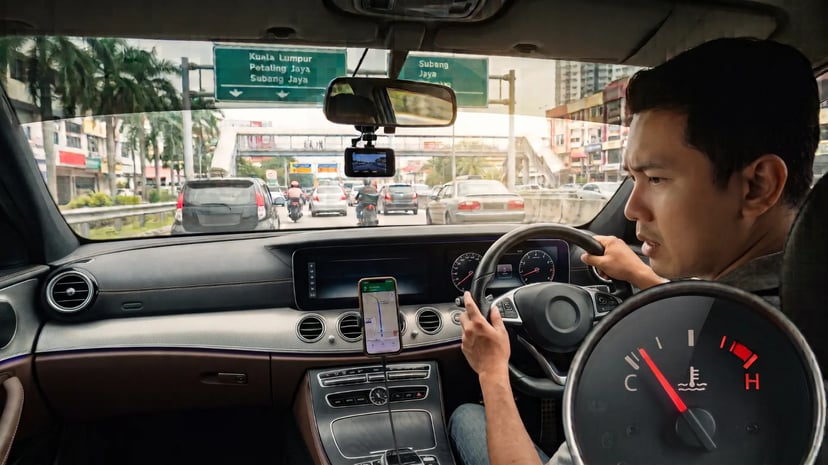
A car temperature gauge goes up and down when the cooling system cannot keep engine heat steady, most often because of a faulty thermostat, low coolant, trapped air, a failing water pump, a clogged radiator, a weak fan or a bad sensor.
A needle that climbs towards "H", falls back and climbs again is easy to ignore in Malaysia's stop-go traffic, but it is a warning worth acting on. This article explains what is normal, what is not and when to stop driving, helping Motorist App users recognise the warning signs.
Key takeaways
- A needle resting around the middle of the gauge is normal, but wide, repeated swings usually point to a cooling-system fault.
- The seven common causes are a faulty thermostat, low coolant, trapped air, a failing water pump, a clogged radiator, a weak radiator fan and a faulty sensor.
- If the needle reaches "H" or steam appears, stop safely, switch off the engine and let it cool completely before opening anything.
- Never open the radiator cap on a hot engine. Pressurised coolant can cause serious burns.
- Repair costs vary widely by car model and workshop, so ask for a written quote before approving work.
What is a normal temperature reading?
The middle of the gauge is a range, not one number. On most modern cars the needle sits around the midpoint once the engine is warm. The midpoint represents a normal operating range rather than an exact temperature. Thermostats typically open at around 90°C.
Small movements are usually harmless. The needle may shift slightly in heavy traffic or on a long climb. Wide, repeated swings within a single drive are different and should be checked.
7 common reasons your car temperature keeps fluctuating
1. A faulty thermostat
It regulates coolant flow, so a fault creates swings. If it sticks closed, the engine heats up. If it sticks open, the engine runs cooler than normal. A thermostat that sticks and frees itself repeatedly produces the up-and-down pattern.
2. Low coolant level
Less coolant means less heat carried away. Leaks and evaporation lower the level, so the engine heats faster and the reading becomes unstable. Check the reservoir only when the engine is cold.
3. Air trapped in the cooling system
Air pockets disturb circulation. After a coolant top-up or repair, air can stay in the system and cause erratic readings. A workshop can bleed the system properly.
4. A failing water pump
The pump keeps coolant moving. If the impeller or seal wears out, circulation drops and temperatures become inconsistent. Watch for coolant drips near the front of the engine.
5. A clogged radiator
Blocked passages restrict flow. A clogged radiator cannot shed heat efficiently, which leads to overheating and a fluctuating gauge.
6. A weak radiator fan
This often shows up in traffic. If the fan does not cool the radiator when the car crawls, the needle rises in jams and may settle once you move at speed and air flows through.
7. A faulty temperature sensor or gauge
Sometimes the reading, not the engine, is wrong. The coolant temperature sensor feeds the signal that moves the needle. If it fails, the gauge can jump even when the engine is fine. A mechanic can test the sensor to confirm.
Quick diagnosis guide
| Likely Cause |
Typical Sign |
Urgency |
|---|---|---|
| Thermostat | Needle swings, or runs unusually cool | Medium |
| Low coolant | Falling reservoir level, rising temperature | High |
| Trapped air | Erratic readings after a coolant top-up | Medium |
| Water pump | Coolant drips near the engine front, noise | High |
| Clogged radiator | Overheating that builds under load | High |
| Radiator fan | Heating up in traffic, cooling at speed | High |
| Sensor or gauge | Gauge jumps while the car feels normal | Low to Medium |
Treat a head gasket failure as the most serious case. Combustion gases entering the coolant can cause overheating, white exhaust smoke and bubbling in the reservoir. Stop driving and seek help.
What to do when the needle spikes
Act calmly and quickly. Turn off the air-conditioning and pull over when it is safe. Switch off the engine and let it cool completely before checking coolant. Driving on while overheated can cause severe engine damage.
How the Motorist App can help
- Reminders: road tax, insurance and fines.
- In-app concierge chat: personalised help with motoring questions.
- Car valuation: get your car valuation within 24 hours.
Expert tip
Check your coolant level when the engine is fully cold, such as first thing in the morning, and record the date and level each time (for example, "13 Oct 2026, just above MIN"). A level that keeps dropping between checks points to a slow leak, and a dated record helps your mechanic find it faster.
Common mistake to avoid
Opening the radiator cap on a hot engine. The system is pressurised, and scalding coolant can spray out. Wait until the engine has cooled completely before opening it.
Conclusion
A fluctuating temperature gauge means the cooling system needs attention, and stopping early limits the damage. Know what normal looks like and pull over if the needle reaches "H". Download the Motorist App to keep your car's essentials in one place.
FAQ
1. Why does my car temperature go up and down while driving?
It usually means coolant flow or heat removal is being interrupted, often by a faulty thermostat, low coolant, trapped air or a weak fan.
2. Is it safe to drive if the temperature gauge keeps fluctuating?
Small movements can be normal, but repeated swings or a needle near "H" mean you should stop and have the car checked.
3. Can low coolant make the temperature gauge fluctuate?
Yes. Low coolant reduces the heat carried away from the engine and can cause the reading to rise and become unstable.
4. Can a bad thermostat cause the gauge to swing?
Yes. A thermostat that sticks open or closed upsets coolant flow and causes the needle to move.
5. Why does my car heat up in traffic but cool down on the road?
Slow traffic gives the radiator little airflow, so a weak fan or low coolant shows up in jams and eases at speed.
6. Can a faulty sensor make the temperature gauge jump?
Yes. The sensor sends the signal that moves the needle, so a fault can cause false readings even when the engine is fine.
7. How often should I change my coolant?
It depends on the manufacturer. Some set first changes at 200,000 km or 10 years, others far sooner, so follow your owner's manual.
8. What should I do if steam comes from the bonnet?
Pull over safely, switch off the engine and wait for it to cool completely. Do not open the radiator cap while it is hot.
9. How much does it cost to fix a fluctuating temperature gauge?
It depends on the cause, car model and workshop. Ask for a written quote before approving repairs.
Download the Motorist App to keep your road tax and fine reminders in one place. If your car keeps giving you trouble and repair bills are adding up, it may be time to sell. Get a free car valuation within 24 hours and find out what your car is worth before deciding your next move.
Read More: Mat Rempit Law Malaysia: New Jail Penalties Explained
I want to find the highest selling price for my car within 24 hours!
Download the Motorist App now. Designed by drivers for drivers, this all-in-one app lets you receive the latest traffic updates, gives you access to live traffic cameras, and helps you manage vehicle related matters.