Can You Be Fined for Sharing JPJ Roadblocks? Fact or Fiction?
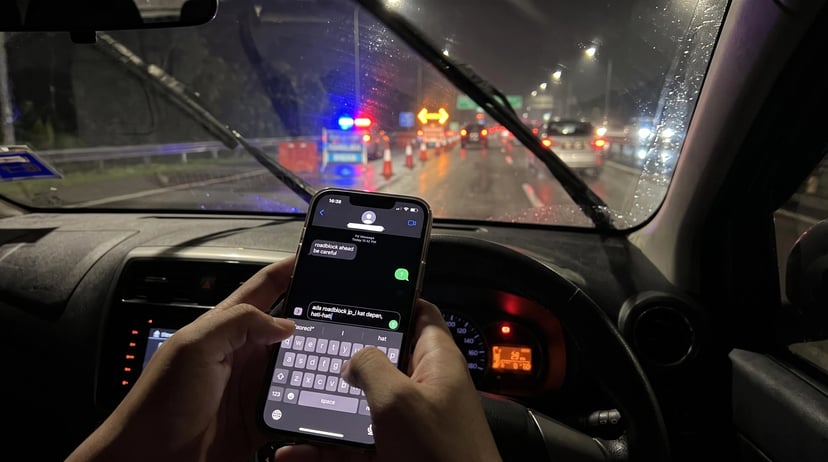 Can you be fined for sharing JPJ roadblock locations in Malaysia?
Sharing where the JPJ roadblocks are could get you in trouble legally in Malaysia. Since 16 October 2026 the Road Transport (Amendment) Act 2026 added Section 110B. This law is about actions that stop enforcement operations. It includes sharing information about enforcement to help people avoid the authorities. The punishment can be up to RM50,000 or five years in prison or both.
If you have ever told friends about a roadblock, in a WhatsApp group or put the location on media you might be wondering if that makes you a criminal. The key difference is why you shared the information and whether it fits the crime.
In this edition of Road Rules Fact or Fiction Motorist Malaysia explains what the law says, the punishments involved and how drivers can stay updated without helping others avoid the law.
Key takeaways
Fact: Sharing JPJ enforcement information to help offenders evade enforcement can fall under Section 110B of the Road Transport Act 1987, as amended in 2026.
Effective date: The Road Transport (Amendment) Act 2026 came into force on 16 October 2026.
Potential penalty: A conviction under Section 110B can result in a fine of RM10,000 to RM50,000, imprisonment of one to five years, or both.
Intent matters: The provision targets conduct intended to help offenders avoid enforcement, rather than ordinary public sharing without criminal intent.
Safer approach: Follow traffic laws and use Motorist App for practical car-ownership information instead of relying on unverified roadblock rumours.
Can you be fined for sharing JPJ roadblock locations?
Fact or fiction: What does the law say?
Verdict: Fact, under specific circumstances.
Sharing enforcement information to help someone evade JPJ or police action can expose a person to prosecution under the new Section 110B. However, it would be misleading to say that every person who mentions a roadblock automatically commits an offence.
What changed? The Road Transport (Amendment) Act 2026 came into force on 16 October 2026. It introduced Section 110B to address activities associated with tonto networks, which monitor enforcement operations and alert other parties so they can avoid detection.
Why does it matter? The provision covers more than physically obstructing officers. It also addresses the sharing of enforcement information in circumstances covered by the offence, making the intention and context of a person's actions important.
What is Section 110B?
Section 110B is a rule added through changes to Malaysias Road Transport Act 1987. It is meant to help authorities deal with people who block interfere with threaten or follow enforcement officers. It also covers those who share information about enforcement actions to help offenders avoid getting caught.
This provision targets actions that make it harder to carry out checks on traffic offences. These include overloaded lorries and vehicles that do not meet standards.
The key difference is this: sending a message to help someone avoid a checkpoint is not the same as a conversation or a public report, about an enforcement activity.. What really matters is the exact facts and the law that applies to decide if a crime has been committed.
What is the penalty for sharing JPJ roadblock locations?
The penalties associated with Section 110B are substantial.
| Legal detail | Position as of 21 October 2026 |
|---|---|
| Relevant law | Road Transport Act 1987, as amended in 2026 |
| Relevant provision | Section 110B |
| Amendment effective date | 16 October 2026 |
| Fine upon conviction | RM10,000–RM50,000 |
| Imprisonment upon conviction | 1–5 years |
| Can both penalties apply? | Yes |
| Classification | Arrestable offence |
Important: These are the penalties for an offence under Section 110B, not an automatic fine for every social media post mentioning a roadblock. The offence must be established under the applicable law.
Does sharing a roadblock location on WhatsApp or Waze count?
It depends on the situation. The way someone communicates by itself does not decide if they have done something
For example a person who intentionally shares a checkpoint location, with a group of people who are doing things so their vehicles can skip checks might be judged differently than someone talking about traffic in a neighborhood group.
The government has said that Section 110B was meant to deal with sharing information that helps people who are breaking the law avoid being caught. It was not meant for sharing that does not have any criminal purpose. Some questions have also been asked about how this rule could affect drivers, reporters and people who are just trying to live their lives.
Practical advice: Do not assume that a message is legally safe simply because it is sent privately, posted anonymously or shared through a navigation application. If you are unsure whether a particular post could breach the law, seek advice from a qualified Malaysian lawyer.
Why is Malaysia cracking down on roadblock information-sharing?
The main concern is enforcement evasion. Enforcement evasion requires that authorities conduct inspections without people coordinating warnings that help non‑compliant vehicles escape detection.
Tonto networks have been linked with monitoring enforcement officers and passing information to others. Tonto networks actions undermine efforts to enforce vehicle safety and regulatory requirements in the commercial transport sector.
For motorists the lesson is clear: comply, with road regulations cooperate with lawful enforcement and avoid taking part in coordinated efforts that help offenders escape checks.
What should you do when approaching a JPJ roadblock?
Stay calm. Follow instructions. Slow your speed when you get close to the checkpoint. Look for traffic signs. Listen to the signals from officers. Stop only when you are told to stop.
Keep your driving licence and vehicle papers ready. If you do not know what an officer is asking or think something wrong has happened put safety first. Ask for help, from the official channels.
Do not make a sudden U‑turn do not speed away and do not use your phone while driving. These actions add danger and can create new legal problems.
Old way vs. Motorist App: managing your car ownership
Knowing where a roadblock is does not replace the need to keep your vehicle compliant. Instead of relying on roadblock rumours, use Motorist App to manage practical car-ownership tasks and make better-informed decisions.
| Feature | Old way: relying on roadblock rumours | Using Motorist App |
|---|---|---|
| Information source | Unverified WhatsApp messages and social media posts | A dedicated car-ownership platform |
| Information accuracy | Locations may be outdated or incorrect | Use relevant app features for your car-ownership needs |
| Vehicle valuation | May rely on guesses or informal opinions | Check your car's valuation options |
| Road tax planning | May depend on memory or scattered reminders | Use available vehicle-related services and information |
| Cost of sharing a roadblock | Could expose you to legal risk, depending on the circumstances | No need to share enforcement locations to manage ordinary car-ownership tasks |
Important distinction: Motorist App can fit into your car-ownership routine but Motorist App does not promise roadblock alerts. Motorist App also does not shield anyone from trouble that comes from unlawful driving. Service quality may change from place to place. Motorist App has no single price that applies to every feature.
Expert tip: Keep your vehicle documents ready
Check your driving licence, vehicle registration details and road tax status before you start a journey. A simple habits can make a big difference for you. This habit can help you avoid problems during a lawful inspection.
If you are uncertain, about your obligations check the information through official government channels. Do not depend on messages to decide whether you should comply with a checkpoint.
Common mistake: Assuming a private WhatsApp message is always safe
A private group does not automatically make sharing information about enforcement, legal. If a message is sent on purpose to help drivers who are not following the rules avoid a JPJ operation the fact that it was sent in private does not always protect the person who sent it.
Also do not think that every simple mention of a roadblock automatically leads to the penalty. The situation the purpose and the proof are important. If you are not sure do not help others avoid the law and get advice when needed.
Conclusion
Sharing JPJ roadblock locations can have legal consequences, in Malaysia when it falls within Section 110B. Since 16 October 2026 the law has provided for fines of RM10,000 to RM50,000, imprisonment of one to five years or both for the relevant offence. Drive responsibly comply with instructions and use reliable tools to manage your car ownership.
FAQs
1. Can you be fined for sharing JPJ roadblock locations in Malaysia?
Yes, sharing enforcement information to help offenders evade the authorities can fall under Section 110B of the Road Transport Act 1987, as amended in 2026. Not every mention of a roadblock automatically constitutes an offence.
2. When did the new roadblock information-sharing law take effect?
The Road Transport (Amendment) Act 2026 came into force on 16 October 2026, introducing Section 110B to address conduct that obstructs or undermines enforcement operations.
3. What is the fine for sharing JPJ roadblock locations?
A person convicted of an offence under Section 110B can face a fine of RM10,000 to RM50,000, imprisonment of one to five years, or both.
4. Can you be punished for sharing roadblock locations in a WhatsApp group?
Potentially, yes, if the information-sharing falls within the offence, including conduct intended to help offenders evade enforcement. The use of WhatsApp alone does not determine whether an offence has occurred.
5. Is it illegal to warn other drivers about a police roadblock?
The circumstances matter. The government has explained that Section 110B targets conduct intended to help offenders avoid enforcement, rather than ordinary information-sharing without criminal intent.
6. Does Section 110B apply to Waze roadblock reports?
The legal position depends on the circumstances and whether the conduct falls within the provision. Do not assume that using a navigation application automatically makes enforcement-related information-sharing lawful or unlawful.
7. Can police arrest someone for sharing JPJ enforcement information?
Section 110B is classified as an arrestable offence. However, that classification does not mean every person who shares a roadblock location can automatically be arrested or convicted; the applicable legal requirements still matter.
8. Why did Malaysia introduce Section 110B?
The provision was introduced to address tonto activities, including obstruction of enforcement operations and the sharing of information to help offenders avoid detection. It is intended to strengthen enforcement against non-compliant vehicles and related offences.
9. What should you do when you encounter a JPJ roadblock?
Slow down, follow officers' lawful instructions, stop when required and keep your relevant driving and vehicle documents accessible. Never attempt to evade a checkpoint or make a dangerous manoeuvre to avoid inspection.
10. Can Motorist App help you avoid roadblock-related problems?
Motorist App can help with practical car-ownership needs, including vehicle valuation and available vehicle-related services. It should not be treated as a source of guaranteed live roadblock alerts or as a substitute for complying with traffic laws.
Keep your car ownership organised with Motorist App
Read More: Someone hit your parked car and drove away? What to do
I want to find the highest selling price for my car within 24 hours!
Download the Motorist App now. Designed by drivers for drivers, this all-in-one app lets you receive the latest traffic updates, gives you access to live traffic cameras, and helps you manage vehicle related matters.


