Dashboard Warning Lights Malaysian Drivers Should Never Ignore
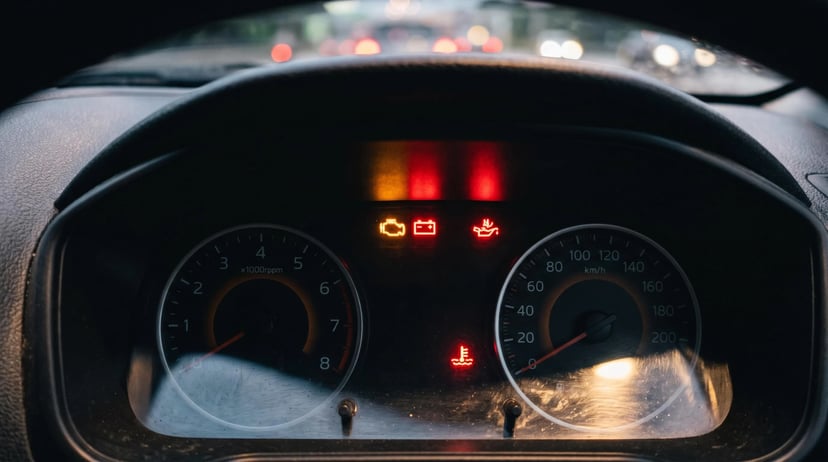
Dashboard warning lights are your car's way of alerting you to potential mechanical problems, safety issues or system failures. Malaysian drivers should never ignore critical warnings such as the engine oil, battery, brake and engine temperature lights because continuing to drive could lead to expensive repairs or dangerous situations.
Whether you drive a Perodua Myvi, Proton Saga, Honda City or Toyota Vios, understanding these dashboard symbols can help you recognise problems early and know when it is safe to continue driving.
Here are seven important dashboard warning lights every Malaysian driver should recognise.
Table of Contents
Key Takeaways
- Red dashboard warning lights generally indicate serious problems that require immediate attention.
- Yellow or amber warning lights indicate potential faults that should be investigated promptly.
- The engine oil pressure and engine temperature warnings require drivers to stop safely and switch off the engine.
- Ignoring brake, battery and engine warnings can lead to breakdowns, expensive repairs or safety risks.
- Always consult your vehicle's owner's manual because warning symbols and their meanings can differ between models.
Understanding Dashboard Warning Light Colours
Before identifying individual dashboard symbols, it is important to understand what their colours generally mean. Most modern vehicles use different colours to communicate the urgency of a particular warning.
1. Red warning lights
Red warning lights generally indicate serious problems that require immediate attention. Examples include low engine oil pressure, engine overheating and brake system faults.
If a red warning light appears while driving, find a safe place to stop as soon as possible. Do not continue your journey until you understand the problem and it is safe to proceed.
2. Yellow or amber warning lights
Yellow or amber lights indicate that a system may have a problem or requires attention. Examples include the check engine, ABS and airbag warning lights.
Some vehicles may remain driveable when these lights appear, but you should arrange an inspection promptly. Certain flashing warnings require more urgent action.
3. Green or blue indicator lights
Green and blue dashboard lights generally indicate that a vehicle feature is operating or has been activated.
Common examples include turn signals, headlights, high beams and cruise control indicators. These are usually informational rather than warnings.
7 Dashboard Warning Lights Malaysian Drivers Should Never Ignore
Here are seven important dashboard warning lights, what they mean and what you should do when they appear.
1. Engine Oil Pressure Warning Light
What it looks like: A red oil can symbol with a dripping oil drop.
What it means: This warning indicates that your engine may not have sufficient oil pressure to lubricate its internal components properly.
Low oil pressure can result from insufficient engine oil, an oil pump malfunction, a leak or a blocked oil filter. Without proper lubrication, important engine components can experience excessive friction and serious damage.
What should you do?
- Pull over somewhere safe as soon as possible.
- Switch off your engine immediately.
- Allow the engine to cool before checking the oil level.
- If the oil level is low, follow your owner's manual when topping it up.
- If the warning remains on, do not restart or continue driving. Arrange professional assistance.
Never assume that adding more engine oil will solve the problem. If the warning is caused by an oil pressure system failure, the vehicle needs professional inspection.
2. Engine Temperature Warning Light
What it looks like: A red thermometer symbol above wavy lines.
What it means: This warning indicates that your engine coolant temperature is too high and the engine may be overheating.
Overheating can happen because of coolant leaks, radiator problems, a malfunctioning cooling fan or other cooling system faults.
For Malaysian drivers who regularly experience traffic congestion, especially during peak hours, an overheating engine can become a serious concern.
What should you do?
- Find a safe place to pull over immediately.
- Switch off the engine.
- Allow the engine to cool down completely.
- Never open the radiator cap while the engine is hot because pressurised coolant can cause serious burns.
- Arrange professional inspection if the warning persists or coolant is leaking.
Continuing to drive an overheating vehicle can cause severe engine damage, including damage to the cylinder head gasket.
3. Battery Charging System Warning Light
What it looks like: A red rectangular battery symbol with positive (+) and negative (-) signs.
What it means: This warning usually indicates a problem with your vehicle's charging system rather than simply a flat battery.
Possible causes include a faulty alternator, damaged drive belt, loose battery connections or electrical system problems.
When the charging system stops working properly, your vehicle may rely on the remaining battery power. Once that power runs out, the engine could stall and fail to restart.
What should you do?
- Switch off unnecessary electrical accessories if it is safe to do so.
- Head towards a safe stopping location.
- Avoid continuing a long journey.
- Arrange for the battery and charging system to be inspected.
Do not assume that replacing the battery will automatically solve the problem. A faulty alternator or charging connection may be responsible.
4. Brake System Warning Light
What it looks like: A red exclamation mark inside a circle or the word BRAKE.
What it means: This warning can indicate that your parking brake is still engaged, your brake fluid level is low or there is a fault in the braking system.
Since your braking system is essential for controlling your vehicle, this is one warning you should never take lightly.
What should you do?
- Check whether your parking brake has been fully released.
- If the warning remains on, pull over safely.
- Pay attention to unusual brake pedal behaviour, such as a soft or sinking pedal.
- Do not continue driving if you suspect a braking system problem.
- Arrange professional inspection before using the vehicle again.
A malfunctioning braking system can affect your ability to stop safely and put other road users at risk.
5. Check Engine Warning Light
What it looks like: A yellow or orange engine-shaped symbol.
What it means: The check engine light indicates that your vehicle's engine management or emissions control system has detected a potential problem.
Possible causes include faulty sensors, ignition problems, fuel system issues or emissions-related faults. In some vehicles, even a loose fuel cap can trigger the warning.
The seriousness depends on the underlying problem and whether the warning is steady or flashing.
What should you do?
- If the light stays on steadily and the vehicle operates normally, drive cautiously to a suitable workshop for diagnosis.
- If the light flashes, reduce engine load and stop somewhere safe.
- If the engine shakes, loses power or makes unusual noises, stop driving and request assistance.
- Have the vehicle's diagnostic system checked by a qualified mechanic.
Do not simply reset the warning light without identifying its cause. The underlying fault may still be present even if the light temporarily disappears.
6. Anti-lock Braking System (ABS) Warning Light
What it looks like: The letters ABS inside a circle, usually displayed in yellow or amber.
What it means: This warning indicates a potential malfunction in your vehicle's Anti-lock Braking System (ABS).
ABS helps prevent the wheels from locking during hard braking, allowing drivers to maintain better steering control in certain emergency braking situations.
If the ABS warning remains illuminated, your conventional braking system may still work, but the anti-lock function may not be available.
What should you do?
- Reduce your speed and avoid aggressive driving.
- Maintain a greater following distance from other vehicles.
- Arrange an inspection at a qualified workshop as soon as possible.
- If the red brake warning light appears together with the ABS warning, stop safely and seek professional assistance.
Do not assume that your braking system is operating at full capacity simply because the brake pedal still feels normal.
7. Airbag Warning Light
What it looks like: A seated passenger with a circular symbol in front of them.
What it means: This warning indicates a possible problem with the Supplemental Restraint System (SRS), which includes the vehicle's airbags and related safety components.
Possible faults may involve airbag sensors, wiring, seat-belt pretensioners or other components within the restraint system.
If this warning remains illuminated, the airbags or related safety equipment may not operate correctly during an accident.
What should you do?
- Arrange a professional inspection as soon as possible.
- Have the SRS system diagnosed by a qualified technician.
- Do not attempt to disconnect or repair airbag wiring yourself.
- Follow the manufacturer's instructions while waiting for repairs.
Although your car may continue driving normally, an airbag warning should never be ignored because it concerns your protection during a collision.
What Should You Do When a Dashboard Warning Light Appears?
Seeing an unfamiliar warning light while driving can be stressful, especially when you are travelling on a busy Malaysian highway or stuck in traffic.
Instead of panicking, follow these steps to respond safely.
Step 1: Identify the warning light
Look at the symbol and its colour. Check your owner's manual to understand what the warning means for your particular vehicle.
Step 2: Assess how your car is behaving
Pay attention to unusual noises, smoke, vibrations, loss of power, overheating or changes in braking and steering behaviour.
Step 3: Find a safe place to stop
If the warning indicates a serious problem, carefully move away from traffic and stop in a safe location. Switch on your hazard lights when appropriate.
Step 4: Avoid unnecessary repairs or resets
Do not randomly disconnect the battery or clear diagnostic codes to make a warning disappear. This does not necessarily resolve the underlying problem.
Step 5: Get professional assistance
Contact a qualified mechanic or roadside assistance provider if your vehicle cannot be driven safely. Do not risk further damage by continuing your journey.
Expert Tip: Know Your Dashboard Before Driving
Expert Tip: Take a few minutes to familiarise yourself with your car's dashboard symbols before your next journey.
Check your owner's manual and learn where the important warning indicators are located. You should also understand which lights normally illuminate briefly when you start your engine as part of the vehicle's system checks.
This simple habit can help you recognise an unusual warning more quickly, especially when driving at night or travelling long distances.
Common Mistake: Ignoring Warning Lights Because the Car Still Runs
Common Mistake: Some drivers assume that a warning light is harmless if their car still starts, accelerates and drives normally.
However, certain mechanical and electrical problems may not immediately affect how a vehicle feels on the road. For example, an ABS malfunction may not change normal braking behaviour, but the anti-lock function could be unavailable during emergency braking.
How to avoid it: Never judge a warning light solely by how your car feels. Identify the symbol, consult your owner's manual and arrange an inspection when necessary.
Frequently Asked Questions
1. What is the most dangerous dashboard warning light?
The engine oil pressure, engine temperature and brake system warning lights are among the most serious. They can indicate problems that may cause major mechanical damage or affect driving safety.
2. Can I continue driving when a red warning light appears?
Generally, you should stop safely as soon as possible when a serious red warning light appears. The exact response depends on the warning, so consult your owner's manual and seek assistance when necessary.
3. Is it safe to drive with a yellow dashboard warning light?
Some yellow warnings allow cautious driving for a short distance, while others require immediate attention. Check the vehicle manual and arrange an inspection promptly.
4. Why does my check engine light keep turning on?
A recurring check engine light may indicate a sensor fault, ignition problem, fuel system issue or emissions-related malfunction. A diagnostic scan can help identify the underlying cause.
5. What should I do if my engine temperature warning light comes on in traffic?
Pull over safely, switch off the engine and allow it to cool. Never open the radiator cap while the engine is hot. Arrange an inspection if the warning persists.
6. Does the battery warning light mean I need a new battery?
Not necessarily. It often indicates a charging system problem involving the alternator, battery connections or drive belt. Have the complete charging system inspected before replacing components.
7. Why does my dashboard warning light disappear after restarting the car?
Some warnings may disappear temporarily after restarting because a fault is intermittent. However, this does not guarantee that the problem has been fixed. Arrange an inspection if the warning returns or the vehicle shows unusual behaviour.
8. Can I drive with the ABS warning light on?
If the ABS warning appears by itself and normal braking remains functional, some vehicles may be driven cautiously to a workshop. However, the anti-lock braking function may not work. If the red brake warning also appears or braking feels abnormal, stop safely and seek assistance.
9. What does the airbag warning light mean?
It indicates a possible malfunction in the airbag or Supplemental Restraint System. The airbags or seat-belt pretensioners may not work correctly during an accident, so arrange a professional inspection promptly.
Conclusion: Never Ignore What Your Dashboard Is Telling You
Your car's dashboard is more than just a collection of indicators. It is an important communication system that alerts you to potential problems affecting your vehicle's performance and safety.
From engine oil pressure and overheating to brake system and airbag warnings, understanding these seven dashboard symbols can help Malaysian drivers make better decisions when problems arise.
Remember, a warning light disappearing does not always mean the problem has been resolved. Regular maintenance, early diagnosis and professional inspections can help prevent unexpected breakdowns and expensive repairs.
Looking to make managing your vehicle ownership easier? Explore the Motorist App for useful driving information, vehicle-related updates and tools to help you stay informed throughout your car ownership journey.
Read More: The Motorist Guide: How to Read Your Car Dashboard
I want to find the highest selling price for my car within 24 hours!
Download the Motorist App now. Designed by drivers for drivers, this all-in-one app lets you receive the latest traffic updates, access live traffic cameras, and manage vehicle-related matters.


