AES/AwAS camera law in Malaysia: fines and rules
AES/AwAS camera law in Malaysia: what drivers and vehicle owners need to know
Malaysia’s AwAS cameras can record certain traffic offences, including speeding and running a red light, and the registered vehicle owner may receive a notice for a camera-recorded offence. The notice should state the alleged offence and provide details such as the date, time, location and vehicle images.
Table of Contents
- What are AES and AwAS cameras?
- Which offences can an AwAS camera record?
- What does the law say about camera notices?
- Who is responsible if someone else was driving?
- What should you do if you receive a notice?
- Can an AwAS offence affect your KEJARA points?
- How much is an AES/AwAS fine?
- Conclusion
- Frequently Asked Questions
Key takeaways
- AwAS is the name used for the system previously known as AES, which was rebranded in 2017.
- JPJ identifies speeding and disobeying a red traffic light among offences recorded by AwAS cameras.
- Since 16 October 2026, amendments to the Road Transport Act 1987 have strengthened registered-owner accountability for camera-recorded offences.
- Check the amount, deadline and instructions on your own notice; do not rely on an old or general compound-rate figure.
What are AES and AwAS cameras?
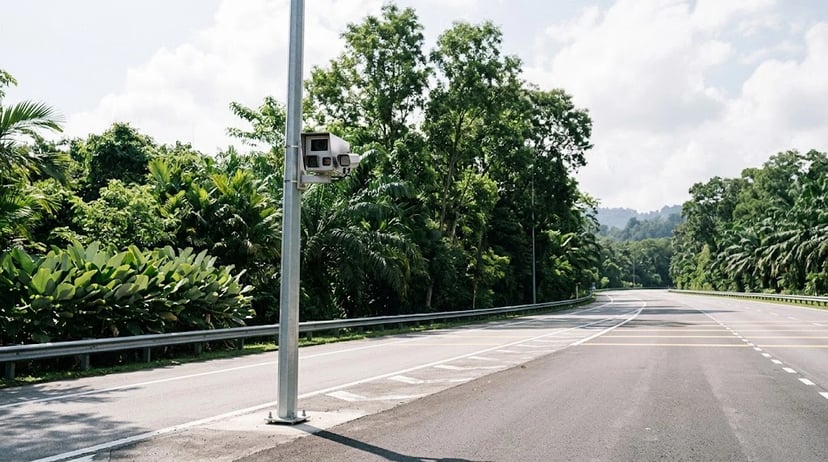
AES stands for Automated Enforcement System. The system was rebranded as the Automated Awareness Safety System, or AwAS, in 2017. JPJ describes AwAS as a system that automatically detects and records certain traffic offences for processing.
The Ministry of Transport is the system owner, while JPJ is responsible for its direct implementation. The locations selected for fixed cameras are based on road-safety considerations; JPJ says the locations are gazetted.
Drivers can check JPJ’s AwAS camera location page for its published information. A location list is a reference for drivers, but it does not replace speed-limit signs or other road instructions.
Which offences can an AwAS camera record?
JPJ’s AwAS information identifies speeding and failure to obey a red traffic light among the offences that the system can record. The underlying laws include provisions of the Road Transport Act 1987, including sections 40(1) and 79(2), as described in JPJ’s AwAS FAQ.
The Road Transport Act also contains a schedule of offences that may be recorded through cameras. Whether a particular camera system is authorised to record a particular offence depends on the applicable law and the system’s enforcement arrangements. Do not assume that every roadside CCTV camera is an AwAS camera.
What does the law say about camera notices?
Section 53A of the Road Transport Act 1987 sets out the notice process for alleged camera-recorded offences. The section provides for a notice to be served on the registered vehicle owner, requiring the person to appear in court or offering an opportunity to compound the offence where applicable.
The law specifies that a camera notice should include the date, time and place of the alleged offence, the offence alleged, an image of the vehicle’s registration plate, an image of the vehicle, and either a compound offer or a requirement to attend court. The notice must be digitally signed by the issuing authority.
On 16 October 2026, the Road Transport (Amendment) Act 2026 came into force. Among other changes, it amended section 53B concerning registered-owner accountability for camera-recorded offences. Read the Ministry of Transport’s 2026 press-release archive and the enacted Road Transport (Amendment) Act 2026 for details.
Expert tip: Keep the notice and any envelope or delivery record. Check that the vehicle registration, offence details, date, time and location match your records before deciding what to do.
Who is responsible if someone else was driving?
A camera notice may initially be directed to the registered owner because the vehicle is identified through its registration. The 2026 amendment strengthens the registered owner’s accountability where the owner causes or permits the vehicle to be used and a camera-recorded offence is committed.
If you were not driving, read the notice carefully and follow any instructions for providing information or responding. Do not ignore it or assume that telling someone informally who was driving will resolve the notice. If the driver’s identity or the owner’s responsibility is disputed, contact JPJ or get legal advice based on the facts and the exact notice.
Common mistake: Do not leave a camera notice unanswered just because another person was using the car. Follow the response instructions and keep evidence of any action you take.
What should you do if you receive an AES/AwAS notice?
Start by checking that the notice relates to your vehicle and that its details are complete. Then follow the notice’s payment or court instructions and note any deadline.
| Check | What to do |
|---|---|
| Vehicle and offence details | Compare the registration number, vehicle images, alleged offence, date, time and location with your records. |
| Payment or court instructions | Check whether the notice offers a compound or requires a court appearance. Follow the stated deadline and process. |
| Payment channel | Use an official JPJ payment channel listed by JPJ, such as MyJPJ, the JPJ Public Portal or a JPJ office, if your notice is eligible. |
| Records | Save the notice, related correspondence and payment receipt. |
JPJ explains that some summonses are compoundable and others must be settled in court. The available payment methods depend on the notice and its status. See JPJ’s summons payment guidance before paying.
Can an AwAS offence affect your KEJARA points?
JPJ says KEJARA demerit points are calculated when an offender pays a compound or fine for an offence listed in the demerit-offence schedule. JPJ’s published information also describes licence suspension thresholds after accumulating 20 points, with suspension periods depending on the driver’s history.
Whether a specific camera-recorded offence carries demerit points depends on the applicable offence and current KEJARA schedule. Check the current JPJ information for the offence on your notice rather than assuming every AwAS notice carries the same points.
Read JPJ’s KEJARA information for how points are calculated and the consequences of accumulating them.
How much is an AES/AwAS fine?
There is no safe single figure to apply to every notice. The amount and deadline depend on the offence, the notice and the current compound offer. JPJ’s online AwAS FAQ still displays a graduated compound schedule, but older published rates may not reflect the terms on a current notice or later changes. Check the amount shown in your notice and confirm it through an official JPJ channel.
A compound offer is different from a court-imposed fine after conviction. JPJ’s FAQ states a court fine range for certain AwAS offences, but the relevant penalty depends on the offence and the law in force. If your notice directs you to court, follow that instruction rather than treating it as a payment reminder.
For current rates and payment eligibility, use JPJ’s official summons payment guidance and the details on your notice.
Conclusion
AES is now known as AwAS, and its cameras can record offences such as speeding and disobeying a red light. The law provides a formal notice process, and the 2026 amendments strengthen accountability for registered owners. Check every notice carefully, act by the stated deadline and use official JPJ channels to confirm payment or court requirements.
For your next drive, use the Motorist App to access traffic updates and live traffic cameras. Always follow the road signs and official instructions.
Frequently Asked Questions
1. Is AES the same as AwAS in Malaysia?
AwAS is the name given to the system previously known as AES. JPJ says the rebranding took place in 2017.
2. What offences can an AwAS camera record?
JPJ identifies speeding and failure to obey a red traffic light among the offences recorded by AwAS. The applicable offence and legal provision should be stated in the notice.
3. Which law covers AES/AwAS camera summonses?
The Road Transport Act 1987 includes provisions concerning camera-recorded offences and notices, including sections 53A and 53B. The offence itself may be covered by other provisions of the Act.
4. What information should an AwAS camera notice contain?
Section 53A specifies details including the date, time and place of the alleged offence, the alleged offence, images of the number plate and vehicle, and whether the notice offers a compound or requires a court appearance.
5. What if I was not driving when the camera recorded the offence?
Follow the notice’s instructions for responding or providing driver information. The 2026 amendments strengthened registered-owner accountability, so do not ignore the notice or assume that naming another driver informally resolves it.
6. How much is an AES/AwAS camera fine?
The amount and deadline depend on the notice and its current compound offer. Check your notice and confirm the amount through an official JPJ channel instead of relying on an old rate quoted online.
7. Can I pay an AwAS summons through MyJPJ?
Some JPJ summonses can be paid through MyJPJ, but eligibility depends on the summons type and status. JPJ also lists the JPJ Public Portal and JPJ offices among its payment channels.
8. Do AwAS camera offences carry KEJARA points?
Points apply to offences listed in the KEJARA demerit schedule. JPJ says points are calculated when the compound or fine is paid; check the current schedule for the specific offence.
9. What happens if I ignore an AwAS notice?
The consequences depend on the notice and offence. It may require payment or a court appearance, so follow its instructions and deadline and contact JPJ if anything is unclear.
10. Is every traffic camera an AwAS enforcement camera?
No. A traffic-monitoring CCTV camera is not automatically an AwAS enforcement camera. Refer to JPJ’s published AwAS information and the details in any official notice.
Read More: AES camera map Malaysia: plan your route in 2026
I want to find the highest selling price for my car within 24 hours!
Download the Motorist App now. Designed by drivers for drivers, this all-in-one app lets you receive the latest traffic updates, access live traffic cameras, and manage vehicle-related matters.


