Deepavali return traffic: NSE crash causes delays
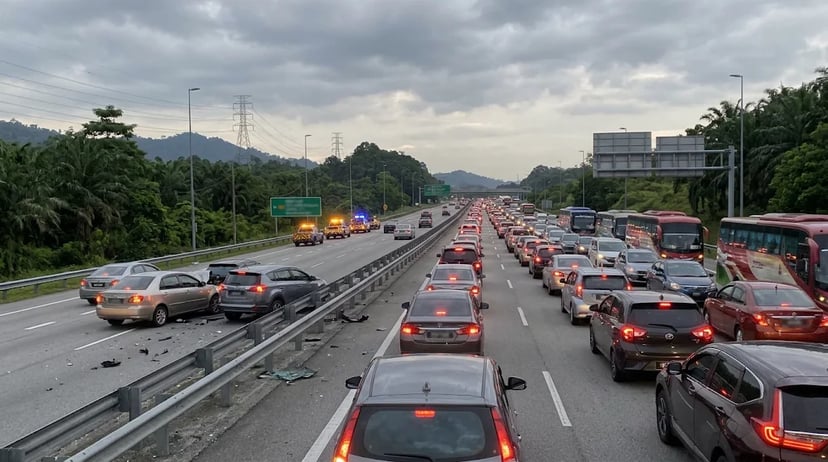
Deepavali Return Traffic Expected to Peak as NSE Crash Causes Delays
Traffic heading towards the Klang Valley was expected to increase on 9 and 10 November 2026 as Deepavali and school-holiday travellers returned, while a lorry-and-car crash caused congestion on the North–South Expressway (NSE) near Yong Peng on the morning of 9 November.
The Malaysian Highway Authority (LLM) said traffic was expected to build from around 10am to 11am on 9 November. The crash was reported at KM82.3 on the southbound NSE, between Yong Peng and Ayer Hitam. LLM said no fatalities were reported. These are updates from 9 November; check current conditions before setting off.
Table of Contents
Key takeaways
- PLUS expected heavier traffic towards the Klang Valley on 9 and 10 November as holidaymakers returned.
- On the morning of 9 November, a lorry and car crash at KM82.3 caused congestion on the southbound NSE between Yong Peng and Ayer Hitam.
- LLM said the crash did not involve any fatalities.
- LLM advised drivers to keep a safe following distance and rest at an R&R if tired or sleepy.
What happened on the NSE?
LLM reported congestion on the southbound NSE from Yong Peng towards Ayer Hitam after a crash involving a lorry and a car at KM82.3 on the morning of 9 November. The LLM spokesperson told Bernama that no fatalities were reported.
The incident occurred as travellers were beginning their return journeys after Deepavali and the additional school holiday. Traffic conditions can change quickly after a crash, so the reported location and delay should not be treated as a live update.
In the evening, LLM reported slow traffic at several stretches of major highways as holidaymakers continued their journeys home. The affected sections were different from the morning crash location. Read Bernama’s 9 November evening traffic update for the locations reported at 8pm.
Why was return traffic expected to peak?
PLUS had forecast more traffic heading towards the Klang Valley on 9 and 10 November as people returned from Deepavali and school-holiday trips. The travel period followed Deepavali on 8 November and school holidays from 7 to 10 November.
PLUS expected up to 2.24 million vehicles a day across its highway network during peak travel days. Separately, LLM estimated that about 3.28 million vehicles could use major highways nationwide daily during the peak period. These are forecasts, not confirmed vehicle counts.
Before the holiday, PLUS advised motorists to plan their journeys and check the MyPLUS Travel Time Advisory (MyPLUS-TTA). The advisory provides suggested travel times for selected journeys; it does not guarantee clear roads.
How to check traffic before travelling
Check the latest traffic conditions shortly before leaving and during your journey. A previous report about congestion may no longer reflect current road conditions, especially after an incident has been cleared or traffic volumes have changed.
- Check PLUS’s MyPLUS-TTA and official traffic updates for routes on its network.
- Check LLM’s traffic updates and highway CCTV information for other expressways.
- Call LLM’s traffic information hotline at 1800-88-7752. LLM lists the hotline for traffic enquiries.
- Allow extra time and follow electronic signs and instructions from highway personnel.
Expert tip: Check your route again immediately before departure. A traffic incident can create a local delay even when the wider highway is moving normally.
Common mistake: Treating a traffic forecast or earlier congestion report as a guarantee of current conditions. Confirm the latest update before choosing your route or departure time.
Driving safely in congestion and rain
LLM advised highway users to maintain a safe following distance, particularly during the Northeast Monsoon period when rain and sudden braking can make driving more difficult. If you feel tired or sleepy, stop at a rest and service area rather than continuing to drive.
Motorcyclists were also advised to use shelters provided by LLM and highway concessionaires during rainy conditions. Follow road signs and traffic officers’ instructions, and do not use an emergency lane unless it has been officially activated as a Smart Lane.
Conclusion
Return traffic towards the Klang Valley was expected to rise on 9 and 10 November after the Deepavali break. A crash involving a lorry and a car caused congestion near Yong Peng on the morning of 9 November, with no fatalities reported. Check current highway updates before leaving and take breaks if you feel tired.
Use the Motorist App to access traffic updates and live traffic cameras while planning your drive. Check official highway operator notices for current travel advisories and road instructions.
Frequently Asked Questions
1. When was Deepavali return traffic expected to peak in 2026?
PLUS expected traffic towards the Klang Valley to increase on 9 and 10 November 2026 as travellers returned from Deepavali and school-holiday trips.
2. Where did the lorry and car crash happen?
LLM reported the crash at KM82.3 on the southbound North–South Expressway, between Yong Peng and Ayer Hitam, on the morning of 9 November 2026.
3. Were there fatalities in the NSE crash?
LLM told Bernama that no fatalities were reported in the crash involving a lorry and a car.
4. Is the NSE near Yong Peng still congested?
The report describes conditions on the morning of 9 November, not current traffic. Check the latest PLUS and LLM updates before travelling.
5. How can I check live highway traffic in Malaysia?
Check the relevant highway operator’s official traffic updates and CCTV information. LLM also lists its traffic information hotline at 1800-88-7752.
6. What is the LLM traffic hotline?
LLM lists 1800-88-7752 as its traffic information hotline.
7. What should I do if traffic is slow and I feel tired?
Stop at a rest and service area to rest. LLM advises highway users not to continue driving when tired or sleepy.
8. What is MyPLUS-TTA?
MyPLUS-TTA is PLUS’s Travel Time Advisory, which provides suggested travel times for selected journeys. Check the latest schedule through PLUS before travelling.
9. Can I drive in the emergency lane during a traffic jam?
Use an emergency lane only when the highway operator has activated it as a Smart Lane and signs permit its use. Otherwise, keep out of the emergency lane.
10. How many vehicles were expected on PLUS highways during the Deepavali peak?
PLUS forecast up to 2.24 million vehicles a day across its highway network during peak travel days. This was a forecast, not a confirmed count.
Read More: Best time to travel to avoid Deepavali traffic 2026
I want to find the highest selling price for my car within 24 hours!
Download the Motorist App now. Designed by drivers for drivers, this all-in-one app lets you receive the latest traffic updates, access live traffic cameras, and manage vehicle-related matters.


