What Happens If You Ignore a JPJ Summons?
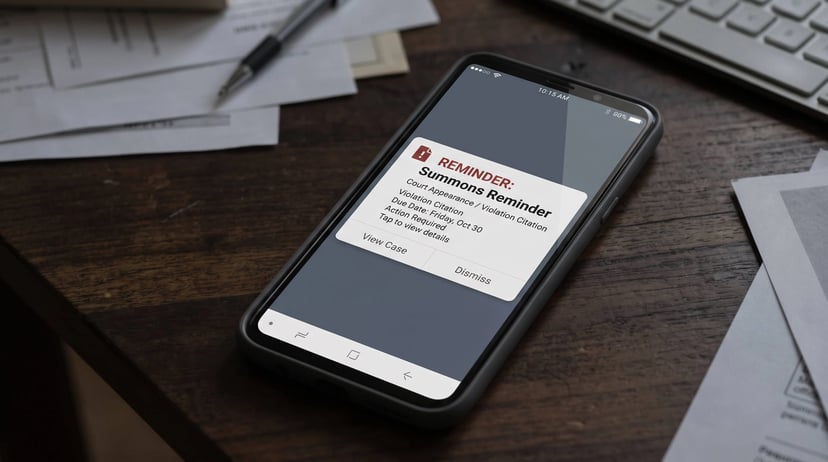
Ignoring a JPJ summons can eventually lead to court action and blacklisting. According to JPJ, summonses or notices that remain unpaid for 60 days may be referred to court, while failing to attend a court mention can result in the driver, vehicle or driving licence being blacklisted until the case is resolved.
Table of Contents
Key takeaways
- A JPJ summons or notice left unpaid for 60 days may be referred to court.
- Failing to attend a court mention can result in the driver, vehicle or driving licence being blacklisted.
- A blacklist can prevent certain JPJ transactions until the outstanding matter is resolved.
- MyJPJ allows users to check their JPJ summons and blacklist status.
What happens when you ignore a JPJ summons?
Ignoring a JPJ summons does not make the offence disappear. JPJ states that drivers or vehicle owners who receive a summons or notice and fail to pay the compound within 60 days may have the matter referred to court.
What happens next depends on the type of summons and the instructions stated on the notice. Some summonses are compoundable, while others must be resolved through court proceedings.
That means motorists should not assume that every outstanding summons can simply be paid online whenever they choose.
Expert tip: Check your JPJ summons through MyJPJ regularly instead of waiting for a physical notice. JPJ's official app provides access to summons and blacklist information.
When can a JPJ summons lead to blacklisting?
JPJ's official guidance states that a summons or notice that remains unpaid for 60 days may be referred to court. If the driver or vehicle owner then fails to attend the court mention, the driver, vehicle or driving licence may be blacklisted until the case is resolved.
This is why ignoring a summons for an extended period can become more serious than simply having an unpaid fine.
For certain cases, the summons may also be non-compoundable. JPJ states that non-compoundable summonses must be settled in court according to the summons notice.
Common mistake: Assuming that every JPJ summons can be settled through an online payment. Non-compoundable summonses and certain notices require the appropriate JPJ or court process instead. Check the instructions on your notice before attempting payment.
What does a JPJ blacklist affect?
A JPJ blacklist can affect your ability to carry out certain vehicle and driving-related transactions. The practical impact can therefore become significant if the outstanding matter is left unresolved.
In particular, previous government statements have explained that blacklisting can prevent renewal of the Motor Vehicle Licence (LKM), commonly referred to as road tax, and may also affect driving licence renewal depending on the case.
JPJ's current MyJPJ system also allows motorists to check their summons and blacklist status, making it easier to identify whether an outstanding matter has progressed to this stage.
It is important to distinguish between having an unpaid summons and being blacklisted. An unpaid summons does not necessarily mean you are immediately blacklisted. The consequences depend on the summons, its status and whether further action has been taken.
Can every JPJ summons be paid online?
No. JPJ separates summonses into compoundable and non-compoundable categories. Compoundable summonses can be paid within the period specified, while non-compoundable summonses must be settled in court as stated on the notice.
JPJ says eligible summonses can be paid through channels including the MyJPJ app, the JPJ Public Portal and selected JPJ offices, branches, UTCs and kiosks.
If the summons is connected to a notice that requires another action first, that issue may need to be resolved before payment can be made.
How to check your JPJ summons
Step 1: Open MyJPJ
MyJPJ provides access to JPJ-related information, including summons and blacklist status. :chatgpt-content-reference{index="11"}
Step 2: Check your summons status
Review any active summons displayed in the system and check whether the case is still eligible for payment or requires another process.
Step 3: Check your blacklist status
If you are concerned that an old summons may have progressed further, use the official JPJ blacklist status service to check your record. JPJ's blacklist checker requires identification details and vehicle registration information.
Step 4: Resolve the matter promptly
Follow the payment or court instructions attached to the summons. Do not assume that leaving the matter unresolved will have no effect on future JPJ transactions.
Frequently Asked Questions
1. What happens if I do not pay a JPJ summons?
An unpaid JPJ summons may be referred to court after 60 days. Further consequences depend on the case and whether you comply with any court requirements.
2. How long can I leave a JPJ summons unpaid?
JPJ states that summonses or notices that remain unpaid for 60 days may be referred to court..
3. Can an unpaid JPJ summons get me blacklisted?
Yes. If the matter progresses to court and the required court attendance is not fulfilled, the driver, vehicle or driving licence may be blacklisted until the case is resolved.
4. Can I renew my road tax with an unpaid JPJ summons?
An ordinary unpaid summons does not automatically mean you are immediately blocked from renewal, but a JPJ blacklist can prevent relevant renewal transactions.
5. Can I renew my driving licence if I am blacklisted by JPJ?
A blacklist can affect driving licence-related transactions. The exact restriction depends on the status and nature of the case.
6. Can I pay a blacklisted JPJ summons through MyJPJ?
MyJPJ supports payment for certain active summonses, including some blacklisted cases that remain eligible for compounding. Cases that cannot be compounded require the appropriate process instead.
7. Can every JPJ summons be paid online?
No. Non-compoundable summonses, expired compound offers and certain summonses arising from non-compliance with notices may not be payable through MyJPJ.
8. Where can I check my JPJ blacklist status?
You can check your blacklist status through JPJ's official blacklist status service or through the relevant functions in MyJPJ.
9. What should I do if I receive a non-compoundable JPJ summons?
Follow the instructions stated on the summons because JPJ says non-compoundable summonses must be settled in court as specified in the notice.
10. Is it better to settle a JPJ summons early?
Yes. Settling an eligible summons within the specified period helps you avoid allowing the matter to progress to further enforcement or court action.
Conclusion: Do not let a JPJ summons become a bigger problem
An unpaid JPJ summons can become more serious if it is ignored for too long. After 60 days, JPJ may refer an unpaid summons or notice to court, and failing to attend can result in blacklisting.
The safest approach is simple: check your summons status, understand whether it is compoundable and resolve it through the correct official channel before it escalates.
For everyday vehicle ownership, the Motorist App can also help you keep track of important motoring matters and reminders, so outstanding issues are less likely to be forgotten.
Read More: JPJ blacklist before Deepavali 2026: 5 traps to clear now
Stay on top of your car ownership costs and important motoring reminders with Motorist.
Download the Motorist App now. Designed by drivers for drivers, this all-in-one app lets you receive the latest traffic updates, access live traffic cameras, and manage vehicle-related matters.


