Do you really need a dashcam in Malaysia?
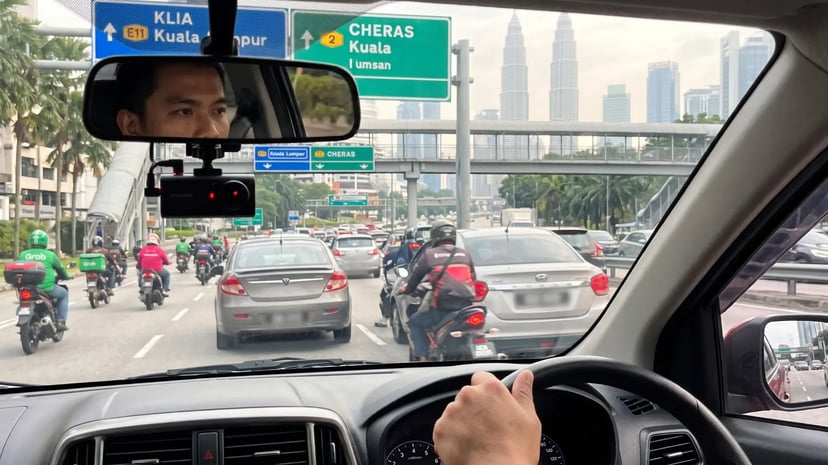
A dashcam is not generally a legal requirement for private cars in Malaysia, but having one can be extremely useful. It records what happens on the road, provides potential evidence after an accident and helps protect drivers against disputed claims. While you can drive without a dashcam, installing one is a practical precaution, especially if you frequently travel on busy roads or highways.
From sudden braking incidents to hit-and-run accidents, a dashcam can capture important moments that would otherwise depend on conflicting eyewitness accounts. But is it really worth spending money on one?
Table of Contents
Key takeaways
- Dashcams are not generally mandatory for private vehicles in Malaysia.
- Footage can help establish what happened during an accident or traffic dispute.
- A dashcam may support an insurance claim, but it does not guarantee approval.
- Video quality, storage reliability and installation position matter more than unnecessary extra features.
- A front-and-rear dashcam provides broader coverage than a front-facing camera alone.
Is a dashcam compulsory in Malaysia?
No. For ordinary private passenger cars, Malaysia does not generally require drivers to install a dashboard camera.
The Road Transport Act 1987 and relevant road traffic regulations govern vehicle use and road safety, but there is no general requirement for every private car to carry a dashcam.
Drivers should nevertheless ensure that any camera is installed securely and does not obstruct their view of the road.
For current vehicle regulations and official guidance, refer to the Road Transport Department Malaysia (JPJ).
Although a dashcam is optional for most private motorists, it can become particularly valuable when an accident occurs and the parties involved disagree about what happened.
Why should you install a dashcam?
There are several practical reasons why Malaysian drivers may benefit from installing a dashcam.
1. Record evidence during road accidents
Imagine driving through an intersection when another vehicle suddenly changes lanes and collides with your car. The other driver claims you caused the accident.
Without video footage, establishing what happened may depend on photographs, eyewitness statements, vehicle damage and other available evidence.
A dashcam can provide a visual record of the incident, including the vehicles' movements, traffic conditions and sequence of events.
2. Protect yourself against disputed accusations
Some accidents involve conflicting accounts of who was responsible. Others may involve allegations of dangerous driving or deliberately staged collisions.
Dashcam footage can help investigators and insurers assess these claims more objectively, although the recording must still be evaluated alongside other evidence.
3. Capture hit-and-run incidents
If another vehicle damages your car and leaves the scene, dashcam footage may help identify its appearance, direction of travel or registration number.
However, identification depends on the camera's resolution, lighting, angle and whether the relevant details were actually captured.
4. Record incidents while your car is parked
Some dashcams offer parking surveillance, which can record movement or impacts around a stationary vehicle.
This may be useful in shopping mall car parks, residential parking areas and other locations where minor collisions sometimes go unnoticed.
Parking surveillance usually requires a compatible power supply and suitable installation. Not every dashcam continues recording after the engine is switched off.
5. Encourage more responsible driving
Knowing that a journey is being recorded may encourage some drivers to pay closer attention to their driving habits.
Reviewing footage can also help drivers understand near misses and identify situations where they could have reacted more safely.
Can dashcam footage be used as evidence in Malaysia?
Yes. Dashcam footage can potentially be used as supporting evidence in Malaysian accident investigations, insurance disputes and legal proceedings.
However, having a video does not automatically mean it will be accepted as conclusive proof.
Electronic evidence may be subject to requirements under the Evidence Act 1950, including provisions relating to computer-generated documents.
Investigators, insurers or courts may consider whether the recording is authentic, relevant, complete and reliable.
What should you do with dashcam footage after an accident?
- Save the original recording as soon as it is safe to do so.
- Back up the file before the camera's loop recording overwrites it.
- Avoid editing or altering the original footage.
- Keep relevant recordings from before and after the incident.
- Provide the footage to the police or insurer when appropriate.
Expert tip: After an accident, preserve at least one unedited copy of the original video file, including any available timestamp and GPS information. Save it to a separate device or secure storage before continuing to use the memory card. This helps prevent important footage from being overwritten.
Remember that a dashcam records only what falls within its field of view. Footage may not capture blind spots, events behind the vehicle or everything that happened before an accident.
Can a dashcam help with car insurance claims?
Yes. Dashcam footage may help support a motor insurance claim by showing the circumstances surrounding an accident.
For example, footage might show another vehicle reversing into your car, changing lanes without sufficient clearance or failing to stop at a traffic signal.
Such recordings can help insurers investigate the incident and assess the available evidence.
However, a dashcam does not automatically determine fault, guarantee a successful claim or prevent disputes.
Insurers may still require a police report, accident photographs, supporting documents and other information.
Does installing a dashcam reduce your insurance premium?
Not necessarily. Malaysian motorists should not assume that installing a dashcam automatically qualifies them for a discount.
Premiums and available discounts depend on the insurer, policy terms, vehicle details and other underwriting factors.
Before renewing your policy, compare the coverage, excess, exclusions and additional benefits rather than choosing insurance based on price alone.
What features should you look for when buying a dashcam?
Not all dashcams provide the same recording quality or reliability. Before purchasing one, consider how and where you normally drive.
| Feature | Why it matters |
|---|---|
| 1080p or higher resolution | Helps capture clearer footage, although resolution alone does not guarantee readable number plates. |
| Night recording quality | Improves the usefulness of footage in low-light conditions. |
| Wide-angle lens | Captures more of the surrounding road, although excessive width can distort details. |
| Loop recording | Automatically replaces older, unprotected recordings when storage becomes full. |
| Impact detection | Can automatically protect certain recordings when a collision or sudden impact is detected. |
| Parking mode | May record incidents while the vehicle is parked, provided the camera has suitable power. |
| Front-and-rear recording | Provides additional coverage for incidents occurring behind the vehicle. |
| Heat resistance | Helps the device withstand high temperatures inside parked cars in Malaysia. |
Should you choose a front-only or front-and-rear dashcam?
A front-facing camera is a reasonable starting point for drivers who mainly want to record the road ahead.
However, a front-and-rear setup is worth considering if you frequently drive on highways, encounter heavy traffic or want additional evidence in rear-end collisions.
Whichever option you choose, prioritise reliable recording, good low-light performance and a memory card designed for frequent video writing.
Are there any disadvantages to using a dashcam?
Although dashcams offer useful benefits, they also have limitations.
1. Additional purchase and installation costs
Buying a camera, compatible memory card and optional installation accessories adds to vehicle ownership expenses.
Some advanced features may also require extra equipment or subscriptions.
2. Footage can be lost or overwritten
Most dashcams use loop recording, which means older footage may eventually be replaced.
A damaged memory card, power interruption or camera malfunction could also prevent an important incident from being recorded.
3. Poor installation may affect visibility
A camera mounted in the wrong position can obstruct the driver's view or create distractions.
Install the camera in a secure location that does not interfere with visibility, airbags or other vehicle safety equipment.
4. Privacy considerations
Dashcams may record pedestrians, passengers and other road users. Sharing recordings publicly can raise privacy and legal concerns, particularly where individuals or identifying details are visible.
Use footage responsibly and avoid uploading recordings simply to embarrass or expose other road users.
Common mistake: Many drivers install a dashcam and never check whether it is actually recording. A faulty memory card or incorrect setting could leave them without footage when an accident happens. Check the recording indicator regularly, review sample clips and replace failing storage cards promptly.
Is a dashcam really worth buying in Malaysia?
For many Malaysian drivers, yes. A dashcam is a worthwhile safety-related accessory because it can provide useful evidence when an unexpected road incident occurs.
It is especially worth considering if you commute daily, frequently use busy highways, drive long distances or regularly park in public areas.
Nevertheless, a dashcam is not a replacement for safe driving, appropriate motor insurance or proper accident reporting.
Drivers should treat it as an additional layer of protection rather than a guarantee against financial loss or legal disputes.
If your budget is limited, a reliable basic dashcam with clear recording and dependable storage may be more useful than an expensive model with features you rarely use.
Frequently Asked Questions
1. Is a dashcam mandatory in Malaysia?
No. Dashcams are not generally mandatory for ordinary private passenger cars in Malaysia, although drivers may choose to install them voluntarily.
2. Can dashcam footage be used as evidence in a Malaysian court?
Yes, dashcam footage may be admissible as electronic evidence, subject to applicable legal requirements and the court's assessment of its authenticity and relevance.
3. Can dashcam footage help prove who caused an accident?
Yes. It can help establish the sequence of events, but fault is determined by considering all relevant evidence rather than video footage alone.
4. Does a dashcam record when the car is switched off?
Some dashcams support parking mode, but continued recording generally requires a compatible power supply or battery system.
5. Is a front-and-rear dashcam better than a front-only camera?
A front-and-rear dashcam provides broader coverage and can be particularly useful for documenting rear-end collisions or incidents behind your vehicle.
6. Can a dashcam record number plates at night?
Some models can capture readable number plates at night, but results depend on lighting, motion, distance, camera settings and image quality.
7. Will installing a dashcam reduce my car insurance premium?
Not automatically. Any discount depends on the insurer and its current policy terms. Check directly with your insurance provider.
8. Can I report dangerous driving using dashcam footage?
Yes. Relevant footage may be submitted to the appropriate authorities, including through official reporting channels where available. Authorities will assess the evidence before deciding whether action is warranted.
9. Can a dashcam drain my car battery?
Yes. A dashcam operating continuously while parked can consume battery power. A suitable parking-mode installation with low-voltage protection can help reduce the risk.
10. Is it legal to share dashcam footage on social media in Malaysia?
Sharing footage is not automatically unlawful, but privacy, defamation and other legal considerations may apply. Avoid publishing unnecessary personal details or making unverified accusations.
Conclusion: A small device that could make a big difference
A dashcam may not be compulsory in Malaysia, but it can be a valuable investment for everyday drivers. From recording accidents to supporting insurance investigations, the footage can provide useful information when an unexpected incident occurs.
The most important thing is choosing a reliable camera, installing it correctly and making sure it continues recording properly.
Beyond installing a dashcam, keeping your vehicle properly insured is another important part of responsible car ownership. If your motor insurance renewal is approaching, Motorist Malaysia can help you explore and compare car insurance options so you can choose suitable coverage for your needs.
Compare your car insurance options with Motorist Malaysia and get started today.
Read More: MyKomuter50 RM50 Pass: Activate from November 16
I want to find the highest selling price for my car within 24 hours!
Download the Motorist App for a more convenient car ownership experience.


