How your driving style is secretly costing you RM2,400 a year, according to MIROS
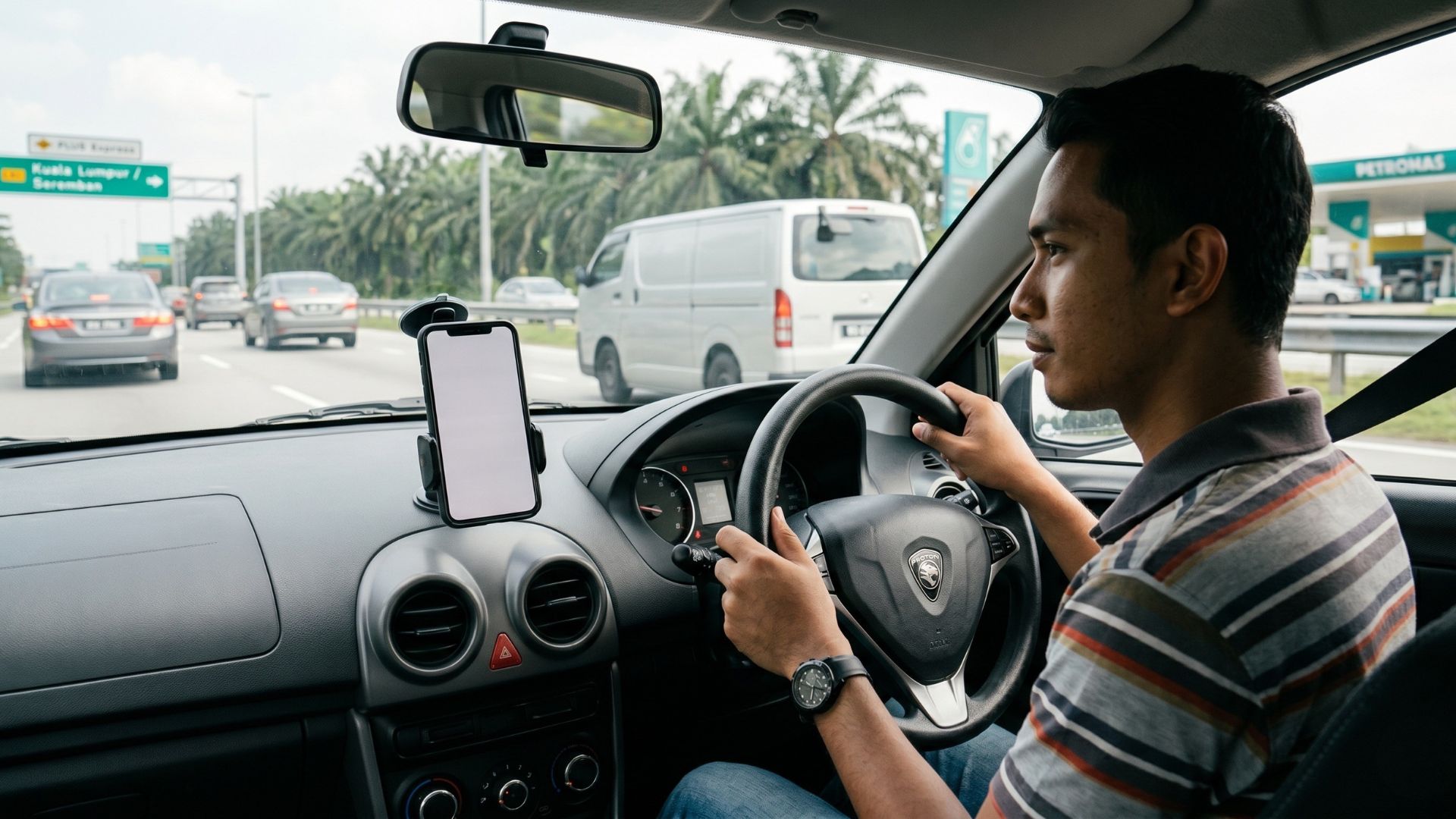
With unsubsidised RON95 now sitting at RM3.97 per litre as of April 2026, fuel costs have become one of the biggest recurring expenses for Malaysian drivers. Yet most motorists have no idea that the way they drive, not just how far they drive, is silently draining hundreds of ringgit from their wallets every single month.
According to the Malaysian Road Safety Research Institute (MIROS), simply changing your driving behaviour can save you between RM13 and RM204 per month, which works out to more than RM2,400 per year for those paying full market rates. No new car required. No expensive modifications needed.
Here is exactly how the numbers add up, which habits are costing you the most, and what you can start doing differently from tomorrow morning.
What is eco-driving and why does it matter in Malaysia?
Eco-driving is defined as a set of energy-efficient driving techniques that reduce fuel consumption without sacrificing travel time or safety. The approach focuses on smooth acceleration, consistent speeds, and anticipating traffic flow rather than reacting to it aggressively.
In Malaysia's context, eco-driving is especially relevant because the country's road infrastructure combines two of the most fuel-punishing environments possible: dense urban stop-and-go congestion in cities like Kuala Lumpur and Petaling Jaya, and high-speed highway stretches on the PLUS, ELITE, and DUKE networks where drivers routinely exceed 110km/h.
Both environments reward calm, deliberate driving habits. Both environments also punish aggression with disproportionately high fuel consumption.
The MIROS savings breakdown: how much can you actually save?
MIROS Director-General Associate Professor Dr. Siti Zaharah Ishak presented data based on a typical light passenger vehicle, specifically a compact sedan such as the Proton Saga, which consumes approximately 6.6 litres per 100km and travels between 1,000km and 2,000km per month.
The monthly savings figures, depending on fuel type, are as follows.
For drivers still paying subsidised RON95 at RM1.99 per litre, adopting eco-driving consistently can reduce monthly fuel costs by between RM13 and RM105. For drivers paying full unsubsidised market rates, currently at RM3.97 per litre as of April 2026, the monthly savings range from RM26 to RM204.
At the upper end, that is a saving of over RM2,400 per year achieved purely through behavioural change at the wheel.
Three common driving habits that destroy your fuel economy
Understanding where fuel is being wasted is the first step toward stopping it. Data from the United States Department of Energy, widely referenced in road safety research including by MIROS, identifies three driving patterns that account for the majority of unnecessary fuel consumption.
Aggressive acceleration and late braking. The habit of flooring the accelerator only to brake hard as you approach a traffic light or slower vehicle is one of the most wasteful things a driver can do. This pattern reduces fuel efficiency by 10 to 40 percent in heavy traffic conditions. Every kilogram of kinetic energy your car builds through acceleration is essentially discarded as heat the moment you apply the brakes.
Excessive speed on highways. Aerodynamic drag increases exponentially with speed. Frequent and aggressive speed changes on expressways, such as tailgating at 130km/h and then backing off suddenly, reduce fuel efficiency by 15 to 30 percent at high speeds. Maintaining a steady cruising speed, even if it is slightly lower than your maximum comfortable speed, delivers meaningfully better fuel economy across a long journey.
Unnecessary idling. Leaving your engine running while stationary, whether waiting for a passenger outside a shopping mall or sitting in a fast food drive-through for an extended period, consumes fuel for zero forward progress. Modern engines warm up quickly and do not benefit from prolonged idling the way older carburettor engines did.
The simplest change you can make starting tomorrow
If you want one immediate, low-effort adjustment with a measurable impact, MIROS recommends reducing your cruising speed on highways by just 8km/h to 16km/h. This single change alone produces a fuel saving of 7 to 14 percent per journey.
To put that in practical terms: if you typically cruise at 120km/h on the PLUS highway, dropping to around 110km/h can reduce your fuel consumption on that stretch by nearly one-seventh. Over a month of regular highway commuting or interstate travel, the savings accumulate into a figure that is genuinely meaningful.
Smoother driving also has a secondary benefit that MIROS explicitly highlights: it reduces your risk of losing vehicle control and significantly lowers the probability of rear-end collisions by giving you more reaction time to respond to hazards ahead.
Does eco-driving apply to electric vehicles?
Yes, and the principle transfers almost directly. The United States Environmental Protection Agency (EPA) found that maintaining consistent speeds and managing air-conditioning usage extends EV battery range significantly. For Malaysian EV owners, where public charging infrastructure is still expanding and range anxiety remains a real concern, eco-driving habits translate directly into longer distances between charges and lower electricity costs over time.
How to start practising eco-driving in Malaysia
The core techniques require no special equipment and can be adopted immediately.
Accelerate gradually from a standstill rather than building speed as fast as possible. Look further ahead in traffic so that you can coast to a natural deceleration instead of braking hard. On highways, set a consistent speed using cruise control where available, and avoid weaving between lanes. Turn off the engine if you anticipate remaining stationary for more than 60 seconds. Keep tyres inflated to the manufacturer's recommended pressure, as underinflated tyres increase rolling resistance and fuel consumption.
None of these techniques will add time to your journey. In most real-world Malaysian traffic conditions, the driver who accelerates hard from every light arrives at the same time as the driver who builds speed gradually, because both reach the same queue of vehicles at the next red light or bottleneck.
Frequently asked questions
1. How much can eco-driving save a Malaysian driver per month?
According to MIROS, savings range from RM13 to RM105 per month for drivers paying subsidised RON95 at RM1.99 per litre, and from RM26 to RM204 per month for those paying unsubsidised rates. The estimate is based on a vehicle travelling 1,000km to 2,000km per month with a fuel consumption of 6.6L per 100km.
2. Do I need a new or more efficient car to benefit from eco-driving?
No. Eco-driving is about behaviour, not hardware. The savings identified by MIROS apply to standard light passenger vehicles such as a Proton Saga. Any driver of any reasonably maintained petrol car can achieve meaningful savings through technique alone.
3. What is the single most effective eco-driving change I can make?
Reducing your highway cruising speed by 8km/h to 16km/h is the simplest and most immediately effective change, producing fuel savings of 7 to 14 percent on highway journeys according to MIROS data.
4. Does aggressive driving only waste fuel, or does it cause other problems?
Aggressive driving increases the risk of accidents by reducing reaction time and increasing braking distances. MIROS specifically notes that smoother driving lowers the risk of losing vehicle control and reduces rear-end collision risk. It also reduces wear on brakes, tyres, and the drivetrain, lowering maintenance costs.
5. Is eco-driving relevant for EV owners in Malaysia?
Yes. The US EPA found that consistent speeds and controlled air-conditioning usage extend battery range in electric vehicles. Malaysian EV drivers can apply the same principles to maximise range and reduce charging frequency.
6. What is MIROS and why should I trust their data?
MIROS is the Malaysian Road Safety Research Institute, a government-linked research body under the Ministry of Transport Malaysia. It conducts research on road safety, vehicle standards, and driver behaviour, and its findings are used to inform national road safety policy. The fuel savings figures cited here were presented by MIROS Director-General Associate Professor Dr. Siti Zaharah Ishak.
Take control of your car costs with Motorist Malaysia
Changing your driving habits is a powerful first step, but managing your total vehicle ownership cost requires the right tools and information across every aspect of car ownership.
Motorist Malaysia is the country's most comprehensive car ownership platform, giving you access to real-time RON95 and RON97 fuel prices, road tax and insurance renewal reminders, workshop locator tools, and a used car valuation service all in one place. Whether you are tracking your fuel spending, comparing insurance quotes before renewal, or planning your next vehicle purchase, Motorist Malaysia puts the information you need directly in your hands.
Visit Motorist Malaysia today to start managing your car smarter, and keep more of your money where it belongs: in your pocket.
Read More: Malaysia traffic crisis as new car sales surge in 2026
I want to find the highest selling price for my car within 24 hours!
Download the Motorist App now. Designed by drivers for drivers, this all-in-one app lets you receive the latest traffic updates, gives you access to live traffic cameras, and helps you manage vehicle related matters.