AES camera locations across Malaysia 2026 (highway by highway)
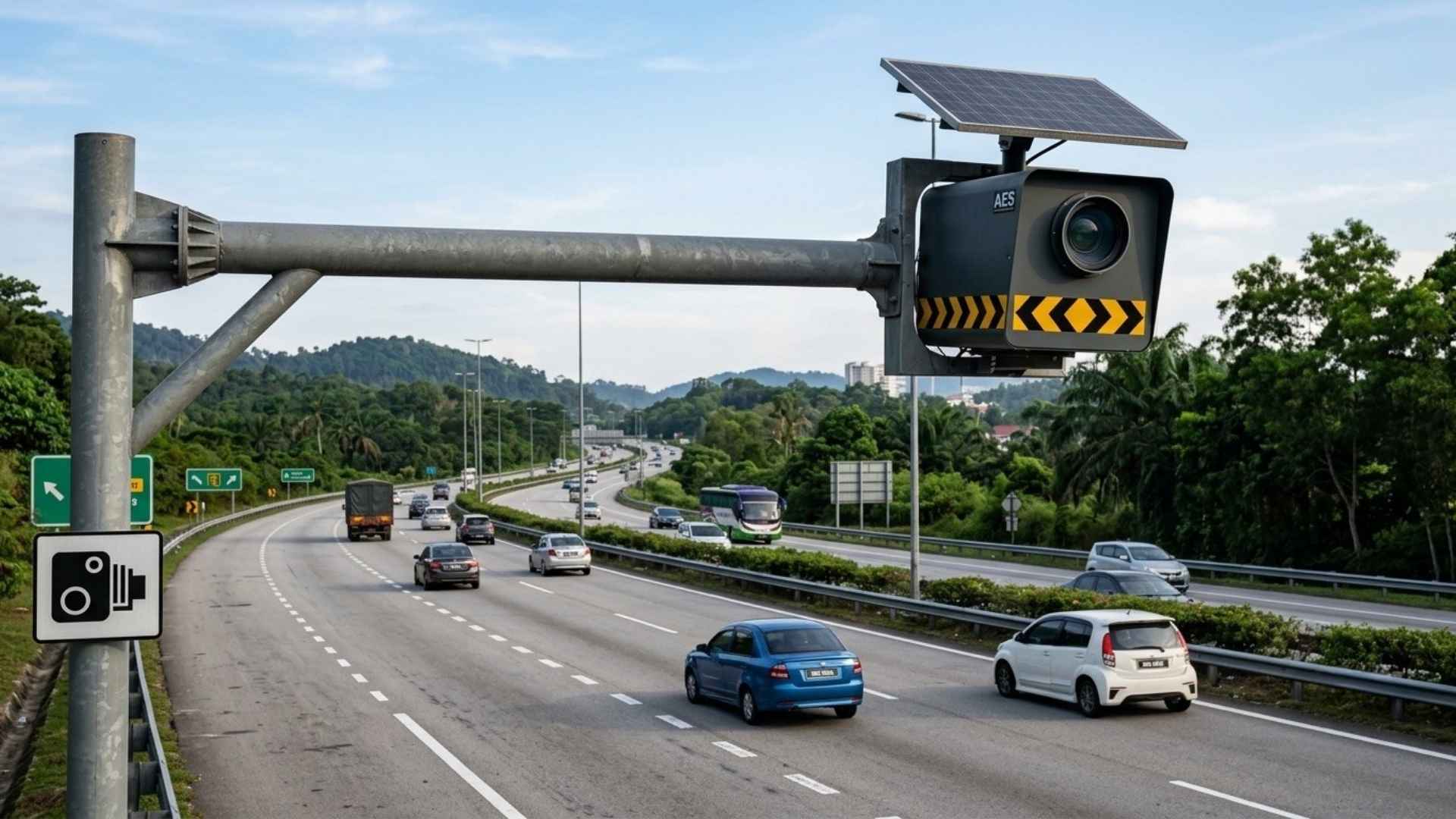
Driving in Malaysia has undergone a significant digital transformation by the year 2026. With the full integration of the Automated Awareness Safety System (AWAS) and the maturity of digital vehicle records, road enforcement is now more precise and automated than ever. For the modern motorist, staying informed about Automated Enforcement System (AES) camera locations is not just about avoiding RM300 fines; it is about understanding the safety ecosystem designed to protect lives on our highways.
The Ministry of Transport and the Road Transport Department (JPJ) have expanded the AES network significantly over the last two years. These cameras are strategically placed in accident blackspots, which are areas with a high statistical probability of fatal collisions. In 2026, the technology has evolved to include AI-powered sensors that can detect multiple violations simultaneously, including speeding, red-light jumping, and illegal emergency lane usage.
At Motorist Malaysia, we believe that an informed driver is a safe driver. This guide provides the most up-to-date list of AES camera locations across all major highways and federal roads in Malaysia.
Quick Reference for Top AES Locations 2026
If you are currently on the road and need a fast check, here are the most critical AES KM markers on the North-South Expressway (PLUS) that every driver should know:
KM 151.4: North-South Expressway (Pagoh, Southbound)
KM 299.9: North-South Expressway (Kampar, Northbound)
KM 375.9: North-South Expressway (Slim River, Northbound)
KM 96.3: North-South Expressway (Kuala Muda, Northbound)
KM 204.6: North-South Expressway (Taiping, Northbound)
KM 184.2: North-South Expressway (Jasin, Southbound)
KM 251.4: North-South Expressway (Senawang, Southbound)
The Evolution of AWAS and KEJARA in 2026
By 2026, the AWAS system has become a fully automated network. It integrates physical AES cameras with the KEJARA demerit point system. This integration ensures that habitual offenders are identified and penalized consistently, regardless of whether they are driving a luxury sedan or a compact city car.
How the Fine System Works
When an AES camera captures a violation, the data is sent in real-time to the JPJ cloud headquarters. Within minutes, a notification is sent to the vehicle owner via the MyJPJ app or the Motorist App. The standard fine remains at RM300. In 2026, the government has removed the option for discounts on AES summonses during "sales" or "discount periods" to maintain the deterrent effect of the system.
The Demerit Point Structure
The KEJARA system is the backbone of Malaysian road discipline. Demerit points are awarded based on the severity of the speeding violation:
Speeding 1km/h to 25km/h over the limit: 2 to 4 points.
Speeding 25km/h to 40km/h over the limit: 6 to 8 points.
Speeding more than 40km/h over the limit: 10 points and an immediate court referral.
Running a Red Light: 4 to 6 points.
Accumulating 20 points for the first time results in a formal warning. Subsequent points lead to the suspension of your driving license for a period of 6 to 12 months.
Master Table of AES Camera Locations 2026
| Highway or Road Name | Specific Location or KM Marker | Type of Violation | State |
|---|---|---|---|
| North-South Expressway (E1) | KM 96.3 (Kuala Muda) | Speeding | Kedah |
| North-South Expressway (E1) | KM 161.0 (Bukit Tambun) | Speeding | Penang |
| North-South Expressway (E1) | KM 204.6 (Taiping) | Speeding | Perak |
| North-South Expressway (E1) | KM 299.9 (Kampar) | Speeding | Perak |
| North-South Expressway (E1) | KM 375.9 (Slim River) | Speeding | Perak |
| North-South Expressway (E2) | KM 151.4 (Pagoh) | Speeding | Johor |
| North-South Expressway (E2) | KM 184.2 (Jasin) | Speeding | Melaka |
| North-South Expressway (E2) | KM 214.4 (Alor Gajah) | Speeding | Melaka |
| North-South Expressway (E2) | KM 251.4 (Senawang) | Speeding | Negeri Sembilan |
| East Coast Expressway (E8) | KM 256.1 (Maran) | Speeding | Pahang |
| Lebuhraya ELITE (E6) | KM 28.4 (KLIA) | Speeding | Selangor |
| Lebuhraya KESAS (E5) | KM 33.4 (Subang Jaya) | Speeding | Selangor |
| Lebuhraya MEX (E20) | KM 11.6 (Putrajaya) | Speeding | W. Persekutuan |
| Lebuhraya SKVE (E26) | KM 10.2 (Saujana Putra) | Speeding | Selangor |
| Jalan Klang Lama | Intersection of Kuchai Lama | Red Light | Kuala Lumpur |
| Jalan Ipoh | Near Sentul Intersection | Red Light | Kuala Lumpur |
| Jalan Skudai | Near Senai | Red Light | Johor |
| Jalan Biru | Near Pasir Gudang | Red Light | Johor |
Detailed Regional Breakdown
1. The Northern Stretch (Perlis, Kedah, Penang, Perak)
The northern region of the PLUS highway (E1) is notorious for its hilly terrain, especially around the Gua Tempurung area. JPJ has installed multiple cameras here to ensure drivers adhere to the lower speed limits required for steep descents.
Kampar (KM 299.9): This is one of the most active cameras in the country. It captures vehicles descending from the Ipoh hills toward Kuala Lumpur.
Taiping (KM 204.6): A critical zone for those traveling between Penang and Ipoh.
2. The Klang Valley and Urban Centers
In Kuala Lumpur and Selangor, the focus of the AES system in 2026 has shifted toward red-light violations and emergency lane abuse. Highways like KESAS and MEX have seen a 25 percent increase in camera density to manage high-volume urban traffic.
MEX Highway (KM 11.6): Monitors commuters traveling between Kuala Lumpur city center and Putrajaya.
Subang Jaya (KESAS): Monitors one of the busiest industrial and residential arteries in the country.
3. The Southern Stretch (Negeri Sembilan, Melaka, Johor)
The E2 highway is characterized by long, straight sections that can often lead to driver fatigue or unintentional speeding.
Pagoh (KM 151.4): This camera is a primary enforcement point for traffic moving toward the Johor state border.
Senawang (KM 251.4): Strategically placed to monitor traffic merging from the Seremban area.
4. The East Coast Expressway (LPT 1 and LPT 2)
The LPT route is prone to unpredictable weather and wildlife crossings. AES cameras here are designed to keep speeds consistent to prevent high-impact collisions.
Maran (KM 256.1): A high-priority zone on the LPT1 stretch.
Kuala Terengganu: Cameras near the end of the LPT2 stretch focus on the transition from highway to federal road speeds.
The Technology of 2026 (4K, AI, and Infrared)
In 2026, the AES hardware has been completely overhauled. The old film-based or low-resolution digital cameras have been replaced by state-of-the-art AI sensors.
AI Driver Behavior Analysis
Modern AES cameras in Malaysia can now identify more than just speed. The AI algorithms are capable of detecting:
Seatbelt Violations: High-definition sensors can see through tinted windshields to verify if occupants are buckled.
Mobile Phone Usage: AI can detect the posture of a driver holding a phone to their ear or looking down at their lap.
Illegal U-Turns: Cameras at traffic lights now track vehicle paths to penalize dangerous maneuvers.
All-Weather Infrared Sensors
One of the major upgrades in 2026 is the use of non-visible infrared flashes. In the past, a bright camera flash at night could startle drivers. Today, infrared technology allows the system to capture crystal-clear 4K images in total darkness or during a heavy tropical monsoon without any visible light.
How the Motorist App Helps You Manage Summonses
In 2026, the last thing you want is a surprise summons when you are trying to renew your road tax or sell your car. Outstanding AES summonses will "blacklist" your vehicle, preventing any JPJ transactions.
Real-Time Alerts
By registering your vehicle on the Motorist App, you gain access to a real-time dashboard. The moment an AES camera logs a violation against your plate, you will receive a push notification. This allow you to:
Avoid Late Fees: Settle the fine before it escalates or leads to a court summons.
Verify the Violation: View the high-resolution image captured by the camera to ensure there was no mistake.
Monitor Demerit Points: Track your KEJARA balance to ensure you stay below the suspension threshold.
Selling a Blacklisted Car
If you are planning to sell your car, Motorist Malaysia can help you identify and clear any outstanding AES summonses. A car with an active blacklist cannot undergo the Puspakom B5 inspection or the JPJ Tukar Nama process. Our platform helps you resolve these issues so your car sale can proceed smoothly.
5 Pro-Tips to Avoid AES Fines in 2026
Set Your Speed Limiter: Most modern cars in Malaysia (Perodua, Proton, Honda, Toyota) now come with a built-in speed limiter or cruise control. On highways like PLUS, set your cruise control to 110 km/h. This prevents your speed from creeping up on downhill sections.
Understand the Signage: JPJ is required by law to place warning signs (Zon Operasi Kamera) at least 1km to 3km before a fixed camera. In 2026, these signs are bright orange and highly visible. If you see one, check your speedometer immediately.
Stay in the Left Lane: If you are feeling tired or are unsure of the local speed limit (which can drop to 90 km/h in certain zones), stay in the left lane. AES cameras focus most heavily on the fast-moving right lane.
Use Community GPS Apps: Ensure your Waze or Google Maps is updated. In 2026, the Malaysian driving community is very active in reporting mobile AES units (mobile cameras used by JPJ officers in non-fixed locations).
Perform Monthly Audits: Even the best drivers can make a mistake. Check the Motorist App once a month to ensure your record is clean. This is especially important after a Balik Kampung season.
Frequently Asked Questions (FAQs) About AES 2026
1. Is there a "buffer" for speeding (e.g., 115 km/h in a 110 km/h zone)?
Officially, no. The speed limit is a hard limit. In 2026, the AI sensors are calibrated to be extremely precise. While there is a tiny technical margin for speedometer error, it is not worth the risk.
2. Can an AES camera detect an expired road tax?
Yes. By 2026, the AES system is linked to the digital e-LKM database. If you are caught speeding, the system automatically checks your road tax and insurance status. If they are expired, you will receive multiple summonses in one go.
3. What happens if I was not the one driving my car?
The summons is sent to the registered owner. You have a window of time to declare the actual driver via the MyJPJ portal or a JPJ office. If you do not declare another driver, you will be held responsible for the fine and the demerit points.
4. Are AES cameras active during heavy rain?
Yes. The 2026 infrared sensors are designed to penetrate heavy rain and mist. Weather conditions no longer hide violations from the system.
5. Can I appeal an AES fine?
You can appeal if you have a valid emergency (e.g., a medical emergency) or if you can prove the camera captured the wrong vehicle. You must usually attend a JPJ branch or a court hearing to present your evidence.
6. Do AES cameras monitor the emergency lane?
Absolutely. Using the emergency lane to bypass traffic is a major offense in 2026 and carries one of the highest demerit point penalties in the KEJARA system.
7. How do I pay an AES fine in 2026?
You can pay via the Motorist App, the MyJPJ app, or at any JPJ kiosk. Cashless payment is now the standard across all platforms.
8. Will an AES summons affect my car insurance NCD?
In 2026, insurance companies have begun implementing "Behavior-Based Pricing." While one ticket might not affect your NCD (No Claims Discount), a high number of demerit points can lead to a "loading" fee or a higher premium during your next renewal.
9. Are there AES cameras in Sabah and Sarawak?
Yes. With the completion of the Pan Borneo Highway, AES cameras have been installed at key accident-prone stretches near Kuching, Miri, and Kota Kinabalu.
10. How long does it take for a summons to appear in the system?
In 2026, the system is nearly instantaneous. You will typically see the summons on your Motorist App dashboard within 24 to 48 hours of the violation.
Driving into a Safer Future
The expansion of the AES camera network in Malaysia for 2026 is a clear signal that road safety is a top national priority. While it can be frustrating to receive a ticket, the ultimate goal of these cameras is to ensure that every Malaysian motorist returns home safely.
By understanding the locations of these cameras, respecting the speed limits, and using digital tools like the Motorist App to stay informed, you can enjoy the beautiful highways of Malaysia without fear of fines or demerit points.
Whether you are driving to Penang for a weekend food trip or commuting across the Klang Valley, remember that the best way to avoid an AES summons is to drive with awareness and care.
Read More: Used BMW 3 Series vs. New Honda Civic FE: status vs. peace of mind for RM160k
I want to find the highest selling price for my car within 24 hours!
Download the Motorist App now. Designed by drivers for drivers, this all-in-one app lets you receive the latest traffic updates, gives you access to live traffic cameras, and helps you manage vehicle related matters.