The exhaust pipe myth: How deep can your car really drive through floodwater?
The exhaust pipe myth: how deep can your car really drive through floodwater?
Many Malaysian drivers believe that water only becomes dangerous when it reaches the exhaust pipe. This myth has been passed around for decades and continues to mislead motorists during flash floods. In reality, the exhaust pipe is rarely the component that determines whether your car survives driving through water.
The biggest danger is not water entering the exhaust system. It is water being sucked into the engine through the air intake. Once that happens, the engine can suffer hydrolock, one of the most expensive forms of engine damage that can occur in seconds.
Understanding how much water your specific vehicle can safely wade through can help you avoid thousands of ringgit in repair costs.
Why the exhaust pipe is not the problem
Modern vehicle exhaust systems continuously push gases outward when the engine is running. This pressure prevents water from easily flowing back into the engine through the tailpipe. Even if water temporarily enters the exhaust system, it is usually not catastrophic while the engine remains running.
The real issue is the location of the engine's air intake. Every car is designed differently, and manufacturers position the air intake at varying heights depending on the vehicle type and engine layout.
If floodwater reaches the air intake, the engine may inhale water instead of air. Unlike air, water cannot be compressed. This can bend connecting rods, crack engine components, and completely destroy the engine almost instantly.
This is why two vehicles of similar size can have very different floodwater capabilities.
How deep can different vehicle types safely drive through water?
There is no universal water depth that applies to every vehicle. Safe wading depth depends on the car's ground clearance, air intake position, electrical components, and manufacturer specifications.
For most sedans and hatchbacks, water should ideally stay below the centre of the wheel. In practical terms, anything above approximately 15 to 20 centimetres should be approached with extreme caution. Once water approaches the lower edge of the front bumper, the risk of engine damage increases significantly.
Compact SUVs generally provide better ground clearance and higher-mounted air intakes. Many can safely handle shallow flooding of around 20 to 30 centimetres under ideal conditions. However, this does not mean they are designed for floodwater driving unless the manufacturer explicitly states their wading capability.
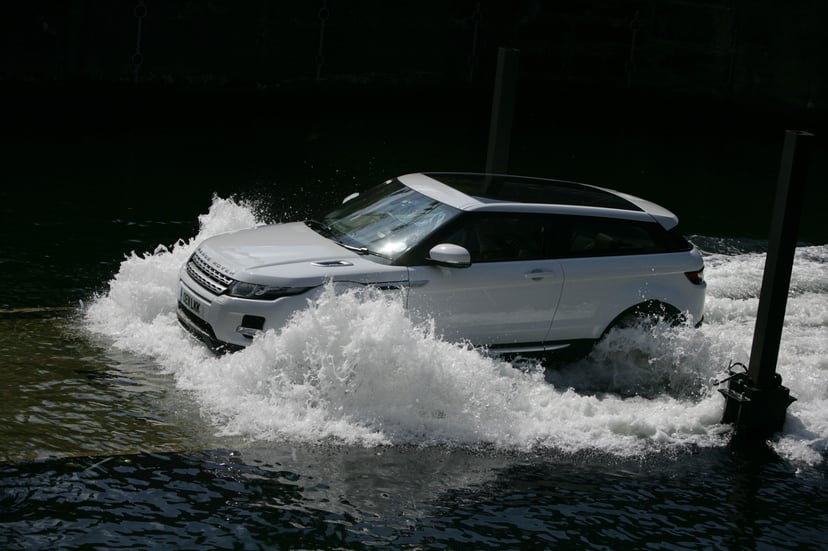
Larger SUVs and pickup trucks typically offer greater floodwater tolerance. Some off-road-oriented models are engineered with official wading depth ratings exceeding 70 centimetres. Vehicles designed for serious off-road use often include waterproofed electrical systems and elevated air intake designs that improve their flood-driving capability.
The safest rule is to never assume that an SUV is automatically flood-proof. Many urban SUVs are designed primarily for city driving and may not perform significantly better than a sedan in deep water.
Manufacturer wading depth matters
Luxury and off-road vehicle manufacturers often publish official wading depth specifications. These figures are determined through controlled testing and represent the maximum water depth the vehicle can safely navigate under specific conditions.
Vehicles that advertise official wading depths are equipped with engineering features that support those capabilities. Simply having high ground clearance is not enough to guarantee floodwater performance.
If your vehicle's manufacturer does not publish an official wading depth, it is best to remain conservative and avoid driving through standing water whenever possible.
Water movement makes floods more dangerous
Depth is not the only factor drivers should consider. Moving water is significantly more dangerous than stationary water.
Just 30 centimetres of flowing water can generate enough force to affect vehicle stability. Floodwater may also conceal potholes, open drains, road debris, or damaged surfaces that are impossible to see from the driver's seat.
Even shallow floodwater can become hazardous if currents are strong or visibility is poor.
If you cannot accurately determine the water's depth or road conditions, the safest decision is to turn around and find an alternative route.
Signs you should never enter floodwater
If other vehicles are stalled ahead, avoid entering the flooded section of the road. If water levels are rising rapidly or are approaching your bumper height, do not proceed.
Drivers should also avoid entering floodwater at speed. Creating a bow wave may temporarily lower water levels around the engine bay, but excessive speed can push water into sensitive components and reduce vehicle control.
When in doubt, waiting a few minutes or choosing another route is always cheaper than replacing an engine.
What should you do if your car stalls in water?
If your vehicle stalls while driving through floodwater, do not attempt to restart the engine.
Repeatedly pressing the ignition button or turning the key may worsen engine damage if water has entered the cylinders. Instead, switch off the electrical system if it is safe to do so and seek professional assistance immediately.
Many cases of catastrophic engine failure occur because drivers unknowingly attempt to restart a hydrolocked engine.
Having the vehicle professionally inspected before restarting can potentially save thousands of ringgit in repair costs.
The truth about floodwater driving
The exhaust pipe myth continues because it sounds logical, but modern engines are far more vulnerable at their air intake than their tailpipe. The maximum water depth your car can safely handle depends on its engineering, not simply its size or ride height.
Sedans, SUVs, and pickup trucks all have different limitations. Understanding those limits and respecting manufacturer specifications is essential, especially during Malaysia's increasingly unpredictable weather conditions.
The safest floodwater is the one you never drive through.
FAQ
Is water entering the exhaust pipe enough to destroy an engine?
No. While water entering the exhaust system is not ideal, it is usually not the primary cause of engine failure. Water entering the air intake and causing hydrolock is far more dangerous.
How much floodwater can a sedan safely handle?
Most sedans should avoid water deeper than approximately 15 to 20 centimetres. Drivers should remain cautious even at lower depths if the water is moving or visibility is poor.
Are SUVs safe to drive through floods?
Not all SUVs are designed for floodwater driving. Their capabilities vary depending on manufacturer specifications, ground clearance, and air intake placement.
Can I restart my car if it stalls in floodwater?
No. Attempting to restart the engine can worsen damage if water has entered the combustion chamber. Professional inspection is recommended before restarting.
Does higher ground clearance guarantee better flood performance?
No. Ground clearance helps, but the air intake position, electrical system protection, and official manufacturer wading depth are equally important factors.
Flood damage can happen in seconds, but staying informed can save you from costly repairs and unnecessary stress. Whether you're buying a new car, comparing vehicle specifications, or looking for expert automotive advice, Motorist Malaysia is here to help.
Visit Motorist Malaysia for trusted car ownership insights, vehicle services, insurance renewals, road tax assistance, and the latest automotive news tailored for Malaysian drivers. Make smarter decisions before you get behind the wheel.
Read More: That small oil leak could cost you a better used-car offer
I want to find the highest selling price for my car within 24 hours!
Download the Motorist App now. Designed by drivers for drivers, this all-in-one app lets you receive the latest traffic updates, gives you access to live traffic cameras, and helps you manage vehicle related matters.