The Motorist Guide on Puspakom Inspection Malaysia 2026: B2, B5 & GI check explained
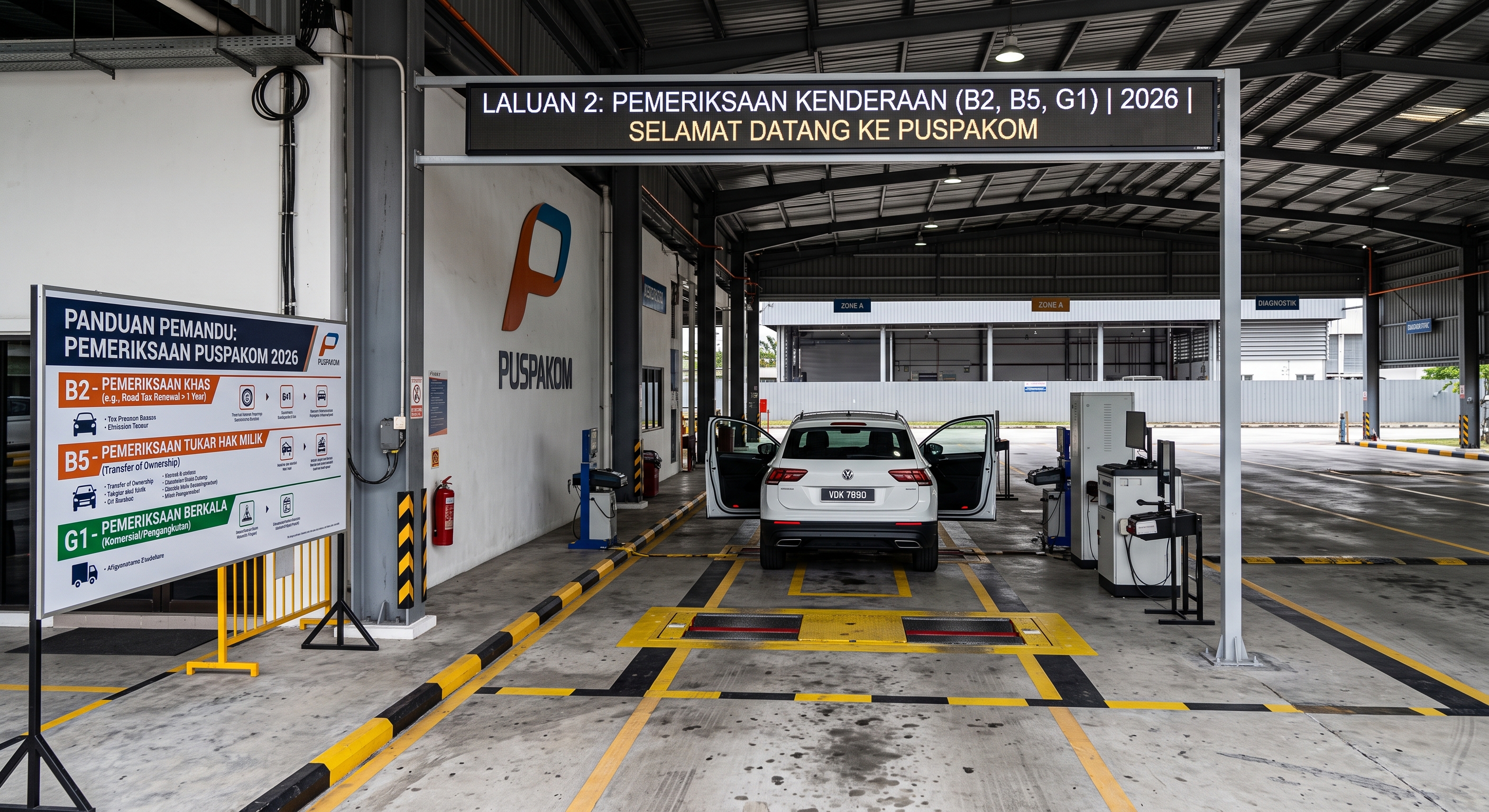
If you have ever tried to buy a used car, install a bodykit, or switch your Grab account from personal to e-hailing use, you have probably run into the word "Puspakom" somewhere along the way. For many Malaysian car owners, it is one of those bureaucratic steps that feels mysterious until you actually need it and then suddenly it is standing between you and your new car's registration papers. This guide breaks down what Puspakom inspections actually involve, the common inspection codes like B2, B5, and GI check, and how to get through the process with minimum stress.
What Is Puspakom and Why Does It Matter
Puspakom Sdn Bhd is the company appointed to carry out vehicle inspections on behalf of the Road Transport Department (JPJ) in Malaysia. Think of it as the official checkpoint that verifies a vehicle is roadworthy, correctly identified, and matches what is recorded in JPJ's system before certain transactions can go through. Without a valid Puspakom inspection report, JPJ will not process things like an ownership transfer or approve certain modifications on your vehicle registration card.
Puspakom operates inspection centres across the country, from major branches in the Klang Valley to smaller centres in most towns, and inspects everything from motorcycles and private cars to commercial vehicles and heavy machinery. For the average car owner, though, the inspections that matter most revolve around buying and selling cars, keeping modifications legal, and making sure your vehicle's paperwork stays accurate over its lifetime.
When You Actually Need a Puspakom Inspection
There are a handful of common situations where a Puspakom inspection becomes unavoidable. The most frequent is a change of vehicle ownership — whenever a car is sold and the registration needs to move from one person's name to another, JPJ typically requires an inspection to confirm the vehicle's condition and identity before the transfer is approved. Modifications are another big one: if you have changed your car's engine, chassis, colour, or made other alterations that differ from what is on the registration card, you will usually need to get it inspected and the changes reflected officially, rather than leaving your paperwork out of sync with the actual car.
Beyond that, Puspakom inspections come up for vehicles going into e-hailing or commercial use, since converting a private car for use with services like Grab often requires a vehicle inspection as part of the PSV or e-hailing registration process. Imported vehicles, whether brought in personally or through an approved permit, generally go through inspection as part of the registration process in Malaysia. Older private vehicles may also be required to undergo periodic inspections once they pass a certain age, and vehicles involved in accidents or insurance claims sometimes need an inspection before they can be back on the road or before ownership changes hands. If you are ever unsure whether your situation requires one, it is worth checking directly with Puspakom or JPJ rather than guessing, since requirements can vary by vehicle type and use case.
B2, B5, GI Check and Other Inspection Codes, Explained Simply
This is where most people get confused, because Puspakom uses a system of inspection codes rather than plain descriptions, and these codes tend to show up on booking portals and invoices without much explanation. Here is a general, plain-English idea of what the more commonly mentioned ones refer to though it is worth stressing upfront that exact codes, scopes, and requirements are set by Puspakom and JPJ, can be updated over time, and should always be confirmed on Puspakom's official channels before you rely on them.
B2 inspection is generally associated with ownership transfer cases, essentially a roadworthiness and identity check to confirm the vehicle is fit to be transferred to a new owner. This is the one most buyers and sellers of used cars will encounter, since it is typically part of completing a sale.
B5 inspection generally relates to vehicles that have been modified or altered in some way, where Puspakom checks the changes against safety and compliance standards before the vehicle's details are updated in the system. If you have swapped an engine, changed the body structure, or made other significant alterations, this is the category that usually applies.
GI check, short for General Inspection, is a broader term that can come up in different contexts, including situations like verifying a vehicle's identity or condition for administrative purposes such as certain types of name changes or checks requested by other authorities. Because "general inspection" can mean different things depending on the situation, it is best to ask Puspakom or check their booking system for the specific requirement that applies to your case.
There are other codes too for instance, inspections for lorries and heavy commercial vehicles fall under their own separate categories, and PSV or e-hailing conversions have their own designated inspection type. Rather than memorising every code, the more reliable approach is to identify what you are trying to accomplish (selling a car, registering a modification, converting to e-hailing, and so on) and then confirm with Puspakom which inspection type applies, since their categorisation is occasionally revised.
How to Book a Puspakom Appointment
Puspakom offers a few ways to book an inspection slot, and using one in advance will save you a lot of waiting around. The most convenient option for most people is the official Puspakom online booking portal, where you can select your preferred branch, choose the type of inspection you need, and pick an available date and time slot. Puspakom also has a mobile app that mirrors much of what the website offers, which some users find easier to manage on the go, especially for checking available slots or tracking booking status.
If online booking is not accessible to you, or your branch allows it, walk-in inspections are still an option at many centres, though be prepared for longer waiting times, particularly at busier branches in the Klang Valley or during peak periods like school holidays and year-end. Booking online in advance, even a few days ahead, is generally the smoother route, and it lets you choose a branch and time that fits your schedule rather than being at the mercy of queue numbers.
What Documents to Bring
Requirements can differ slightly depending on the inspection type, but there is a general set of documents that covers most situations. Bring your original identification card or passport, the vehicle's registration card (commonly known as the geran), and any relevant sale and purchase documents if the inspection relates to an ownership transfer. If your visit concerns a modification, having supporting documents for the parts or changes made, such as invoices or JPJ approval letters where applicable, can help move things along.
A short checklist to keep in mind before you head to the centre:
- Identification card or passport (original)
- Vehicle registration card (geran)
- Sale and purchase agreement or transfer-related documents, if applicable
- Any modification or parts documentation, if relevant
- Your booking confirmation, if you booked online
It is always a good idea to double-check the exact document list for your specific inspection type on Puspakom's website or by calling ahead, since missing paperwork is one of the most common reasons people get turned away or have to make a second trip.
What Happens During the Inspection and What If the Vehicle Fails
Once you arrive at the centre with your vehicle and documents, staff will typically verify your paperwork first before directing you to the inspection bay. From there, the vehicle usually goes through a series of checks that can include the chassis and engine number verification, a visual and mechanical roadworthiness check covering things like brakes, lights, tyres, and steering, and an emissions check where applicable. The overall process, from document verification to the physical inspection, usually takes a while depending on how busy the branch is, so it helps to set aside a reasonable chunk of your day rather than assuming it will be quick.
If your vehicle does not pass, Puspakom will generally issue a report outlining the specific faults or issues found. The usual next step is to get those issues fixed through a workshop and then return for a re-inspection, which may or may not incur an additional fee depending on the circumstances. It is worth asking the branch staff directly what the re-inspection process involves for your situation, since this can vary. Getting minor maintenance items sorted before your appointment, such as checking your lights, tyre tread, and brake condition, can save you an entire extra trip.
Frequently Asked Questions
1. What is a Puspakom inspection used for?
Puspakom inspections are used to verify a vehicle's roadworthiness, identity, and compliance before certain transactions or changes can be processed by JPJ. Common reasons include transferring ownership, registering modifications, converting a vehicle for e-hailing use, and registering imported vehicles.
2. What's the difference between B2 and B5 inspections?
In general terms, B2 is associated with ownership transfer cases, checking that a vehicle is roadworthy and correctly identified before it changes hands. B5 is generally associated with vehicles that have been modified or altered, where Puspakom checks the changes for compliance before updating the vehicle's records. That said, exact scopes can be updated by Puspakom, so it is worth confirming the applicable code for your specific case with them directly.
3.How do I book a Puspakom appointment online?
You can book through Puspakom's official online booking portal or their mobile app by selecting your preferred branch, the type of inspection required, and an available date and time slot. Walk-ins are usually still accepted at most branches, but booking ahead tends to mean shorter waiting times.
4. How much does a Puspakom inspection cost?
Inspection fees vary depending on the type of inspection and vehicle category, and these fees are set and occasionally updated by Puspakom. Rather than relying on a fixed figure, it is best to check the current fee schedule on Puspakom's official website or confirm with the branch before your appointment.
5.What documents should I bring to a Puspakom inspection?
At minimum, bring your original identification card or passport and the vehicle's registration card. Depending on the inspection type, you may also need sale and purchase documents for an ownership transfer, or supporting paperwork for any modifications made to the vehicle. It is a good idea to confirm the exact document requirements for your specific inspection type before you go.
What to Do After Your Puspakom Inspection Is Sorted
Once your Puspakom inspection and ownership paperwork are out of the way, there are usually a few more practical things on the to-do list, and this is where Motorist Malaysia can make life easier. If you have just taken ownership of a car, it is a good time to compare car insurance quotes from multiple insurers in one place, so you are not stuck renewing whatever policy came with the vehicle without checking if there is a better deal available.
Road tax renewal is another task that often lands around the same time as an ownership transfer or inspection, and Motorist Malaysia lets you renew your road tax online without having to queue at a physical counter. And if the whole reason you were at Puspakom in the first place was to buy or sell a car, Motorist Malaysia's platform for browsing and listing used cars is worth a look too, whether you are hunting for your next vehicle or trying to find a buyer for your current one.
None of these steps need to feel like separate headaches. Once the inspection and transfer are settled, tidying up your insurance, road tax, and next car move through one platform can save you a fair bit of running around which, if you have just been through a Puspakom queue, is probably exactly what you are in the mood for.
Read More: Engine swap in Malaysia: When must you update your JPJ records?
I want to find the highest selling price for my car within 24 hours!
Download the Motorist App now. Designed by drivers for drivers, this all-in-one app lets you receive the latest traffic updates, gives you access to live traffic cameras, and helps you manage vehicle related matters.