AI now watches 3 Malaysian Highways: Could you be caught?
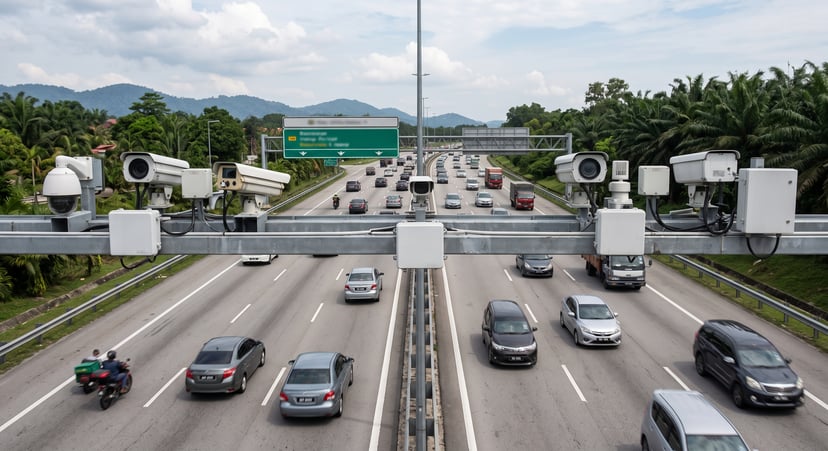
AI-powered cameras are now watching three of Malaysia's busiest highways in real time, and while they cannot yet issue automatic summonses, the Works Minister says direct automated ticketing "may be implemented in the future." For drivers, that means the gap between committing a traffic offence and receiving a summons is about to shrink dramatically, and staying compliant just became a lot more urgent.
This isn't a distant policy proposal. As of September 2026, the system is already live, already watching, and already feeding footage to police. Here's exactly what's being monitored, what it means for your next drive on BESRAYA, NPE, or LEKAS, and how to make sure you're never caught off guard.
Key Takeaways
- Three highways are now under 24/7 AI surveillance: BESRAYA, NPE, and LEKAS, all operated by IJM Toll Division, are monitored through a new Smart Highway Traffic Control Centre.
- The system uses 144 CCTV cameras, 87 Video Incident Detection System (VIDS) units, 35 Automatic Number Plate Recognition (ANPR) units, and 22 Variable Message Signs (VMS).
- Automated summonses aren't active yet — but Works Minister Datuk Seri Alexander Nanta Linggi has confirmed automatic ticketing "may be implemented in the future," with no date set.
- Patrol response times have already dropped from more than 15 minutes to just 8–10 minutes thanks to AI-detected incidents and alerts.
- This is part of a nationwide push: Malaysia's tolled highways already carry 873 CCTV cameras and 278 VMS units under the ITS Roadmap 2030.
What Exactly Is Being Monitored on BESRAYA, NPE, and LEKAS?
A new command centre now watches three highways around the clock. The Smart Highway Traffic Control Centre was launched at Plaza Tol Loke Yew, inside the existing BESRAYA Traffic Monitoring Centre, and it centralises surveillance across BESRAYA (Sungai Besi Expressway), NPE (New Pantai Expressway), and LEKAS (Kajang–Seremban Expressway) — all under IJM Toll Division.
The hardware stack is genuinely comprehensive. It combines 144 CCTV cameras, 87 VIDS (Video Incident Detection System) units, 35 ANPR (Automatic Number Plate Recognition) units, and 22 VMS (Variable Message Signs) boards. Together, these feed a live picture of every lane, every on-ramp, and every incident back to a single control room.
Detection goes well beyond traffic offences. The AI system flags wrong-way driving, illegal lane changes, and illegal stopping or parking, but it also catches vehicle breakdowns, pedestrians on the highway, potholes and road damage, liquid spills, rubbish dumping, illegal banners, and even potential flooding. It automatically counts and categorises vehicles too, feeding data straight into traffic-flow planning.
Can It Issue Summonses Automatically, Right Now?
Not yet, and that distinction matters. As it stands, the system cannot issue traffic summonses on its own. Footage and incident data are passed to the police, who then decide whether enforcement action follows — the human step hasn't been removed.
But the direction of travel is clear. Works Minister Datuk Seri Alexander Nanta Linggi has said direct automated ticketing "may be implemented in the future," though no rollout date or confirmed mechanism has been announced. Given how AES (automated enforcement system) cameras already issue automated speed and red-light summonses elsewhere in Malaysia, extending that model to these three highways is a logical next step, not a hypothetical one.
Response times are the clearest proof this already works. Highway patrol response times have fallen from more than 15 minutes to around 8–10 minutes, purely from AI-flagged alerts routing help to incidents faster. If that same detection layer is later wired directly into the summons system, the lag between offence and penalty could shrink just as dramatically.
Why This Is Part of a Bigger National Shift
This isn't an isolated pilot. The BESRAYA/NPE/LEKAS rollout sits inside Malaysia's ITS Roadmap 2030 (Intelligent Transport Systems), a national plan built around AI, big data analytics, IoT, real-time travel information, and integrated traffic management across the whole highway network.
The scale nationally is already large. Malaysia's tolled highway network carries 873 CCTV cameras and 278 Variable Message Signs in total, meaning the BESRAYA/NPE/LEKAS system is a concentrated, AI-upgraded slice of infrastructure that's already extensive elsewhere.
For drivers, the practical takeaway is simple: enforcement is getting faster, more automated, and less dependent on a physical patrol car being nearby. Manual habits, like assuming an illegal lane change on a quiet stretch will go unnoticed, are becoming a riskier bet every year.
What This Means for Your Next Drive
AI monitoring on BESRAYA, NPE, and LEKAS is already live, already faster than the old patrol-based system, and one policy decision away from issuing summonses without any human review at all. The safest assumption for any driver on these routes is that today's "not yet automated" is next year's default. Staying compliant — and staying alerted — matters more now than it did a year ago.
Frequently Asked Questions
1. Which Malaysian highways are currently monitored by AI?
BESRAYA (Sungai Besi Expressway), NPE (New Pantai Expressway), and LEKAS (Kajang–Seremban Expressway) are monitored through the new Smart Highway Traffic Control Centre, all operated by IJM Toll Division.
2. Can these AI cameras issue automatic traffic summonses?
No, not currently. The system detects offences and incidents and passes footage to the police, who decide on enforcement; automatic ticketing is only a future possibility, not yet implemented.
3. Will automated summonses be introduced on Malaysian highways?
Works Minister Datuk Seri Alexander Nanta Linggi has said direct automated ticketing "may be implemented in the future," but no date or confirmed rollout plan has been announced as of September 2026.
4. What technology does the Smart Highway Traffic Control Centre use?
It uses 144 CCTV cameras, 87 Video Incident Detection System (VIDS) units, 35 Automatic Number Plate Recognition (ANPR) units, and 22 Variable Message Signs (VMS).
5. What offences and incidents can the AI system detect?
It detects wrong-way driving, illegal lane changes, illegal stopping/parking, vehicle breakdowns, pedestrians on the highway, potholes, liquid spills, rubbish dumping, illegal banners, and potential flooding.
6. Has this AI monitoring improved emergency response times?
Yes. Highway patrol response times have dropped from more than 15 minutes to around 8–10 minutes since the AI alert system went live.
7. How can I check if I already have an outstanding traffic summons in Malaysia?
You can check via PDRM's MyBayar Saman, JPJ's mySIKAP portal, or MyEG — or get automatic fine alerts sent directly to you through the Motorist App.
8. Is this AI highway monitoring part of a larger national plan?
Yes. It falls under Malaysia's ITS Roadmap 2030, a national plan using AI, big data, and IoT to modernise traffic management, with 873 CCTV cameras and 278 VMS already across the tolled highway network.
9. How can I avoid being caught off guard by increased AI enforcement?
Use in-app tools like the Motorist App's Co-Driver feature, which gives real-time audio alerts for speed and red-light cameras, so you get advance warning before entering a monitored zone.
Enforcement on Malaysia's highways is getting faster and smarter, your habits should too. Download the Motorist App to get real-time camera alerts via Co-Driver, instant summons notifications, and road tax and insurance reminders, all in one place.
Read More: Road tax transfer when selling a car in Malaysia
I want to find the highest selling price for my car within 24 hours!
Download the Motorist App now. Designed by drivers for drivers, this all-in-one app lets you receive the latest traffic updates, gives you access to live traffic cameras, and helps you manage vehicle related matters.