New AWAS camera Malaysia: Braking won't save you
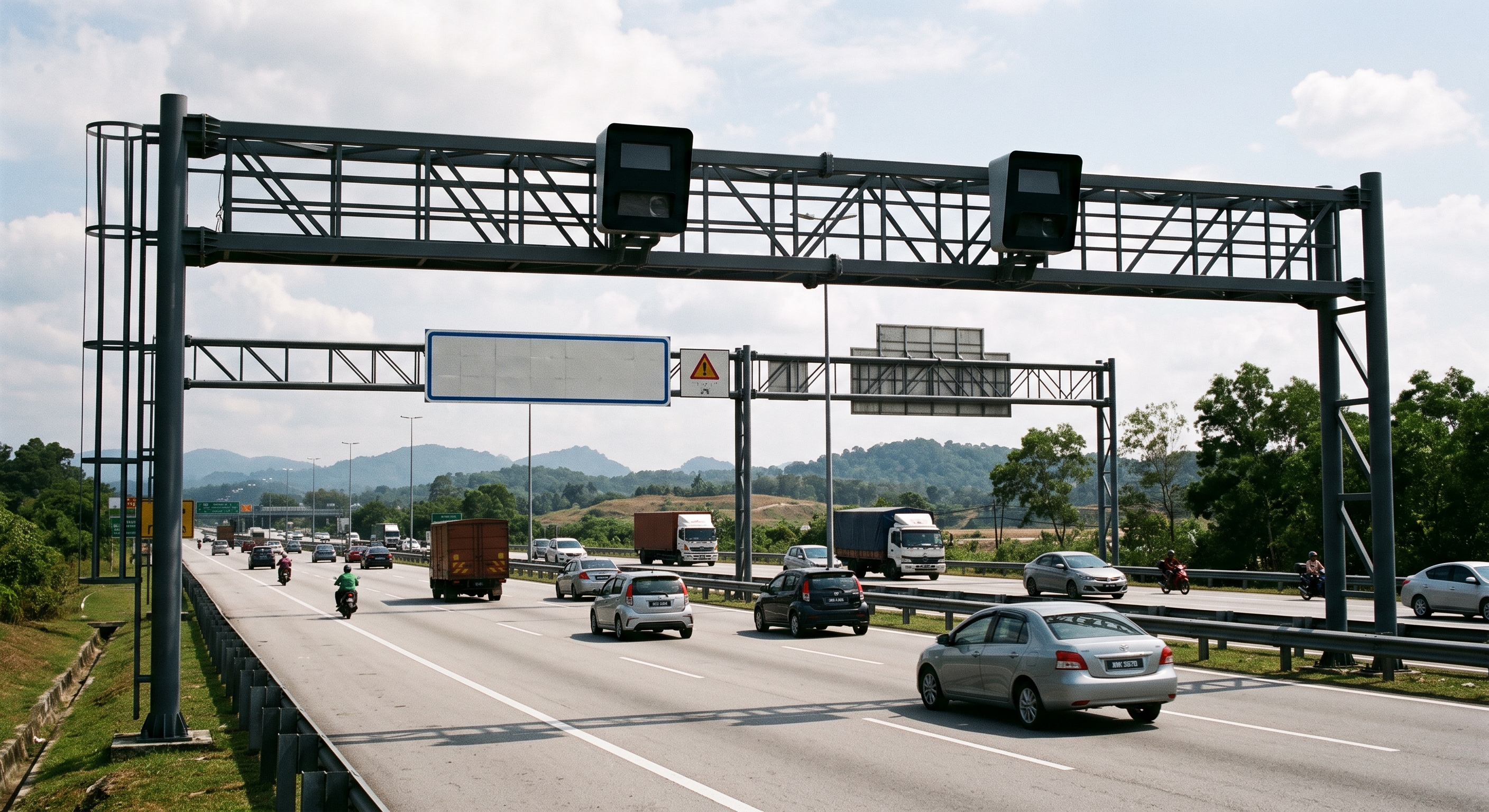
Malaysia's newest speed camera doesn't care if you brake the moment you spot it, the AWAS point-to-point system clocks your average speed across an entire highway stretch, timing your travel between two fixed points, so braking late no longer works.
For years, the trick was simple: spot the AES pole, tap the brakes, speed back up once you're past it. That trick is about to stop working on at least two major highway stretches, because JPJ isn't just swapping camera hardware — it's changing what the camera actually measures.
Key Takeaways
- Malaysia's new AWAS "point-to-point" system measures your average speed across an entire stretch of highway, not your speed at one fixed pole — so slowing down only near the camera doesn't help.
- Two pilot stretches have been named: the Genting Sempah tunnel to Gombak R&R on the KL–Karak Expressway (~15km), and Senawang to Simpang Ampat on the North–South Expressway.
- JPJ carried out live camera calibration on the NSE at KM265.3 southbound (Nilai–Seremban) on 25 November 2025, a sign the rollout is progressing beyond the original pilot announcement.
- Transport Minister Anthony Loke has explained the rationale directly: "We don't want drivers to slow down just in front of the camera, but (slow down) within a certain distance."
- As of the latest public information, JPJ has not announced a confirmed enforcement start date — the system appears to still be in calibration/testing, separate from Malaysia's existing network of roughly 46 fixed-point AES/AWAS cameras.
What "Point-to-Point" Actually Means
It's a completely different detection method. Old AES and current fixed AWAS cameras catch your instantaneous speed at one exact GPS point — one flash, one location, done. The new point-to-point system instead uses Automatic Number Plate Recognition (ANPR) to log your plate at an entry point and again at an exit point, then calculates your average speed from the distance and the time it took you to cover it.
This is why the old trick stops working. Braking hard for three seconds near a pole did nothing to your average speed over 15km if you made up the time elsewhere on the stretch. The system doesn't need to catch you speeding at any single instant — it just needs your overall travel time to prove you couldn't have stayed within the limit the whole way.
It's still being calibrated, not yet fully enforced. The two named pilot corridors — KL–Karak's Genting Sempah–Gombak stretch and the NSE's Senawang–Simpang Ampat run — were originally slated to begin trials in June 2025. That date slipped, and the most recent public sign of activity is JPJ's overnight calibration exercise on the NSE near Nilai–Seremban in late November 2025. No confirmed public enforcement date has been announced since.
How This Differs From the AES/AWAS Cameras You Already Know
Most of Malaysia's active cameras still work the old way. As of February 2026, JPJ's own count stood at 46 active AWAS enforcement points nationwide — 30 for speed, 16 for red-light violations — spread across highways including PLUS, ELITE, and LEKAS, plus known hotspots like the Menora Tunnel and the Genting Sempah segment of the Karak Highway. Those are still fixed-point cameras.
The point-to-point system is a separate, newer layer. It isn't replacing those 46 locations overnight — it's being tested on specific stretches where average-speed enforcement makes more sense than a single pole, such as long tunnel approaches and toll-to-toll expressway runs where speeding tends to happen mid-stretch, not at one spot.
Old Fixed-Point Cameras vs. New Point-to-Point System
| Fixed-Point AES/AWAS (existing) | Point-to-Point AWAS (new, piloting) | |
|---|---|---|
| What it measures | Instantaneous speed at one exact location | Average speed across an entire timed stretch |
| Can braking near it help? | Yes — only that instant is measured | No — your full travel time is measured |
| Known locations (2026) | 46 active points nationwide (30 speed, 16 red-light) | 2 named pilot stretches: Genting Sempah–Gombak (Karak), Senawang–Simpang Ampat (NSE) |
| Detection tech | Single-point AI camera, 4K infrared | ANPR at entry + exit checkpoints |
| Confirmed enforcement date | Already active | Not yet publicly confirmed as of the latest calibration (Nov 2025) |
| Standard fine | RM300 | Not yet officially published for this system |
Expert tip: If you're driving the Karak Highway between Genting Sempah and Gombak, or the NSE between Senawang and Simpang Ampat, set your speed to the posted limit the moment you enter the stretch — not just when you think a camera might be near. The system is timing the whole distance, so one fast overtaking move partway through can still drag your average over the limit even if you slow down for the rest of the drive.
Common mistake: Treating a point-to-point zone like an old AES spot — speeding up in the middle and only slowing for where you think the camera is. There is no single "the camera" to slow down for; the entry and exit checkpoints do the calculating regardless of what you do in between.
Malaysia's move to point-to-point speed detection changes the entire logic of avoiding a ticket — there's no pole to spot and no instant to time your braking around. With calibration already happening on the NSE and Karak Highway, it's worth driving those stretches at a steady, legal pace rather than betting on old habits that were built for a different kind of camera.
Frequently Asked Questions
1. What is the new AWAS point-to-point speed camera in Malaysia?
It's a system that calculates your average speed across an entire highway stretch by timing your travel between two ANPR checkpoints, instead of measuring your speed at just one fixed point.
2. How is this different from the AES cameras I already know?
Old AES and current fixed AWAS cameras catch your exact speed at one location; the point-to-point system instead measures your average speed over the whole distance between two checkpoints.
3. Where is the point-to-point system being tested?
The two named pilot stretches are the Genting Sempah tunnel to Gombak R&R on the KL–Karak Expressway, and Senawang to Simpang Ampat on the North–South Expressway.
4. Can I still avoid a ticket by braking near the camera?
No — because the system measures your average speed across the entire stretch, braking near one point doesn't offset speeding elsewhere on the same route.
5. Is the point-to-point system fully operational yet?
Not confirmed publicly. It was originally set to pilot from June 2025, that timeline slipped, and the most recent public activity was a camera calibration exercise on the NSE near Nilai–Seremban in November 2025.
6. How many AES/AWAS cameras are active in Malaysia right now?
As of February 2026, JPJ's figures showed 46 active fixed-point AWAS cameras nationwide — 30 for speeding and 16 for red-light violations — separate from the new point-to-point pilot.
7. What's the fine if I get caught by these cameras?
The standard fine under Malaysia's existing AES/AWAS system is RM300, alongside demerit points ranging from 2 to 10 depending on the violation. An official fine schedule specific to the point-to-point system has not yet been published.
8. Will point-to-point cameras replace all existing speed cameras in Malaysia?
There's no indication of that yet — it's being piloted on specific stretches where average-speed enforcement suits the road layout, alongside the existing network of fixed-point cameras.
9. Why did JPJ introduce this system instead of just adding more fixed cameras?
Transport Minister Anthony Loke has said the goal is to stop drivers from "slowing down just in front of the camera," pushing compliance across the whole stretch rather than at a single point.
10. Does the Motorist App track updates on these new enforcement zones?
Yes the Motorist App keeps drivers updated on evolving enforcement changes like this, so you're not caught out by a system that works differently from the cameras you're used to.
Don't get caught off guard by a camera that works differently. Download the Motorist App to stay ahead of Malaysia's evolving speed enforcement before you hit that stretch of highway.
Read More: QR code summons scam Malaysia: Never scan this
I want to find the highest selling price for my car within 24 hours!
Download the Motorist App now. Designed by drivers for drivers, this all-in-one app lets you receive the latest traffic updates, gives you access to live traffic cameras, and helps you manage vehicle related matters.