Damansara storm Strong winds lift car at toll plaza
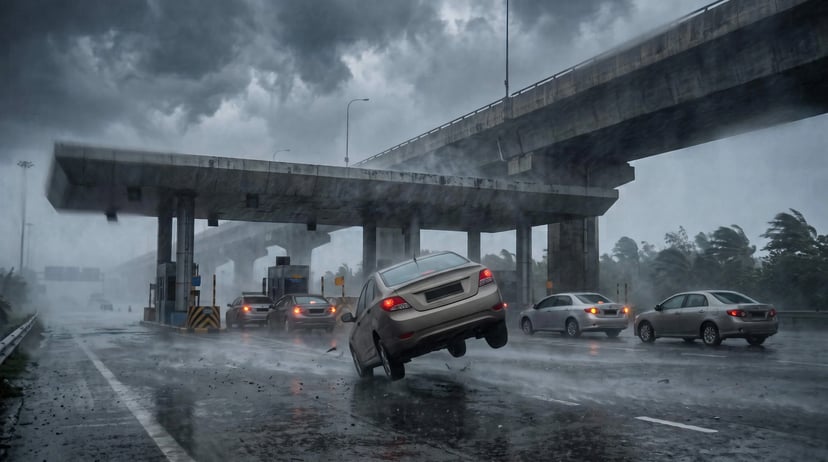
Damansara storm: Car lifted by powerful winds at toll plaza
A powerful thunderstorm struck Damansara, Selangor, on 13 October 2026, with dramatic footage showing strong winds lifting a car into another vehicle at a toll plaza. The incident highlights how sudden storms can endanger motorists, damage vehicles and leave car owners facing unexpected repair bills if their insurance does not provide the right protection.
The incident occurred during the evening rush hour, when heavy rain and powerful gusts swept through parts of Damansara and Kota Damansara. The footage showed a car being lifted by the wind while waiting in a queue at the toll plaza before colliding with another vehicle.
Another video from Kota Damansara showed a red car being pushed across a car park as debris swirled around it and nearby trees bent under the force of the wind. The incident raised concerns about the dangers of driving and parking during severe weather.
For Malaysian motorists, the incident is a reminder to take storm warnings seriously, know what to do when powerful winds hit and check whether their car insurance covers damage caused by natural disasters.
Key takeaways
Damansara storm: On 13 October 2026, powerful winds lifted a car into another vehicle at a toll plaza in the Damansara area.
Other areas affected: Footage from Kota Damansara showed a car being pushed by strong winds and trees bending during the storm.
Weather warning: Malaysia's monsoon transition period began on 9 October 2026 and is expected to continue until late October, bringing a risk of thunderstorms, heavy rain and strong winds.
Driving safety: Slow down, switch on your headlights, maintain a greater following distance and avoid exposed parking areas during severe weather.
Insurance protection: Special Perils coverage can protect against specified natural disasters, subject to your policy's terms and conditions.
What happened during the Damansara storm?
Strong winds lift a car at a toll plaza
The incident occurred on the evening of 13 October 2026. A video shared on Threads at around 6.30pm showed a car waiting in a toll plaza queue beneath an elevated highway when a powerful gust appeared to lift the vehicle and throw it against another car.
Heavy rain and strong winds were visible in the footage as motorists waited to pass through the toll lanes. The unusual incident quickly attracted attention on social media because of the apparent force needed to move a stationary vehicle.
According to reports published on 14 October 2026, both vehicles sustained mi, nor body damage and no injuries were reported. However, motorists should rely on confirmed reports rather than speculation about the exact weather phenomenon responsible.
Kota Damansara also experienced powerful winds
The toll plaza incident was not the only sign of severe weather in the area. Two clips shared online at around 6.20pm showed a red car being pushed across a car park in Kota Damansara, with rain and debris swirling around it.s
The footage also showed trees bending in the wind near residential buildings and a children's playground. These conditions illustrate how severe gusts can affect not only moving vehicles but also parked cars, trees and nearby structures.
Why this matters: A parked car is not necessarily safe from storm damage. Strong winds can move vehicles, while falling branches, debris and unstable structures can cause significant damage even when the owner is nowhere near the car.
Why are thunderstorms dangerous for Malaysian motorists?
Malaysia entered the monsoon transition period on 9 October 2026, with the period expected to last until late October. During this phase, changing wind patterns can encourage thunderstorm formation, bringing heavy rain, lightning and strong winds over short periods.
The Malaysian Meteorological Department (MetMalaysia) has warned of possible flash floods, fallen trees and damage to unstable structures, particularly across western and interior parts of Peninsular Malaysia, as well as western Sabah and Sarawak.
The main risks drivers should know
| Weather hazard | Potential danger to motorist |
|---|---|
| Strong wind gusts | Vehicles can be pushed off course, while loose objects may become dangrous debris |
| Heavy rain | Visibility decreases and roads become slipery, increasing accident risks |
| Flash floods | Water can enter the cabin, damage electrical systems and affect the engine |
| Fallen trees and branches | Parked or moving vehicles may suffer damage to their roofs, windscreens and bodyworkl |
| Lightning | Exposed areas and roadside stops can become dangerous during severe thunderstorms |
| Unstable structures | Billboards, temporary structures and other objects may collapse or be displaced |
The key lesson: Do not underestimate a storm simply because it lasts only a few minutes. Conditions can deteriorate rapidly, particularly during afternoon and evening thunderstorms.
What should you do if strong winds hit while driving?
When a storm suddenly intensifies, your priority should be to protect yourself and your passengers rather than trying to reach your destination as quickly as possible.
1. Slow down and switch on your headlights
Reduce your speed according to visibility and road conditions. Headlights help other motorists see your vehicle through heavy rain, while smoother steering and braking reduce the risk of losing control on slippery roads.
2. Increase your following distance
Leave more space between your vehicle and the car ahead. Heavy rain reduces visibility and can increase stopping distances, so avoid tailgating, sudden braking and unnecessary lane changes.
3. Avoid exposed areas and unsafe parking spots
If you need to stop, choose a safe location away from trees, billboards, unstable structures and objects that could fall or be blown into your vehicle.
Do not stop in a live traffic lane or beneath an elevated structure simply because it offers shelter. If conditions become dangerous, follow official instructions and move to a safer location when possible.
4. Never drive through floodwater
Floodwater may be deeper than it appears and can conceal damaged road surfaces, open drains or other hazards. Turn around and find an alternative route rather than risking your safety or your vehicle.
5. Check official weather warnings before travelling
Before setting off, check MetMalaysia's forecasts and thunderstorm warnings through its website, the myCuaca application or its official social media channels.
If severe weather is expected, consider delaying non-essential journeys until conditions improve.
Does car insurance cover damage caused by a storm?
The Damansara incident also raises an important question for car owners: who pays if strong winds lift your vehicle, a tree falls on it or a flash flood causes extensive damage?
The answer depends on your insurance policy and the circumstances of the incident. A standard comprehensive policy does not necessarily include protection against natural disasters, so drivers should check whether Special Perils coverage is included.
What is Special Perils coverage?
Special Perils is an additional motor insurance benefit that can cover specified natural disasters, subject to the policy's terms, exclusions and applicable excess.
Depending on the policy, it may cover damage caused by:
Floods and flash floods.
Storms and tempests.
Landslides and landslips.
Subsidence and other specified ground movements.
Earthquakes and other covered natural events.
For an incident involving extreme winds, do not assume that the damage automatically qualifies for a Special Perils claim. The insurer will assess the circumstances and determine whether the event falls within the protection provided by the policy.
How much does Special Perils coverage cost?
The premium varies according to the insurer, the vehicle's insured value and the selected coverage. There is no single fixed price that applies to every Malaysian driver.
As an illustration, if an insurer quotes a premium at 0.2% of a vehicle's insured value of RM50,000, the add-on would cost RM100 before any applicable taxes, fees or other charges. This is a mathematical example, not a current quotation or a guaranteed market rate.
Before purchasing the add-on, ask your insurer:
Does the policy cover storm damage as well as floods?
What exclusions and excess amounts apply?
Is the add-on already included in the quotation?
What evidence is needed to support a claim?
Old way vs. Motorist App: Keeping your car ownership organised
Preparing for extreme weather means knowing your insurance coverage before damage occurs. Keeping track of renewal dates and reviewing available insurance options can help you avoid leaving important decisions until the last minute.
| Task | Old way | Motorist App |
|---|---|---|
| Insurance renewal | Track each policy's expiry date manually | Use vehilce insurance reminders to help manage renewal dates |
| Insurance quotations | Contact insurers individually, potentially comparing 3 separate quotations | Explore available insurance quotations through the platform |
| Weather preparation | Check weather and traffic information across separate sources | Access available traffic updates andvehicle-related services |
| Special Perils protection | Assume comprehensive insurance covers every natural disaster | Explore insurance options, then confirm the exact protection with the insurer |
The Motorist App can help organise vehicle ownership and provide access to insurance-related services. However, it does not replace official weather warnings, emergency services or your insurer's policy documents.
Expert tip: Document storm damage before making a claim
If your vehicle is damaged during a storm, prioritise personal safety first. Once it is safe, take photographs or videos of the damage, record the location and time, and keep any relevant weather warnings or incident details.
Contact your insurer promptly and follow its instructions before arranging repairs. If the vehicle has been flooded, do not start the engine until it has been inspected, as doing so could cause further damage.
Common mistake: Assuming every storm-related claim is covered
Having comprehensive car insurance does not automatically guarantee compensation for damage caused by strong winds, falling trees or flooding.
If your policy excludes the relevant natural disaster and does not include suitable additional protection, you may have to pay for repairs yourself. Even with Special Perils coverage, the insurer will assess whether the incident falls within the policy's terms.
Check your policy schedule and exclusions before the next storm arrives. Do not wait until your vehicle is damaged to find out what protection you have purchased.
Conclusion
The Damansara storm on 13 October 2026 showed how quickly extreme weather can turn a routine journey into a dangerous situation. Motorists should take thunderstorm warnings seriously, avoid exposed areas during powerful winds and check whether their car insurance provides suitable protection against storm damage.
FAQs
1. What happened during the Damansara storm on 13 October 2026?
Strong winds appeared to lift a car into another vehicle at a toll plaza in the Damansara area. Videos also showed a car being pushed by the wind in a Kota Damansara car park.
2. Were there any injuries in the Damansara toll plaza incident?
Reports published on 14 October 2026 indicated that no injuries were reported and both vehicles sustained minor body damage.
3. Was the Damansara storm caused by a tornado?
The footage prompted speculation about a whirlwind or similar phenomenon, but motorists should not treat social media descriptions as official confirmation of the precise weather event.
4. Why can strong winds be dangerous for cars?
Powerful gusts can affect vehicle stability, move parked cars and send debris into traffic. Falling trees and unstable structures can also cause significant damage.
5. What should I do if a thunderstorm hits while I am driving?
Slow down, switch on your headlights, increase your following distance and avoid flooded roads. If conditions become unsafe, seek a suitable safe location and follow official advice.
6. Does comprehensive car insurance cover storm damage in Malaysia?
Not necessarily. Coverage depends on the policy, and natural-disaster protection may require a Special Perils add-on.
7. Does Special Perils insurance cover damage caused by strong winds?
It may cover specified storm-related damage, depending on the wording and exclusions of your policy. Ask your insurer whether the particular type of wind damage is covered.
8. Does Special Perils insurance cover flood damage?
It can cover flood damage when the relevant protection is included and the claim meets the policy's conditions. Check the policy schedule and exclusions before relying on this protection.
9. What should I do if a tree falls on my car during a storm?
Stay clear of immediate hazards, document the damage when it is safe, contact your insurer and follow its claims process. Do not arrange repairs before checking whether the insurer requires an inspection.
10. Where can I check storm warnings in Malaysia?
Check MetMalaysia's official website, the myCuaca application or its official social media channels for forecasts and thunderstorm warnings.
Stay prepared with the Motorist App
Read More: Mat Rempit Law Malaysia: New Jail Penalties Explained
I want to find the highest selling price for my car within 24 hours!
Download the Motorist App now. Designed by drivers for drivers, this all-in-one app lets you receive the latest traffic updates, gives you access to live traffic cameras, and helps you manage vehicle related matters.