What to Do If Your Car Breaks Down on a Highway in Malaysia
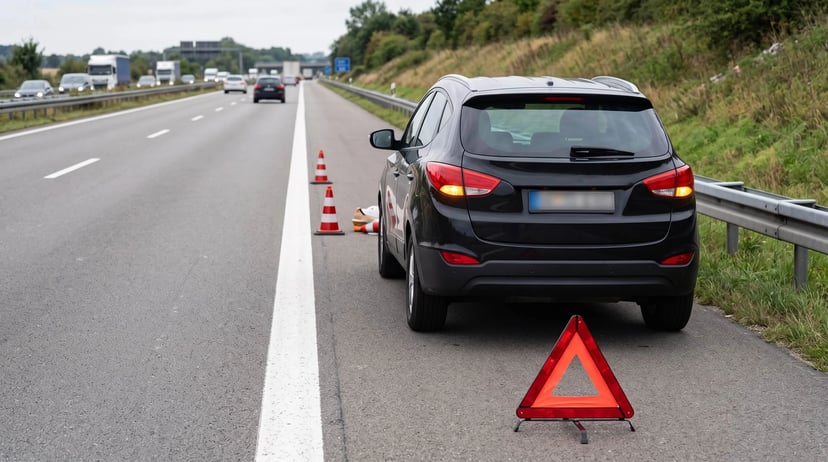
What should you do if your car breaks down in the middle of a highway?
If your car stops working on a highway in Malaysia turn on your flashing warning lights drive to the emergency lane if it is safe to do and park away from the cars that are moving. Take yourself and your passengers to a place behind the safety wall if possible then ask for help from highway assistance or dial 999 if there is a serious problem right away.
A quick breakdown on a highway can be scary especially when big trucks and cars are going very fast. Being clear about what to do in the few minutes can help keep you, your passengers and other drivers safe.
No matter if your engine gets too hot, a tire pops or your car suddenly has no power, your main job is to stay safe, not to fix the car or get back on the road.
Key takeaways
Switch on your hazard lights: Warn approaching drivers as soon as you notice a problem.
Move to safety: Use the emergency lane if you can do so safely, and avoid stopping in a live traffic lane.
Protect yourself and your passengers: Exit only when it is safe, preferably from the side away from traffic, and move behind a safety barrier where available.
Call for assistance: Contact the relevant highway operator or roadside assistance provider. Call 999 if there is an immediate threat to life or a serious road emergency.
Prepare before travelling: Keep emergency contact details, your insurance information and basic safety equipment accessible.
What to do immediately when your car breaks down
Step 1: Turn on your hazard lights
Switch on your hazard warning lights immediately to alert approaching drivers. If your car is still moving, maintain control and look for a safe opportunity to move out of the traffic lane.
Step 2: Move to the emergency lane if safe
If the car can still move safely, steer towards the emergency lane or another designated safe area. Do not make sudden manoeuvres across traffic just to reach the shoulder.
Step 3: Get yourself and your passengers to safety
Once stopped, leave the vehicle only if it is safe to do so, preferably through the side away from moving traffic. Move behind the roadside safety barrier where possible and stay away from the carriageway.
Step 4: Contact roadside assistance
Call your highway operator or roadside assistance provider and explain your location, the type of breakdown and whether anyone is injured. If there is immediate danger or a serious emergency, call 999.
Who should you call if your car breaks down in Malaysia?
The right contact depends on which highway you are using and the assistance you need. Save relevant numbers before starting your journey so you do not have to search for them while stranded.
| Service | Contact number | When to call |
|---|---|---|
| PLUSLine | 1800-88-0000 | Breakdowns and emergencies on PLUS-operated expressways |
| Malaysian Highway Authority (LLM) traffic information hotline | 1800-88-7752 | Highway traffic information and enquiries |
| Emergency services | 999 | Immediate danger, serious injuries or emergencies requiring police, ambulance or fire and rescue assistance |
| Your insurer or roadside assistance provider | Check your policy | Towing, vehicle recovery and eligible roadside assistance |
LUS provides 24-hour expressway assistance through PLUSRonda. Its emergency telephones are also available at intervals of approximately 2 kilometres along the relevant expressways.
Important: These numbers do not all provide the same service. If your car breaks down on a different expressway, check the operator responsible for that road.
What information should you give when calling for help?
Prepare the following details to help the assistance team locate you:
Highway name: For example, the North-South Expressway.
Direction of travel: Northbound or southbound, where applicable.
Location marker: The nearest kilometre marker, exit, toll plaza or landmark.
Vehicle details: Your car's make, model and colour.
Nature of the problem: For example, engine failure, a flat tyre, smoke or overheating.
Safety situation: Tell the operator if your vehicle is blocking a traffic lane or anyone is injured.
On PLUS highways, kilometre markers can help the response team identify your location more accurately.
Should you stay inside your car or get out?
Getting away from moving traffic is generally the priority, but do not exit if doing so would expose you to greater danger. The safest action depends on where the car has stopped and the surrounding traffic conditions.
If you are safely on the emergency lane: Leave the vehicle if it is safe, using the side away from traffic, and move behind the safety barrier.
If your car is stopped in a live lane: Do not step into moving traffic. Call 999 if there is immediate danger, switch on your hazard lights if possible, and follow the emergency operator's instructions.
If there is smoke or a suspected fire: Get away from the vehicle if you can do so safely and alert emergency services.
If you are on a narrow shoulder without a barrier: Avoid standing close to traffic or behind the car where another vehicle could strike it.
Do not assume that the emergency lane is safe simply because your vehicle is no longer in the main traffic lane.
Should you try to repair your car on the highway?
Do not fix your car close to moving cars. Even a small issue can put you in danger when you are near cars that are going quickly.
Some problems, like a battery or a flat tire might seem easy to handle.. Putting a tire on a small emergency lane or working on the engine next, to traffic is dangerous.
Instead call the highway manager or a trained help service. On PLUS expressways PLUSRonda helps with mechanical issues and towing for cars that qualify.
What if your engine overheats?
If the temperature warning appears, pull over as soon as you can do so safely and switch off the engine. Do not open a hot radiator cap because pressurised coolant can cause severe burns.
What if you have a flat tyre?
Keep the vehicle under control and slow down gradually. Avoid abrupt braking, then move to a safe location if possible and request assistance rather than changing the tyre beside moving traffic.
What if your car suddenly loses power?
Turn on your hazard lights and try to coast towards a safe stopping area without making sudden movements. If the car cannot reach the emergency lane, remain alert to surrounding traffic and request immediate assistance.
How can you prepare for a highway breakdown before travelling?
Preparation can save valuable time when something goes wrong. Before a long drive, check your tyres, engine oil, coolant level and battery condition, and make sure you know how to contact assistance.
Use this checklist before leaving:
Check tyre pressure and look for visible tyre damage.
Ensure your fuel level is sufficient for the journey.
Check the engine oil and coolant levels when the engine is cold.
Save the highway operator's contact number.
Keep your insurance and roadside assistance details accessible.
Carry a charged mobile phone and a charging cable.
Know where to find your vehicle's kilometre marker or location information.
Keep the ownership information organized too. The Motorist App helps drivers take care of their car ownership needs while Motorists AutoConcierge service gives another place to get help, with things related to vehicles. These services can help with your planning. They do not take the place of emergency services or the highway operators help when there is a breakdown.
Old way vs. Motorist App: Preparing for car ownership
The difference is not that an app can prevent every breakdown. It is that organising your vehicle-related needs before a journey can make routine ownership tasks easier to manage.
| Task | Old way | With the Motorist App |
|---|---|---|
| Finding vehicle-related information | Search through separate messages, documents and websites | Access available vehicle-related services in one app |
| Managing car ownership needs | Handle each task separately | Use the app to explore relevant car ownership services |
| Getting ready for a long journey | Rely on memory and manually check each task | Combine app-based preparation with a physical vehicle checklist |
| Emergency roadside assistance | Call the relevant highway operator or provider | Still call the relevant highway operator or provider directly |
| Emergency contact numbers | Search online when needed | Save important numbers on your phone before travelling |
The comparison above describes general preparation practices, not a measured performance test. The Motorist App does not replace emergency calls, and no specific time or cost saving is guaranteed.
Expert tip: Save your highway location before calling
Use the kilometre marker, not just a nearby town.
When you call for help give the highway name, the direction of travel and the nearest kilometre marker. If you cannot identify the highway name describe the exit, the toll plaza or a landmark. This helps the response team narrow down your location and reduces confusion.
Common mistake: Standing behind the broken-down car
Never use the rear of your car as a waiting area.
A car stopped on the emergency lane can still get hit by another driver. Don’t stand behind the boot. Don’t check the engine next, to moving traffic. Don’t try to fix the car in a place where you’re exposed. If you can safely leave the vehicle go behind a safety barrier. Wait there for help.
How does car insurance help if your vehicle breaks down?
Car insurance does not automatically cover every type of breakdown. Standard motor insurance generally focuses on insured events such as accidents, theft and specified damage, while mechanical failure due to wear and tear may not be covered.
Your policy may include or offer roadside assistance, towing or vehicle recovery, subject to its terms and limits. Before a long journey, check:
Whether roadside assistance is included in your policy.
Whether towing is covered and the distance or cost limits that apply.
Whether the service covers mechanical breakdowns, flat tyres and battery problems.
Whether you must contact an approved assistance provider before arranging a tow.
Do not assume that every tow truck is authorised or that every towing charge will be reimbursed. Confirm the provider, destination and charges with your insurer or highway operator before agreeing to a service, where circumstances allow.
How can Motorist help you manage your car ownership?
Motorist is a car-ownership platform that works in Malaysia and parts of Southeast Asia. The Motorist App lets drivers get vehicle-related services and AutoConcierge helps with the experience of owning a car.
Even though the app is not a replacement for emergency roadside help being ready, with vehicle information and handling tasks can make it easier to plan trips and take care of your car.
For drivers who want to have a way to manage their car the Motorist App is a good place to begin.
Conclusion
If your car breaks down on a Malaysian highway, prioritise safety, move away from traffic when it is safe to do so, and contact the relevant highway operator or roadside assistance provider. Preparing your vehicle and keeping important information accessible before travelling can help you handle unexpected problems more confidently.
FAQs
1. What should I do first if my car breaks down on a highway in Malaysia?
Switch on your hazard lights, move to the emergency lane if safe, and get yourself and your passengers away from moving traffic where possible. Contact the relevant highway operator for assistance.
2. What number should I call if my car breaks down on the PLUS Highway?
Call PLUSLine at 1800-88-0000, which provides 24-hour expressway assistance through PLUSRonda.
3. Can I call 999 if my car breaks down on a highway?
Yes, if the situation involves immediate danger, serious injuries or another emergency requiring urgent assistance. For an ordinary vehicle breakdown without an immediate threat, contact the highway operator or your roadside assistance provider.
4. Should I put a warning triangle behind my broken-down car?
Only consider placing a warning triangle if you can do so safely without entering or walking beside moving traffic. Your safety takes priority, so do not risk your life to position one.
5. Is it safe to change a tyre on the highway emergency lane?
It is generally safer to request roadside assistance than to change a tyre beside fast-moving traffic. If the emergency lane is narrow or exposed, stay away from traffic and wait for professional help in a safer location.
6. Will my car insurance cover a highway breakdown?
It depends on your policy. Roadside assistance or towing may be included, but mechanical failure and wear-and-tear repairs are not necessarily covered.
7. Can I call a private tow truck if my car breaks down on a highway?
You may be able to arrange private towing, subject to the highway operator's procedures and applicable restrictions. Contact the highway operator or your insurer first where possible, and confirm the towing charges and destination before agreeing.
8. What should I do if my car breaks down in the middle lane?
Switch on your hazard lights if possible, remain alert to traffic and avoid stepping into a live lane. Call 999 if there is immediate danger and follow the emergency operator's instructions.
9. Can PLUSRonda repair my car on the highway?
PLUSRonda provides 24-hour expressway assistance, including minor mechanical repairs and towing for eligible Class 1 vehicles. The assistance available depends on the nature of the problem and the circumstances.
10. How can I reduce the risk of a car breakdown during a long journey?
Check your tyres, battery, engine oil, coolant and fuel level before leaving. Keep your roadside assistance details accessible and address any warning lights or unusual vehicle behaviour before starting the trip.
11. Does the Motorist App provide emergency roadside assistance?
The Motorist App helps motorists access vehicle-related services, but you should not assume it dispatches emergency roadside assistance. For a highway breakdown, contact the relevant highway operator, your insurer or your roadside assistance provider directly.
Download the Motorist App
Read More: Someone hit your parked car and drove away? What to do
I want to find the highest selling price for my car within 24 hours!
Download the Motorist App now. Designed by drivers for drivers, this all-in-one app lets you receive the latest traffic updates, gives you access to live traffic cameras, and


