Speed limiters: only 33 JPJ-approved workshops for 200,000 vehicles
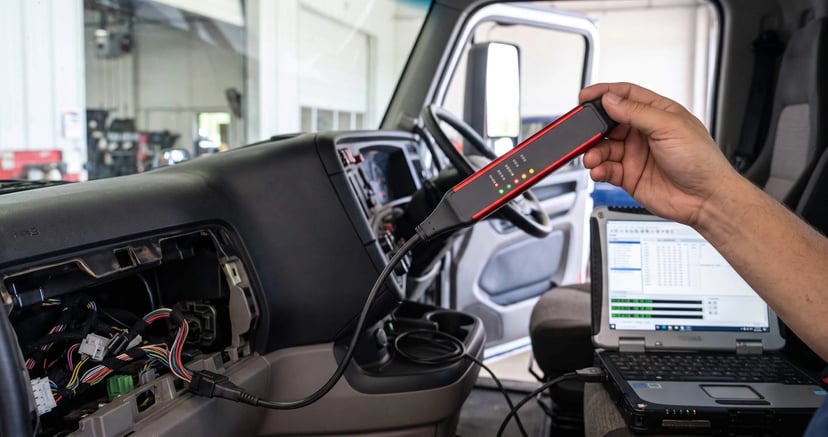
Malaysia has only 33 JPJ-approved providers for retrofitting speed limitation devices (SLDs) on commercial vehicles, leaving more than 200,000 vehicles facing installation challenges. As of 26 October 2026, the government has postponed full enforcement to give operators more time to comply, but Transport Minister Anthony Loke has stressed that the requirement has not been cancelled.
The shortage raises concerns about installation capacity, technical compatibility and road safety, particularly for older lorries and buses that may need additional equipment to meet the requirements.
Key takeaways
- Only 33 JPJ-approved providers were available for speed limiter retrofits nationwide as of 26 October 2026.
- JPJ recorded 106,651 verified installations among 207,083 active vehicles manufactured from 2015 onwards, representing 51.5% compliance.
- Only 34,514 of 202,861 vehicles manufactured before 2015 had recorded installations, representing 17% compliance.
- Full enforcement, originally scheduled to begin on 1 July 2026, was postponed; the requirement remains in place.
- The prescribed maximum speed setting for an SLD under JPJ's guidelines is 90 km/h for the vehicles covered by the requirements.
Table of Contents
Why JPJ has only 33 approved workshops
Limited installation capacity is delaying compliance. On 27 October 2026, Transport Minister Anthony Loke told the Dewan Rakyat that only 33 providers nationwide had received approval from the Road Transport Department (JPJ) to retrofit speed limitation devices.
The number is insufficient to meet the needs of the large commercial vehicle fleet. The government is encouraging more companies to obtain approval, especially in states where installation services are limited or unavailable.
The postponement is not a cancellation. The Ministry of Transport announced on 30 June 2026 that full enforcement, which had been scheduled for 1 July 2026, would be deferred to give the industry additional time to complete installations and verification.
The ministry is also finalising a dedicated legal framework governing SLD installation, verification and enforcement. A new date for full enforcement will be announced after the necessary arrangements have been completed.
What commercial vehicle owners need to know
Not every vehicle requires the same installation process. The applicable requirements depend on the vehicle category, manufacturing date and whether an SLD is already fitted and functioning. Owners should establish their vehicle's status before arranging installation.
How speed limiter requirements work
An SLD restricts a vehicle's maximum speed. The system is intended to help control speeding and reduce the risk of serious accidents involving heavy commercial vehicles. Under JPJ's guidelines, the prescribed maximum speed setting is 90 km/h for the vehicles covered by the requirements.
JPJ introduced the requirement in phases beginning on 1 October 2025. The rules cover specified categories of commercial vehicles, including certain passenger buses and goods vehicles weighing more than 3,500 kg.
Vehicles manufactured after 2015 may already have the required equipment under the vehicle type approval process. Depending on the vehicle, owners may need to ensure that the device is activated, tested and verified rather than arrange a new installation.
Older vehicles that do not have compatible equipment may require retrofitting. Such installations must be handled through providers authorised by JPJ, with the required verification documents issued after the system has been checked.
Compliance figures and installation challenges
The latest figures show a significant gap between newer and older vehicles. In the Dewan Rakyat on 27 October 2026, Loke reported the following installation figures as of 26 October.
| Vehicle group | Vehicles recorded | Verified installations | Compliance |
|---|---|---|---|
| Manufactured from 2015 onwards | 207,083 | 106,651 | 51.5% |
| Manufactured before 2015 | 202,861 | 34,514 | 17% |
Older vehicles face more technical obstacles. Some models may not be compatible with available speed limitation devices, while original equipment manufacturers may be unable to provide the technical support needed for retrofitting.
The shortage of approved providers adds another layer of difficulty. Even operators ready to comply may need to arrange installation and verification around limited workshop availability.
The figures also show why enforcement cannot be treated as a completed process. While more than half of the recorded newer-vehicle group had verified installations, the rate for the older-vehicle group remained at just 17% as of 26 October 2026.
What owners should do next
Check the vehicle's requirements before booking an installation. Commercial vehicle operators should confirm whether their vehicles already have an SLD, whether it is activated and whether its installation and functionality have been verified.
For vehicles requiring retrofits, owners should contact a JPJ-approved provider and confirm that the provider can support the vehicle's make and model. They should also ask about the installation process, testing arrangements and the documents that will be issued.
Keep the compliance records accessible. JPJ's guidelines require an SLD verification slip and functionality report for the relevant vehicles. These documents are used during vehicle inspections and permit-related processes, so operators should confirm that their records are complete and current.
For general vehicle ownership, the Motorist App can help drivers keep track of vehicle-related costs and other ownership information. It does not replace JPJ's SLD approval, installation or verification process.
Expert tip
Confirm compatibility before paying for a retrofit. Give the JPJ-approved provider your vehicle's make, model, manufacturing year and relevant vehicle details. Ask the provider to confirm compatibility and explain how the required verification documents will be issued before you commit to an installation date.
Common mistake to avoid
Do not assume that the enforcement postponement means your vehicle is exempt. The government has stated that the requirement remains in place. Operators should verify their vehicles' compliance status and follow official JPJ and Ministry of Transport updates rather than wait for an enforcement notice.
Old way vs. Motorist App: tracking vehicle ownership
Although the Motorist App does not handle SLD installation or JPJ compliance, it can help individual drivers organise general vehicle ownership information. The comparison below shows the difference between manual recordkeeping and using an app for everyday ownership tracking.
| Feature | Old way: manual tracking | Motorist App |
|---|---|---|
| Ownership records | Records kept across separate notes, receipts and files | A digital platform for vehicle-related information and ownership needs |
| Cost tracking | Costs must be totalled manually | Helps users manage their vehicle ownership information |
| SLD installation | Must be arranged through an authorised provider | Not an SLD installation or verification service |
| Official compliance figures as of 26 October 2026 | 33 approved retrofit providers nationwide | The same JPJ requirements apply; the app does not change official compliance figures |
What this means for Malaysian drivers
Malaysia's shortage of JPJ-approved SLD retrofit providers is delaying full enforcement, particularly for older commercial vehicles that face installation and compatibility challenges. The requirement has not been cancelled, so operators should confirm their vehicles' status, use authorised providers and keep the necessary verification documents ready.
FAQs
1. How many JPJ-approved SLD retrofit providers are there in Malaysia?
As of 26 October 2026, JPJ had approved 33 providers nationwide to carry out speed limitation device retrofits on commercial vehicles.
2. Why has Malaysia postponed full enforcement of speed limiters?
The government postponed full enforcement because the industry needs more time to complete installations, only 33 retrofit providers were approved nationwide, and some older vehicles face technical compatibility challenges.
3. Has Malaysia cancelled the speed limiter requirement for commercial vehicles?
No. Transport Minister Anthony Loke has stated that the postponement does not cancel or waive the requirement. A new full-enforcement date will be announced after the relevant arrangements are finalised.
4. When was full SLD enforcement originally scheduled to begin?
Full enforcement was originally scheduled for 1 July 2026 before the Ministry of Transport announced its postponement on 30 June 2026.
5. What is the maximum speed setting for an SLD in Malaysia?
JPJ's guidelines prescribe a maximum speed setting of 90 km/h for the commercial vehicles covered by the SLD requirements.
6. Which commercial vehicles need speed limitation devices?
The requirements cover specified categories of commercial vehicles, including certain passenger buses and goods vehicles with a maximum authorised weight above 3,500 kg. Owners should check JPJ's guidelines to determine whether their specific vehicle is covered.
7. Do commercial vehicles manufactured before 2015 need an SLD retrofit?
Vehicles manufactured before 2015 may need an SLD activated or installed, depending on their existing equipment and the applicable requirements. Vehicles without compatible devices may require an approved retrofit.
8. What is the SLD compliance rate for older commercial vehicles?
As of 26 October 2026, 34,514 of 202,861 vehicles manufactured before 2015 had recorded SLD installations, representing a compliance rate of 17%.
9. What is the SLD compliance rate for vehicles manufactured from 2015 onwards?
JPJ had recorded 106,651 verified installations among 207,083 active vehicles manufactured from 2015 onwards as of 26 October 2026, representing 51.5% compliance.
10. Can any workshop install a speed limiter on a commercial vehicle?
No. SLD retrofits must be handled by providers approved by JPJ, and the installation and functionality must be verified according to the applicable guidelines.
11. What documents are required after an SLD installation?
JPJ's guidelines specify an SLD verification slip and a functionality report. Vehicle owners should retain the required records and present them when requested for relevant inspections and permit-related processes.
12. Can the Motorist App install or verify a speed limiter?
No. The Motorist App is for general vehicle ownership needs and does not install, activate or certify SLDs. Commercial vehicle operators must use the appropriate JPJ-approved providers for compliance.
Track your vehicle ownership with the Motorist App
Read More: TuJu app: LLM says it was not built to rival Waze
I want to find the highest selling price for my car within 24 hours!
Download the Motorist App now. Designed by drivers for drivers, this all-in-one app lets you receive the latest traffic updates, gives you access to live traffic cameras, and helps you manage vehicle related matters.


