Flying Cars in Malaysia: Chinese Firms Approach MITI
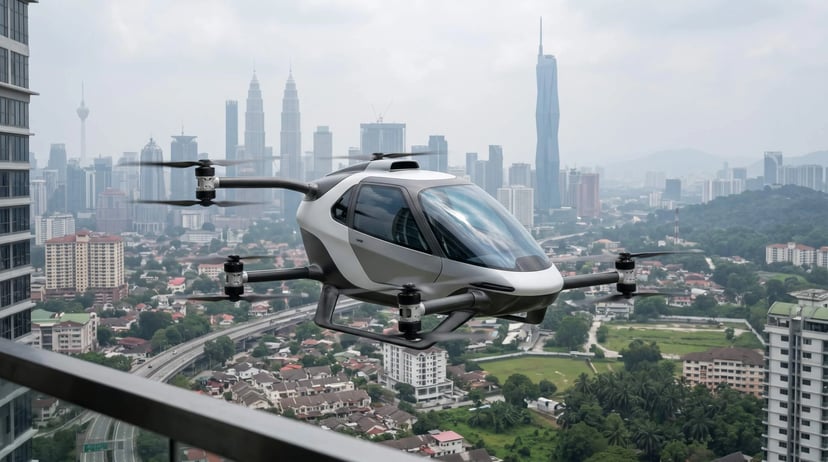
Malaysia could become a testing and manufacturing hub for flying cars as several Chinese technology companies have approached the Ministry of Investment, Trade and Industry (MITI) to explore opportunities in the country's emerging low-altitude economy. However, commercial flying cars are not yet ready for everyday use, as safety assessments, aviation regulations and infrastructure must be established first.
Table of Contents
- Why Are Chinese Companies Interested in Malaysia?
- What Is Malaysia's Low Altitude Economy?
- When Could Flying Cars Arrive in Malaysia?
- Why Are Safety Regulations Important?
- CAAM and EHang Begin Safety Cooperation
- What Could Flying Cars Mean for Malaysian Drivers?
- Expert Tip
- Common Mistake
- Frequently Asked Questions
Key Takeaways
- Several Chinese companies have approached MITI to explore flying car testing and potential manufacturing operations in Malaysia.
- Malaysia is developing its Low Altitude Economy (LAE) ecosystem, which includes drones, air taxis and autonomous aircraft.
- Freight drone services have been targeted for an initial rollout as early as 2027, while passenger air taxis have a longer-term 2030 target.
- On 21 October 2026, CAAM and EHang began cooperation to assess the safety and regulatory requirements of advanced air mobility technology.
- Any future flying car demonstrations or commercial operations will require the relevant regulatory approvals.
Why Are Chinese Companies Interested in Malaysia?
Malaysia is attracting attention from international companies looking to expand the next generation of transportation technology.
On 20 August 2026, Deputy Investment, Trade and Industry Minister Sim Tze Tzin revealed that several Chinese companies had approached MITI about using Malaysia as a testing ground for urban air mobility technologies.
The discussions include more than simply testing flying vehicles. The companies are also exploring opportunities to establish manufacturing, assembly and maintenance operations in Malaysia.
This could create opportunities for local businesses, engineering specialists and the wider aerospace industry if the proposals eventually move forward.
However, Sim clarified that the discussions were still at an early stage. No confirmed manufacturing facility, commercial launch or operational approval was announced at that point.
What Is Malaysia's Low Altitude Economy?
The Low Altitude Economy (LAE) refers to economic activities and services operating within low-altitude airspace through technologies such as drones, autonomous aircraft and electric air taxis.
Malaysia's strategy covers several areas:
- Cargo drone deliveries: Transporting parcels and goods through unmanned aircraft.
- Urban air mobility: Developing passenger transportation through aircraft designed for shorter urban journeys.
- Air taxis: Providing potential alternatives to conventional road transportation.
- Infrastructure inspections: Using drones to inspect buildings, bridges and other infrastructure.
- Emergency services: Exploring aerial technology for firefighting and other emergency operations.
The government is also studying international frameworks from countries including China, the United Kingdom, Japan, Germany and Singapore to develop a suitable regulatory environment.
In August 2026, MITI also discussed plans for an Unmanned Valley Ecosystem pilot project under the 13th Malaysia Plan. The proposed initiative would provide a controlled environment for testing different aviation systems, including vertiports, which are specialised facilities for vertical take-off and landing aircraft.
When Could Flying Cars Arrive in Malaysia?
Malaysia's plans involve a gradual introduction of low-altitude aviation technology rather than immediately allowing passenger flying cars to operate across cities.
The previously announced roadmap outlined two important targets:
- 2027: Limited commercial freight drone services could begin as early as the first quarter of the year.
- 2030: Passenger air taxi services are a longer-term target under the planned development of the sector.
These dates are intended targets, not guarantees that commercial services will begin on schedule. Their implementation depends on regulatory approval, infrastructure development and safety readiness.
Foreign operators are also expected to establish joint ventures with Malaysian companies before launching operational services, according to the announced framework.
Why Are Safety Regulations Important?
Flying cars may offer another way to travel, but operating aircraft above populated areas introduces risks that conventional road vehicles do not face.
MITI Deputy Minister Sim Tze Tzin stressed that safety must remain a priority as Malaysia explores this technology.
Authorities must consider what happens if an aircraft experiences technical problems, loses power or encounters an unexpected obstacle while flying above residential or commercial areas.
Other important considerations include:
- Airspace management: Preventing conflicts between passenger aircraft, drones and other aviation operations.
- Aircraft certification: Ensuring vehicles meet the necessary technical and airworthiness standards.
- Operator competency: Establishing appropriate training and competency requirements.
- Maintenance: Ensuring aircraft receive proper inspections and servicing.
- Emergency procedures: Preparing for technical failures and unexpected situations.
- Public safety: Protecting people and property on the ground.
Without clear regulations and effective monitoring, expanding flying vehicle operations could introduce unnecessary risks to the public.
CAAM and EHang Begin Safety Cooperation
Malaysia's flying car ambitions received another development on 21 October 2026, when the Civil Aviation Authority of Malaysia (CAAM) announced a cooperation with Chinese aviation technology company EHang.
According to CAAM, the cooperation will establish a platform to assess the safety, technical and regulatory considerations surrounding EHang's proposed Advanced Air Mobility activities in Malaysia.
The assessment covers several important areas:
- Aircraft airworthiness.
- Operational safety.
- Personnel competency.
- Aircraft maintenance arrangements.
EHang specialises in developing and manufacturing pilotless electric vertical take-off and landing (eVTOL) aircraft.
Its EH216-S model is designed to carry passengers without an onboard pilot. According to the company, the model has received type, production and standard airworthiness certificates from China's civil aviation authority.
However, having certifications in another country does not automatically grant permission to operate in Malaysia.
CAAM clarified that any proposed demonstration or trial in Malaysia would be assessed separately and could only proceed after obtaining the necessary approvals from CAAM and other relevant authorities.
This cooperation represents an important step in understanding the technology, but it should not be mistaken for approval to begin commercial flying car services.
What Could Flying Cars Mean for Malaysian Drivers?
If the technology eventually becomes commercially viable, flying cars and air taxis could introduce another transportation option for Malaysians.
Some potential applications include:
1. Alternative urban transportation
Air taxis could eventually provide another way to travel between selected locations, potentially reducing dependence on congested road networks for certain journeys.
2. Faster delivery services
Cargo drones could help transport selected goods, particularly where conventional road delivery is less convenient.
3. New aerospace industry opportunities
Local manufacturing, assembly and maintenance operations could create opportunities for Malaysian businesses and skilled workers.
4. More advanced transportation infrastructure
The development of vertiports, airspace monitoring systems and supporting facilities could encourage further investment in Malaysia's aerospace industry.
Nevertheless, these are potential benefits rather than confirmed outcomes. The technology must first demonstrate that it can operate safely, reliably and sustainably.
Expert Tip: Follow the Regulatory Developments, Not Just the Technology
When following flying car developments, pay attention to announcements from CAAM and the Ministry of Transport rather than relying solely on aircraft demonstrations or manufacturer announcements.
A successful demonstration does not automatically mean an aircraft is approved for passenger services. Regulatory clearance, operational readiness and safety assessments are equally important.
Common Mistake: Assuming Flying Cars Are Already Approved in Malaysia
One common misunderstanding is assuming that foreign companies approaching MITI means flying cars can already operate commercially in Malaysia.
These discussions and regulatory cooperation are part of the development process. They do not automatically grant permission for passenger flights, public demonstrations or commercial operations.
Always distinguish between a proposed project, a controlled safety assessment and an officially approved commercial service.
Frequently Asked Questions
1. Are flying cars coming to Malaysia?
Malaysia is exploring flying car technology through discussions with foreign companies and the development of its Low Altitude Economy. However, widespread commercial services have not yet been established.
2. Which Chinese companies have approached MITI?
MITI Deputy Minister Sim Tze Tzin confirmed that several Chinese companies had approached the ministry. Their individual identities were not disclosed in the August announcement.
3. What does MITI want to achieve with flying cars?
MITI is exploring opportunities for aircraft testing, local manufacturing, assembly and maintenance operations to support Malaysia's aerospace industry.
4. What is the Low Altitude Economy in Malaysia?
The Low Altitude Economy covers economic and public service activities using drones, autonomous aircraft, air taxis and other technologies operating within low-altitude airspace.
5. When could air taxis begin operating in Malaysia?
Malaysia's previously announced roadmap identifies 2030 as a target for passenger air taxi services. Actual operations will depend on regulatory approval and safety readiness.
6. Will cargo drones operate before passenger flying cars?
The planned roadmap targets limited commercial freight drone services as early as the first quarter of 2027, ahead of the longer-term passenger air taxi target.
7. What is EHang's role in Malaysia's flying car development?
EHang is cooperating with CAAM to assess the safety, technical and regulatory requirements of its proposed Advanced Air Mobility activities in Malaysia.
8. Can EHang flying cars already carry passengers in Malaysia?
No commercial passenger operation has been approved through the announced cooperation. Any proposed demonstration or trial requires the necessary approvals from CAAM and other relevant authorities.
9. What is an eVTOL aircraft?
An electric vertical take-off and landing aircraft uses electric propulsion to take off and land vertically without requiring a conventional runway.
10. Are flying cars the same as passenger drones?
Not necessarily. Flying cars is a broad popular term, while passenger drones generally refer to aircraft designed to carry people using drone-like technology. Some passenger aircraft also use eVTOL technology.
11. Will flying cars reduce traffic congestion in Malaysia?
They could provide an alternative for selected journeys in the future, but their actual impact on road congestion remains uncertain and will depend on cost, capacity, infrastructure and public adoption.
12. What needs to happen before flying cars become common in Malaysia?
Malaysia needs appropriate aviation regulations, aircraft safety certification, trained personnel, maintenance facilities, suitable landing infrastructure and effective airspace management.
Conclusion: Is Malaysia Ready for Flying Cars?
Malaysia's interest in flying cars marks an interesting development in the country's transportation and aerospace ambitions. With Chinese companies exploring local testing and manufacturing opportunities, alongside CAAM's cooperation with EHang, the groundwork for advanced air mobility is gradually taking shape.
However, there is still a considerable distance between exploring the technology and making flying cars a practical transportation option. Safety, regulation and infrastructure will determine how quickly Malaysia can move forward.
For now, Malaysian motorists should continue keeping up with developments in transportation technology while making informed decisions about their existing vehicles. Whether you are planning to upgrade, sell or maintain your car, Motorist can help simplify your car ownership journey.
Read More: Unveiling Mind-Blowing Car Tech: The Future Is Here
I want to find the highest selling price for my car within 24 hours!
Download the Motorist App now. Designed by drivers for drivers, this all-in-one app lets you receive the latest traffic updates, access live traffic cameras, and manage vehicle-related matters.


