Roundabout rules Malaysia: Are you in the correct lane?
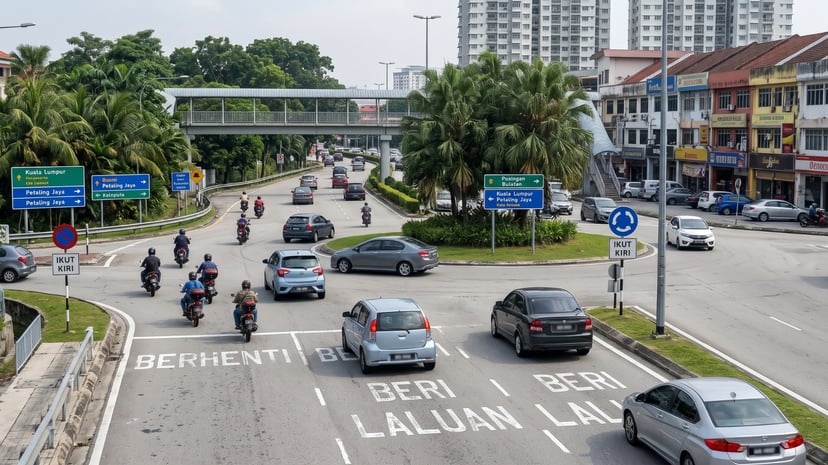
In Malaysia, the correct lane at a roundabout depends on which exit you intend to take. Generally, use the left lane to turn left or go straight, and the right lane to go straight, turn right or make a U-turn. Vehicles already circulating inside the roundabout have priority, so drivers entering must give way. Always follow road signs, lane markings and traffic signals where provided.
Roundabouts may look straightforward, but choosing the wrong lane, failing to signal or cutting across another vehicle's path can lead to dangerous situations. Understanding the proper roundabout rules in Malaysia can help you navigate these junctions more safely and confidently.
Table of Contents
- Key takeaways
- What are the roundabout rules in Malaysia?
- Which lane should you use at a roundabout?
- Who has the right of way at a roundabout?
- How to use your indicators correctly
- How to navigate a roundabout safely
- Common roundabout driving mistakes
- Can you get fined for incorrect roundabout driving?
- Frequently asked questions
- Conclusion
Key takeaways
- Use the left lane for turning left or travelling straight through a typical two-lane roundabout.
- Use the right lane for travelling straight, turning right or making a U-turn.
- Always give way to vehicles already circulating inside the roundabout.
- Signal appropriately and check mirrors and blind spots before exiting.
- Follow lane arrows, signs and traffic controls instead of assuming every roundabout has the same layout.
What are the roundabout rules in Malaysia?
A roundabout is a circular intersection designed to manage traffic flowing between several connecting roads. In Malaysia, vehicles travel clockwise around the central island, and approaching vehicles must give way to circulating traffic.
According to the Royal Malaysia Police (PDRM) roundabout guidance, drivers should choose the correct lane before entering, signal their intentions, reduce speed and give priority to vehicles already using the roundabout.
These principles apply to everyday driving, whether you encounter a roundabout in a residential neighbourhood, commercial area or busy urban intersection.
However, not all roundabouts have identical layouts. Some have one circulating lane, while others have multiple lanes, dedicated turning lanes or traffic lights. Always observe the signs and road markings at the actual junction.
Which lane should you use at a roundabout in Malaysia?
For a typical two-lane roundabout, imagine the exits positioned like a clock, with your vehicle approaching from the 6 o'clock position. This makes it easier to identify which lane to use.
| Intended direction | Clock position | Recommended lane |
|---|---|---|
| Turn left | 9 o'clock | Left lane |
| Go straight | 12 o'clock | Left or right lane |
| Turn right | 3 o'clock | Right lane |
| Make a U-turn | 6 o'clock | Right lane |
This is the general lane-selection guidance published by PDRM. It assumes a conventional roundabout without signs or markings directing traffic differently.
1. Turning left: Use the left lane
If you intend to take the first exit, position your vehicle in the left lane before reaching the roundabout. Signal left, slow down and give way to circulating vehicles before entering.
Once it is safe, follow the outer lane towards your exit. Avoid drifting into the inner lane or accelerating across the path of another vehicle.
2. Going straight: Use the left or right lane
Drivers travelling straight through a typical two-lane roundabout may generally use either lane, provided the road markings permit it.
The left lane is often the simpler choice because it reduces the need to move across circulating traffic before exiting.
If using the right lane, pay particular attention to vehicles in the outer lane. Do not assume they will give way simply because you have reached your intended exit.
3. Turning right: Use the right lane
For the third exit, approach from the right lane and indicate right. Give way before entering and follow the appropriate circulating lane.
As you approach your intended exit, check your mirrors and blind spots, indicate left and move towards the exit only when the path is clear.
Never cut across a vehicle travelling alongside you in the outer lane.
4. Making a U-turn: Use the right lane
If you need to travel around the roundabout and return in the direction you came from, use the right lane unless signs indicate otherwise.
Keep a controlled speed, signal appropriately and check for vehicles before leaving the roundabout.
If you cannot exit safely, continue around the roundabout where permitted rather than forcing your way across another lane.
Expert tip: Decide which exit you need before reaching the roundabout. Look for lane-direction arrows early and position your vehicle accordingly. If you are unfamiliar with the junction, reduce your speed and allow extra space instead of making a last-second lane change.
Who has the right of way at a roundabout?
Vehicles already inside the roundabout have priority over vehicles waiting to enter. This is one of the most important roundabout rules in Malaysia.
When approaching a roundabout, check for circulating traffic coming from your right. Slow down and stop if necessary until there is a safe opportunity to enter.
This applies even if you are taking the first exit. Being in the left lane does not automatically give you priority over vehicles already circulating.
The Public Works Department (JKR) road design guidance also describes roundabouts as intersections where entering traffic yields to circulating traffic.
Remember that having priority does not mean you can change lanes without checking. Every driver remains responsible for ensuring their intended movement is safe.
How to use your indicators correctly at a roundabout
Turn signals help other road users understand your intentions. Using them correctly is particularly important at roundabouts because vehicles may be entering, circulating and exiting simultaneously.
When turning left: Signal left as you approach and maintain the signal until you complete the turn.
When going straight: Generally, no turn signal is needed when approaching. After passing the exit immediately before yours, signal left before leaving the roundabout.
When turning right: Signal right on approach. After passing the exit before your intended exit, check that it is safe and signal left to leave.
When making a U-turn: Signal right while circulating, then signal left when preparing to take your exit.
These are general signalling practices. Drivers must still follow any specific traffic controls and account for the layout of the junction.
Importantly, an indicator communicates your intention. It does not give you the right to enter another vehicle's lane or force another driver to brake.
How to navigate a roundabout safely
Safe roundabout driving begins before you reach the junction. Following a consistent routine can reduce confusion and sudden movements.
Step 1: Identify your exit early
Look ahead for directional signs and decide whether you are turning left, travelling straight, turning right or making a U-turn.
Step 2: Choose the correct lane
Move into the appropriate approach lane before reaching the roundabout. Follow any painted arrows or overhead signs.
Step 3: Reduce your speed
Approach at a speed that allows you to observe circulating vehicles, pedestrians and motorcycles. Be prepared to stop.
Step 4: Give way before entering
Check traffic approaching from your right and enter only when there is sufficient space.
Step 5: Maintain your lane
Follow the appropriate circulating lane. Avoid unnecessary lane changes and leave enough space around surrounding vehicles.
Step 6: Signal and exit safely
Check your mirrors and blind spots, indicate left when appropriate and exit without cutting across another vehicle's path.
Motorcyclists can be particularly difficult to spot around a roundabout. Take extra care before moving towards an exit, especially during peak-hour traffic.
Common roundabout driving mistakes Malaysians should avoid
Even experienced drivers can make mistakes at roundabouts, particularly when traffic is heavy or lane markings are unclear.
Using the left lane to turn right: Continuing past the straight-ahead exit from the outer lane of a conventional two-lane roundabout can create conflicts with vehicles exiting from the inner lane.
Entering without giving way: Drivers sometimes assume that taking the first exit means they can enter immediately. Vehicles already circulating still have priority.
Failing to indicate: Other motorists may not know whether you intend to continue circulating or leave at the next exit.
Changing lanes suddenly: Last-minute movements can place your vehicle directly in another driver's path.
Stopping unnecessarily inside the roundabout: Unexpected braking can create a hazard for following traffic. Maintain a safe, controlled movement unless stopping is necessary.
Common mistake: Assuming the right lane automatically gives you permission to cut across the left lane when exiting. Even if you selected the correct approach lane, you must check that your exit path is clear. If another vehicle blocks your exit, avoid forcing the manoeuvre and continue around safely where permitted.
Can you get fined for using the wrong lane at a roundabout in Malaysia?
Incorrect roundabout driving can lead to enforcement action if the manoeuvre involves a traffic offence, such as disobeying road signs or markings, driving carelessly or making a dangerous movement.
However, there is no single fine amount that should be assumed for every instance of choosing the wrong roundabout lane. The applicable offence and penalty depend on the driver's actions and the relevant legal provisions.
Drivers should refer to the Road Transport Department (JPJ) or PDRM for current enforcement information.
Beyond possible penalties, incorrect lane selection can increase the risk of side collisions, sudden braking and disputes between drivers.
Understanding the rules is therefore not simply about avoiding a saman. It is about reducing unnecessary risks for everyone sharing the road.
Frequently Asked Questions
1. Which lane should I use at a roundabout in Malaysia?
At a typical two-lane roundabout, use the left lane to turn left or go straight, and the right lane to go straight, turn right or make a U-turn. Follow any specific lane markings or signs.
2. Who has the right of way at a roundabout in Malaysia?
Vehicles already circulating inside the roundabout have priority. Drivers entering must give way and wait for a safe gap.
3. Can I go straight from the right lane at a roundabout?
Yes. PDRM guidance allows drivers to go straight from either lane at a conventional two-lane roundabout, unless road markings or signs direct otherwise.
4. Can I turn right from the left lane at a roundabout?
Generally, no. At a conventional two-lane roundabout, the left lane is intended for left turns or travelling straight. Use the right lane for right turns unless signs specify a different arrangement.
5. Do I need to signal when going straight at a roundabout?
You generally do not need to signal when approaching to go straight. However, signal left after passing the exit before yours to indicate that you are leaving.
6. Do I have to stop before entering a roundabout?
Not necessarily. Slow down and give way to circulating traffic. Stop when required by traffic conditions, signals or signs.
7. Can I change lanes inside a roundabout?
A lane change should only be made where permitted and when it is safe. Avoid unnecessary changes, check mirrors and blind spots, and never cut across another vehicle to reach an exit.
8. What should I do if I miss my exit at a roundabout?
Continue around the roundabout and approach your exit again if the road layout and signs permit it. Never reverse or make a sudden turn to recover a missed exit.
9. Are the roundabout rules the same for three-lane roundabouts?
The basic principles of giving way, signalling and safe lane selection remain the same. However, three-lane roundabouts may have different lane assignments, so follow the specific signs and painted arrows.
10. Can I receive a saman for dangerous driving at a roundabout?
Yes. Dangerous or careless manoeuvres at a roundabout may result in enforcement action under applicable Malaysian traffic laws. The offence and penalty depend on the circumstances.
11. Do motorcycles have to follow roundabout rules?
Yes. Motorcyclists must follow applicable traffic signs, priority rules and lane directions. Other drivers should also check carefully for motorcycles before entering, changing lanes or exiting.
12. What if a roundabout has traffic lights?
Follow the operating traffic lights and any accompanying signs or road markings. Do not rely solely on the usual roundabout priority rule when traffic signals are controlling movement.
Conclusion: Choose the correct lane before entering a roundabout
Using the correct lane at a roundabout in Malaysia helps keep traffic predictable and reduces the risk of collisions. Remember the basics: left lane for turning left or going straight, right lane for going straight, turning right or making a U-turn, and always give way to vehicles already circulating.
Most importantly, observe road markings, signal clearly and never force an unsafe exit. A few seconds of patience can make a significant difference to road safety.
Keeping your vehicle in good condition is another important part of safer driving. If you are considering upgrading to a different car, Motorist Malaysia can help you explore your car-selling options and request a valuation before deciding on your next vehicle.
Read More: Dealing with Roundabouts in Malaysia
I want to find the highest selling price for my car within 24 hours!
Download the Motorist App for a more convenient car ownership experience.


