EV road tax in Malaysia stays, rates 85% lower than ICE vehicles
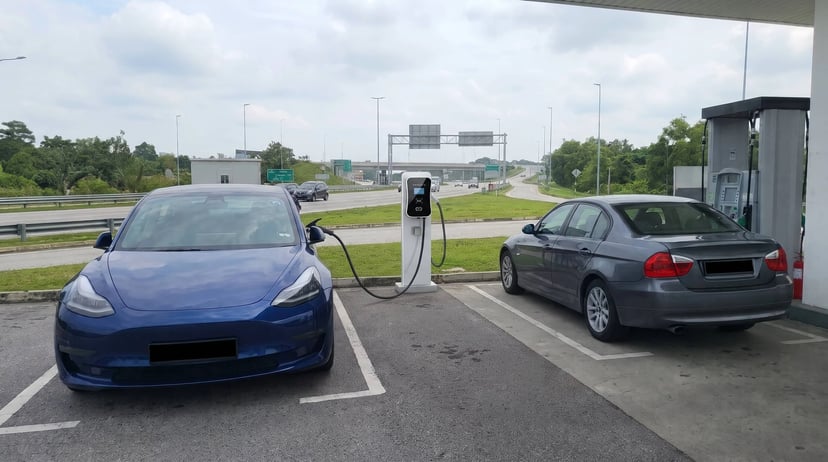
Malaysia’s Transport Ministry will retain the current electric vehicle (EV) road tax structure, saying EV and zero-emission vehicle rates are on average 85% lower than those for internal combustion engine (ICE) vehicles under the revised structure introduced on 1 January 2026.
Table of Contents
Key takeaways
- Malaysia’s current EV road tax structure will remain in place.
- EV road tax rates are stated by the Transport Ministry to be 85% lower on average than ICE vehicle rates.
- EV road tax is based on electric motor output in watts or kilowatts, while private ICE vehicle road tax is based on engine capacity in cubic centimetres (cc).
- 174,686 EVs had been registered in Malaysia as of August 2026.
Why Malaysia is keeping the EV road tax structure
The Transport Ministry said there is currently no need to restructure the EV road tax formula. The ministry considers motor power to be an appropriate basis for determining the Motor Vehicle Licence (LKM) rate because vehicles with more powerful electric motors are generally more expensive, larger and heavier.
The ministry was responding to a parliamentary question asking whether EV road tax could instead take factors such as vehicle segment, prestige and performance into account.
According to the ministry, the existing LKM structure was established following a comprehensive study and remains suitable for determining EV road tax.
Expert tip: When estimating an EV’s annual road tax, check its official motor power output rather than relying on the vehicle’s price or performance figures alone.
How EV road tax is calculated
Private ICE vehicle road tax is currently calculated according to engine capacity, measured in cubic centimetres (cc). For EVs, the LKM rate is determined by the electric motor’s power output, measured in watts or kilowatts (kW).
The EV rate increases as electric motor power increases. The Transport Ministry said higher motor power generally corresponds with higher vehicle prices, larger vehicle sizes and greater weight, which is why motor power remains the basis for the calculation.
The current EV structure took effect on 1 January 2026 after EVs enjoyed a road tax exemption from 1 January 2022 through 31 December 2025.
Common mistake: Do not assume that every EV has a low fixed road tax rate. The amount still varies according to the vehicle’s electric motor output.
How much lower is EV road tax?
The Transport Ministry said the revised road tax rates for EVs and zero-emission vehicles are, on average, 85% lower than the rates for ICE vehicles. The ministry said the lower rates are intended to encourage consumers to switch to zero-emission vehicles.
The government had previously announced in 2024 that the new EV rates would be 85% lower than the previous EV rates. However, the latest parliamentary reply specifically described the current rates as being 85% lower on average than ICE vehicle rates.
For example, under the current structure, an EV with a motor output of 50 kW can have a road tax of RM20, while higher-powered EVs pay progressively more.
How many EVs are registered in Malaysia?
The Transport Ministry revealed that 174,686 EVs had been registered in Malaysia as of August 2026.
Private passenger cars made up the largest portion, with 130,229 units, accounting for 74.6% of total EV registrations.
The figures show that EV ownership has continued to grow after Malaysia ended its road tax exemption at the end of 2025, although the available figures do not by themselves establish the reasons behind individual purchasing decisions.
Frequently Asked Questions
1. Will Malaysia restructure EV road tax?
The Transport Ministry currently has no plans to restructure the existing EV road tax formula.
2. How is EV road tax calculated in Malaysia?
EV road tax is calculated according to the electric motor’s power output, measured in watts or kilowatts.
3. Is EV road tax cheaper than ICE road tax?
The Transport Ministry said EV road tax rates are, on average, 85% lower than rates for ICE vehicles.
4. When did Malaysia’s current EV road tax structure start?
The current EV road tax structure took effect on 1 January 2026.
5. Were EVs previously exempt from road tax in Malaysia?
Yes. EVs were exempt from road tax from 1 January 2022 until 31 December 2025.
6. Does a more powerful EV pay more road tax?
Yes. The EV road tax rate increases as electric motor power increases.
7. How is ICE vehicle road tax calculated?
Private ICE vehicle road tax is currently based on engine capacity measured in cubic centimetres (cc).
8. How many EVs were registered in Malaysia by August 2026?
A total of 174,686 EVs had been registered in Malaysia as of August 2026.
9. How many EV passenger cars were registered?
There were 130,229 registered EV passenger cars as of August 2026, representing 74.6% of total EV registrations.
10. Why does the government use motor power for EV road tax?
The Transport Ministry said higher electric motor power generally corresponds with higher vehicle prices, larger dimensions and greater weight.
Conclusion
Malaysia’s current EV road tax structure is set to remain, with the Transport Ministry saying the rates are suitable and significantly lower than those for ICE vehicles on average. For EV owners, the key factor remains the vehicle’s electric motor output, which determines the annual LKM rate.
Keep track of your vehicle-related costs and stay informed about Malaysia’s latest automotive developments with Motorist.
Read More: EV Road Tax 2026: How Much Will You Pay Now That the Exemption Has Ended?
I want to find the highest selling price for my car within 24 hours!
Download the Motorist App now. Designed by drivers for drivers, this all-in-one app lets you receive the latest traffic updates, access live traffic cameras, and manage vehicle-related matters.