Car road tax Malaysia 2027: Rates by cc and kW
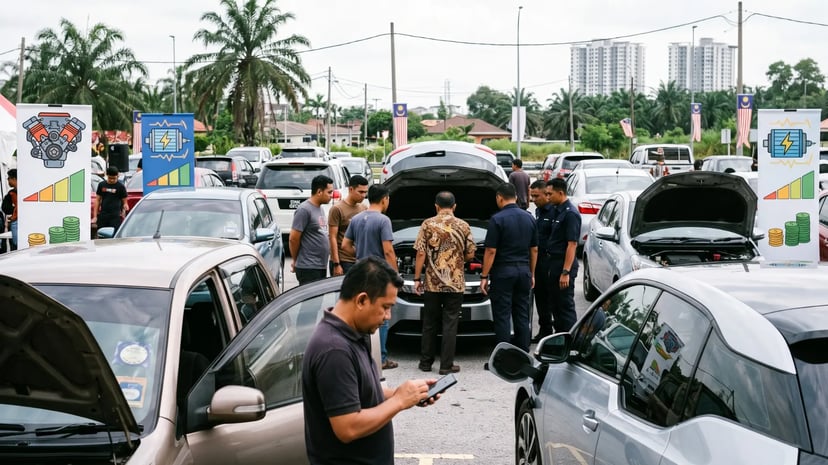
Car road tax in Malaysia starts from RM20 per year, with most private 1.3L and 1.5L saloon cars in Peninsular Malaysia costing RM70 and RM90 respectively. Petrol, diesel and hybrid cars are generally taxed according to engine capacity (cc), while fully electric vehicles (EVs) are taxed according to motor power (kW). Eligible vehicle owners can renew their road tax online through the MyJPJ app after obtaining valid motor insurance.
Planning your car ownership expenses for 2027? Knowing how much your road tax costs can help you budget for your annual renewal, compare vehicles before buying and avoid unexpected expenses.
Information reviewed on 27 November 2026. The following figures reflect the latest available road tax schedules for 2027 planning, subject to any subsequent changes announced by the Road Transport Department (JPJ) or Ministry of Transport (MOT).
Table of Contents
- How is car road tax calculated in Malaysia?
- Car road tax rates by engine capacity (cc)
- Road tax rates for SUVs, MPVs and pickup trucks
- Road tax rates in Sabah and Sarawak
- Electric vehicle road tax rates by kW
- How much is road tax for popular cars in Malaysia?
- How to calculate your car road tax
- How to renew road tax online using MyJPJ
- Why can't I renew my road tax on MyJPJ?
- How to reduce your annual car ownership costs
- Frequently Asked Questions
Key takeaways
- Annual road tax starts from RM20 for private cars with engines of 1,000cc or below.
- A private 1.5L saloon car in Peninsular Malaysia typically costs RM90 per year in road tax.
- Electric vehicles are taxed according to motor power (kW) following the end of the EV road tax exemption on 31 December 2025.
- Road tax rates depend on vehicle classification, ownership category and declared geographical area.
- Eligible private vehicle owners can renew road tax through MyJPJ for six or twelve months, subject to valid insurance coverage and JPJ requirements.
How is car road tax calculated in Malaysia?
Road tax, officially known as Lesen Kenderaan Motor (LKM), is a vehicle licence administered by the Road Transport Department (JPJ). Its validity must be maintained when using your vehicle on public roads.
Unlike motor insurance premiums, road tax is not directly determined by your car's market value, age or No Claim Discount (NCD). Instead, it is calculated using several vehicle-specific factors.
- Engine capacity (cc): Applicable to petrol, diesel and conventional hybrid cars, as well as plug-in hybrids.
- Motor power (kW): Applicable to fully electric vehicles.
- Vehicle classification: Saloon and non-saloon vehicles follow different rate schedules.
- Geographical area: Peninsular Malaysia, Sabah, Sarawak and certain duty-free islands have different applicable rates.
- Ownership category: Individually owned and company-owned vehicles may be subject to different rates.
The applicable rate depends on the information recorded by JPJ rather than simply the vehicle's advertised engine size or body style.
Car owners can refer to the official JPJ road tax calculation guidelines for more information.
Car road tax rates by engine capacity (cc)
The following annual road tax schedule applies to individually owned private saloon cars in Peninsular Malaysia, based on the prevailing rates available for 2027 planning.
| Engine capacity (cc) | Base annual rate | Progressive charge |
|---|---|---|
| 1,000cc and below | RM20 | None |
| 1,001–1,200cc | RM55 | None |
| 1,201–1,400cc | RM70 | None |
| 1,401–1,600cc | RM90 | None |
| 1,601–1,800cc | RM200 | RM0.40 per cc above 1,600cc |
| 1,801–2,000cc | RM280 | RM0.50 per cc above 1,800cc |
| 2,001–2,500cc | RM380 | RM1.00 per cc above 2,000cc |
| 2,501–3,000cc | RM880 | RM2.50 per cc above 2,500cc |
| Above 3,000cc | RM2,130 | RM4.50 per cc above 3,000cc |
Source: JPJ road tax calculation guidelines.
For private saloon cars with engines of 1,600cc or below, road tax is charged at a fixed rate within each engine capacity bracket. Once the engine capacity exceeds 1,600cc, an additional progressive charge applies.
This explains why a 1.8L car can cost considerably more to renew than a 1.5L car, even if both vehicles have similar market values.
Road tax rates for SUVs, MPVs and pickup trucks
Vehicles classified by JPJ as private non-saloon vehicles follow a different road tax structure. This category commonly includes SUVs, MPVs, four-wheel-drive vehicles and privately registered pickup trucks.
| Engine capacity | Base annual rate | Progressive charge |
|---|---|---|
| 1,000cc and below | RM20 | None |
| 1,001–1,200cc | RM85 | None |
| 1,201–1,400cc | RM100 | None |
| 1,401–1,600cc | RM120 | None |
| 1,601–1,800cc | RM300 | RM0.30 per cc above 1,600cc |
| 1,801–2,000cc | RM360 | RM0.40 per cc above 1,800cc |
| 2,001–2,500cc | RM440 | RM0.80 per cc above 2,000cc |
| 2,501–3,000cc | RM840 | RM1.60 per cc above 2,500cc |
| Above 3,000cc | RM1,640 | RM1.60 per cc above 3,000cc |
These rates apply to private non-saloon vehicles in Peninsular Malaysia. Commercial vehicles may follow separate licensing requirements.
For example, a 1,498cc private saloon car costs RM90 annually, while a non-saloon vehicle with the same engine capacity costs RM120 under the applicable schedules.
However, non-saloon vehicles are not necessarily more expensive to tax at every engine capacity bracket. Always compare the relevant JPJ rates before purchasing a vehicle.
Road tax rates in Sabah and Sarawak
Car owners in Sabah and Sarawak generally enjoy lower road tax rates than those in Peninsular Malaysia for equivalent petrol and diesel vehicle classifications.
The following table compares the annual rates for individually owned private saloon cars.
| Engine capacity | Peninsular Malaysia | Sabah and Sarawak |
|---|---|---|
| 1,000cc and below | RM20 | RM20 |
| 1,200cc | RM55 | RM44 |
| 1,300cc | RM70 | RM56 |
| 1,500cc | RM90 | RM72 |
| 1,600cc | RM90 | RM72 |
| 1,800cc | RM280 | RM224 |
| 2,000cc | RM380 | RM274 |
| 2,500cc | RM880 | RM524 |
| 3,000cc | RM2,130 | RM1,024 |
The figures above use the exact engine capacities stated in the table. Actual charges may differ slightly depending on your vehicle's registered engine capacity.
Sabah and Sarawak progressive road tax rates for private saloon cars
| Engine capacity | Base rate | Progressive charge |
|---|---|---|
| 1,601–1,800cc | RM160 | RM0.32 per cc above 1,600cc |
| 1,801–2,000cc | RM224 | RM0.25 per cc above 1,800cc |
| 2,001–2,500cc | RM274 | RM0.50 per cc above 2,000cc |
| 2,501–3,000cc | RM524 | RM1.00 per cc above 2,500cc |
| Above 3,000cc | RM1,024 | RM1.35 per cc above 3,000cc |
What about SUVs and MPVs in Sabah and Sarawak?
| Engine capacity | Base annual rate | Progressive charge |
|---|---|---|
| 1,000cc and below | RM20 | None |
| 1,001–1,200cc | RM42.50 | None |
| 1,201–1,400cc | RM50 | None |
| 1,401–1,600cc | RM60 | None |
| 1,601–1,800cc | RM165 | RM0.17 per cc above 1,600cc |
| 1,801–2,000cc | RM199 | RM0.22 per cc above 1,800cc |
| 2,001–2,500cc | RM243 | RM0.44 per cc above 2,000cc |
| 2,501–3,000cc | RM463 | RM0.88 per cc above 2,500cc |
| Above 3,000cc | RM903 | RM1.20 per cc above 3,000cc |
Special road tax arrangements also apply in certain duty-free areas, including Langkawi, Pangkor and Labuan. Check your vehicle's eligibility and declared area with JPJ before assuming that a reduced rate applies.
Electric vehicle road tax rates by kW
Do electric cars still enjoy free road tax in Malaysia in 2027? Under the current framework, the answer is no. Malaysia's EV road tax exemption ended on 31 December 2025, with a revised motor-power-based taxation structure introduced in 2026.
Unlike petrol and diesel cars, fully electric vehicles do not have a conventional engine capacity measured in cc. Instead, their road tax is determined by the registered electric motor power measured in kilowatts (kW).
The following EV road tax schedule provides a reference for 2027 ownership costs, assuming no subsequent changes to the applicable rates.
| Electric motor power | Annual road tax range |
|---|---|
| 50kW and below | RM20 |
| Above 50–100kW | RM30–RM70 |
| Above 100–210kW | RM80–RM280 |
| Above 210–310kW | RM305–RM575 |
| Above 310–410kW | RM615–RM1,065 |
| Above 410–510kW | RM1,140–RM2,040 |
| Above 510–610kW | RM2,165–RM3,515 |
| Above 610–710kW | RM3,690–RM5,490 |
| Above 710–810kW | RM5,715–RM7,965 |
| Above 810–910kW | RM8,240–RM10,940 |
| Above 910–1,010kW | RM11,265–RM14,415 |
| Above 1,010kW | RM20,000 |
The exact amount within each power bracket depends on the applicable 10kW sub-band.
Examples of annual EV road tax costs
| Registered motor power | Annual road tax |
|---|---|
| 50kW | RM20 |
| 85kW | RM60 |
| 100kW | RM70 |
| 110kW | RM80 |
| 130kW | RM120 |
| 150kW | RM160 |
| 160kW | RM180 |
| 200kW | RM260 |
| 220kW | RM305 |
| 300kW | RM545 |
Sources: Ministry of Transport Malaysia and EV road tax schedule reference.
Not all electric vehicles are cheaper to tax than petrol cars. High-performance EVs with more powerful electric motors can attract significantly higher annual road tax charges.
Expert tip
When buying an electric car, check its registered motor power in kW rather than its battery capacity in kWh. A 60kWh battery does not mean the vehicle is taxed at 60kW. Different motor configurations of the same EV model can also have different road tax costs.
How much is road tax for popular cars in Malaysia?
If you drive a Perodua Myvi, Honda City, Toyota Vios or Proton X50, your annual road tax depends on your specific variant, registered engine capacity and vehicle classification.
Here are illustrative annual road tax costs for selected common variants in Peninsular Malaysia.
| Car model | Engine capacity | Annual road tax |
|---|---|---|
| Perodua Axia 1.0 | 998cc | RM20 |
| Perodua Bezza 1.0 | 998cc | RM20 |
| Perodua Bezza 1.3 | 1,329cc | RM70 |
| Perodua Myvi 1.3 | 1,329cc | RM70 |
| Perodua Myvi 1.5 | 1,496cc | RM90 |
| Proton Saga 1.3 | 1,332cc | RM70 |
| Proton Saga 1.5 | 1,499cc | RM90 |
| Proton Persona 1.6 | 1,597cc | RM90 |
| Honda City 1.5 | 1,498cc | RM90 |
| Toyota Vios 1.5 | 1,496cc | RM90 |
| Honda Civic 1.5 Turbo | 1,498cc | RM90 |
| Toyota Corolla Altis 1.8 | 1,798cc | RM279.20 |
| Perodua Ativa 1.0 | 998cc | RM20 |
| Perodua Alza 1.5 | 1,496cc | RM120 |
| Proton X50 1.5 | 1,477cc | RM120 |
| Mazda CX-5 2.0 | 1,998cc | RM439.20 |
| Toyota Camry 2.5 | 2,487cc | RM867 |
These examples assume individual private ownership and the relevant saloon or non-saloon classification. Engine specifications may vary by generation, model year and variant. Insurance premiums and third-party service charges are excluded.
How to calculate your car road tax
Calculating your car road tax is relatively straightforward once you know your registered engine capacity, vehicle category and applicable geographical area.
For private saloon cars above 1,600cc, use the following formula with the relevant rate bracket.
Annual road tax = Base rate + (Excess engine capacity × Progressive rate)
Example 1: A 1,798cc saloon car in Peninsular Malaysia
- Base rate: RM200
- Excess engine capacity: 1,798 − 1,600 = 198cc
- Progressive charge: 198 × RM0.40 = RM79.20
- Total annual road tax: RM279.20
Example 2: A 1,998cc saloon car in Peninsular Malaysia
- Base rate: RM280
- Excess engine capacity: 1,998 − 1,800 = 198cc
- Progressive charge: 198 × RM0.50 = RM99
- Total annual road tax: RM379
Example 3: A 1,998cc non-saloon SUV in Peninsular Malaysia
- Base rate: RM360
- Excess engine capacity: 1,998 − 1,800 = 198cc
- Progressive charge: 198 × RM0.40 = RM79.20
- Total annual road tax: RM439.20
Common mistake: Rounding up your car's engine capacity
Many drivers assume that a 2.0L car has exactly 2,000cc or that a 1.8L car has exactly 1,800cc. Manufacturers often round engine sizes for marketing purposes. Always use the exact engine capacity recorded on your Vehicle Ownership Certificate (VOC), commonly called the geran, when calculating road tax.
How to renew road tax online using MyJPJ
Eligible Malaysian private vehicle owners can renew their digital road tax, known as e-LKM, directly through the MyJPJ application without visiting a JPJ counter.
Before renewing your road tax, make sure:
- Your motor insurance is valid for the requested renewal period.
- Your road tax is eligible for renewal, which can generally be done up to two months before expiry.
- Your vehicle is eligible for online renewal through MyJPJ.
- There are no blacklisting issues or other restrictions preventing renewal.
- You have access to your MyJPJ account and an accepted payment method.
Follow these steps to renew your road tax online.
Step 1: Renew your car insurance
Obtain valid motor insurance covering your intended road tax renewal period. Ensure your vehicle details are correct and that the insurance information has been submitted to the relevant system.
Step 2: Open the MyJPJ app
Launch the official MyJPJ application on your smartphone and sign in using the available authentication method.
Step 3: Select your vehicle
Open your profile, navigate to Lesen Kenderaan Motor and select the registration number of the vehicle you want to renew.
Step 4: Choose road tax renewal
Select Pembaharuan and choose an available renewal period of six or twelve months, depending on your eligibility and insurance coverage.
Step 5: Review your road tax amount
Check your vehicle information, renewal period and payable amount before proceeding. The amount displayed by JPJ should take precedence over any estimated calculations.
Step 6: Complete the payment
Choose an available payment method in the app and complete the required payment authentication.
Step 7: Check your updated digital road tax
Once payment is successful, save your receipt and return to your vehicle profile to confirm that the e-LKM validity period has been updated.
If the payment is pending or the digital road tax has not updated, check your transaction history before attempting another payment.
For further information, refer to the official JPJ digital road tax renewal instructions and MyJPJ FAQs. App interfaces and payment options may change following software updates.
Why can't I renew my road tax on MyJPJ?
If your road tax renewal fails on MyJPJ, the issue could be related to your insurance coverage, vehicle records, account eligibility or payment status.
Your insurance has expired or is not reflected in the system
Contact your insurance provider to confirm that your policy is active and the correct vehicle information has been submitted.
Your vehicle or owner record has been blacklisted
Unresolved enforcement matters that result in an active blacklist or renewal restriction can prevent you from renewing your road tax. Not every unpaid summons automatically results in a blacklist, so check your actual status with the relevant authority.
Your road tax expired more than three years ago
According to JPJ, cars with road tax that has expired for more than three years must undergo and pass the required vehicle inspection before renewal.
Do not drive the vehicle to an inspection centre without the necessary legal authorisation. Contact JPJ regarding a temporary travel permit or arrange appropriate vehicle transportation.
Your vehicle is not eligible for MyJPJ renewal
Certain ownership categories, commercial vehicles or vehicles requiring additional documentation may need to use alternative renewal channels.
Your payment has failed or is pending
Check your transaction history and bank payment status before trying again. Contact JPJ if payment has been deducted but your road tax has not been renewed.
Alternative road tax renewal channels include JPJ counters, participating post offices, authorised service providers and the mySIKAP portal, depending on vehicle eligibility.
For official requirements, refer to the JPJ vehicle licence renewal guidelines.
How to reduce your annual car ownership costs
Road tax is only one part of the total cost of owning a car in Malaysia. When budgeting for 2027, drivers should also consider insurance, fuel, maintenance, tyres, financing and depreciation.
Choosing a vehicle with a smaller engine or lower electric motor output may help reduce recurring road tax expenses. However, a cheaper road tax rate does not necessarily mean a car is cheaper to own overall.
For example, an individually owned 1.5L saloon car in Peninsular Malaysia costs RM90 per year in road tax, while a 2,487cc saloon car costs RM867.
That represents a difference of RM777 annually, or RM3,885 over five years, assuming the rates remain unchanged.
If your current vehicle is becoming increasingly expensive to maintain, comparing its total running costs against those of a more economical replacement could help you make a better financial decision.
Frequently Asked Questions
1. How much is road tax for a 1.0L car in Malaysia in 2027?
Under the prevailing schedule, private cars with an engine capacity of 1,000cc or below cost RM20 annually in Peninsular Malaysia, Sabah and Sarawak, subject to any future rate revisions.
2. How much is road tax for a 1.5L car in Malaysia?
An individually owned private 1.5L saloon car costs RM90 annually in Peninsular Malaysia and RM72 in Sabah and Sarawak. A private non-saloon vehicle within the same engine bracket costs RM120 in Peninsular Malaysia.
3. How much is road tax for a 2.0L car in Malaysia?
A private saloon car with an exact engine capacity of 2,000cc costs RM380 annually in Peninsular Malaysia and RM274 in Sabah and Sarawak. Cars with slightly smaller registered engine capacities may cost less.
4. Is EV road tax still free in Malaysia in 2027?
No under the current framework. Malaysia's EV road tax exemption ended on 31 December 2025. Electric vehicles are subject to a motor-power-based road tax schedule starting from RM20 annually.
5. Is EV road tax calculated using kW or kWh?
EV road tax is calculated using registered electric motor power in kilowatts (kW), not battery storage capacity in kilowatt-hours (kWh).
6. How much is road tax for a 150kW electric car?
A fully electric car with a registered motor power of 150kW costs RM160 annually under the revised EV road tax schedule introduced in 2026. Confirm the applicable amount with JPJ when renewing in 2027.
7. How is road tax calculated for hybrid cars in Malaysia?
Hybrid and plug-in hybrid cars are generally taxed according to their registered combustion engine capacity in cc and the applicable vehicle classification, rather than their combined electric and petrol power output.
8. Can I renew my road tax online through MyJPJ?
Yes. Eligible private vehicle owners can renew their road tax through MyJPJ after obtaining valid motor insurance and meeting the applicable JPJ renewal conditions.
9. Can I renew road tax without renewing my car insurance?
No. Your vehicle must have valid motor insurance covering the requested road tax renewal period before JPJ can approve the renewal.
10. How early can I renew my car road tax?
JPJ generally allows road tax renewal up to two months before the existing road tax expires.
11. Can I renew my car road tax for six months instead of one year?
Yes. Private vehicle owners can generally choose between six-month and twelve-month renewal periods, provided the required insurance coverage and eligibility conditions are met.
12. Do I need to display a physical road tax sticker in Malaysia?
For eligible individually owned private vehicles covered by Malaysia's digital road tax initiative, displaying a physical road tax sticker is not required. Other vehicle categories and cross-border journeys may have different documentation requirements.
13. Can I drive my car if my road tax has expired?
No. You should not drive a vehicle on public roads with expired road tax unless you have the applicable legal authorisation, such as a valid temporary travel permit for an approved purpose.
14. Does road tax become cheaper as my car gets older?
Generally, no. Standard private car road tax is based on engine capacity or electric motor power, vehicle classification, ownership category and applicable area, rather than the vehicle's age or depreciated market value.
15. Is company-owned car road tax more expensive?
Company-owned private saloon cars in Peninsular Malaysia generally attract higher rates than individually owned private saloon cars in the same engine capacity bracket. Separate schedules may apply to other vehicle classifications.
16. Have Malaysia's 2027 road tax rates been confirmed?
As of 27 November 2026, a separate revision to the road tax schedule for 2027 has not been verified. Drivers can use the prevailing schedules for budgeting and should check JPJ or MyJPJ for the final payable amount.
Conclusion
Understanding Malaysia's road tax rates can help you prepare for your 2027 renewal and make more informed car ownership decisions. Whether you drive a petrol car, hybrid, SUV or electric vehicle, checking your registered engine capacity or motor power is the first step towards calculating your annual road tax accurately.
Remember to maintain valid motor insurance, renew your road tax before it expires and check official JPJ updates for any changes to the applicable rates.
Is your current car becoming too expensive to own? Get a free car valuation with Motorist Malaysia to understand what your vehicle is worth before deciding whether to keep it or switch to a more economical car.
Read More: EV road tax in Malaysia stays, rates 85% lower than ICE vehicles
I want to find the highest selling price for my car within 24 hours!
Download the Motorist App today and enjoy a smarter, more convenient car ownership experience.