Is your used BYD or Tesla losing value? The truth about battery health and resale prices in Malaysia
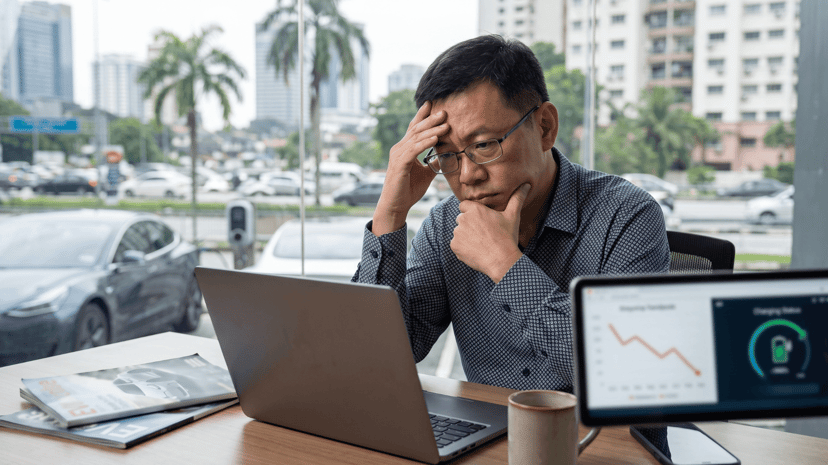
Electric vehicles are becoming more common on Malaysian roads, but some BYD and Tesla owners are discovering that their cars may not hold value in the same way as established petrol models. This does not necessarily mean that the battery is failing. A used electric vehicle’s price is influenced by several factors, including battery health, remaining warranty, new-car price changes, model demand, charging capability and the availability of newer technology.
For owners planning to sell, understanding these factors can make it easier to set realistic expectations and present the vehicle more confidently to potential buyers.
What does EV battery health mean?
Battery health usually refers to the battery’s state of health, commonly shortened to SOH. It estimates how much usable capacity remains compared with when the battery was new.
For example, a battery with 90 per cent SOH should theoretically retain about 90 per cent of its original usable capacity. However, actual driving range may still vary according to traffic, speed, weather, tyre pressure, air-conditioning use and driving style.
Battery ageing is normal. Lithium-ion batteries gradually lose capacity through calendar ageing, charging cycles, temperature exposure and regular use. This is different from a sudden battery failure.
A lower SOH may reduce the distance the vehicle can travel per charge. It may also affect resale value because buyers often associate lower capacity with shorter range and higher future repair risk.
However, battery health should not be judged using the dashboard range figure alone. The displayed range is an estimate that can change according to recent driving behaviour. A proper diagnostic assessment provides a more reliable picture.
Does battery degradation automatically destroy resale value?
No. Moderate battery degradation does not automatically make an electric vehicle difficult to sell. Buyers are more likely to become concerned when there is no reliable battery information, when the vehicle’s real-world range has fallen noticeably or when the battery warranty is close to expiring.
A well-maintained EV with transparent records, consistent charging performance and an active warranty may still attract competitive offers. In contrast, uncertainty may cause buyers to reduce their bids, even when the battery is functioning normally.
Battery transparency is therefore becoming increasingly important in the used-EV market. Research published in 2026 also highlighted that battery-management-system estimates do not always reflect actual capacity equally across every manufacturer. This supports the need for professional diagnostics rather than relying only on an app or dashboard reading.
How BYD battery coverage affects resale confidence
BYD Malaysia’s warranty package provides eight years or 160,000 km of coverage for the high-voltage Blade Battery, whichever comes first. BYD’s Malaysian distributor has also stated that battery replacement is provided if SOH falls below 70 per cent during the applicable warranty period.
This coverage can support resale confidence, particularly for newer BYD Dolphin, Atto 3 and Seal units that still have several years of battery warranty remaining.
However, sellers should confirm whether the warranty can be transferred, whether servicing requirements have been followed and whether any exclusions apply. The authorised service centre should verify the warranty status using the vehicle identification number.
The remaining warranty period may matter almost as much as the current battery condition. Two similar BYD vehicles may receive different offers if one has complete service records and several years of coverage remaining while the other has missing records or unusually high mileage.
What Tesla owners should know
Tesla Malaysia currently provides an eight-year battery and drive-unit warranty for its main Model 3 and Model Y variants. Depending on the version, the mileage limit is generally 160,000 km or 192,000 km, with a minimum battery-capacity retention of 70 per cent during the warranty period.
This does not mean that a Tesla battery is expected to fall to 70 per cent. The figure is a warranty threshold, not a resale target or a prediction of normal degradation.
A used Tesla’s value may also be influenced by software features, accident repairs, wheel condition, remaining basic warranty, charging history and changes to the price of new Tesla vehicles.
When manufacturers reduce new-car prices or introduce an upgraded model at a competitive price, older used units may need to be repriced. International used-EV markets have experienced similar pressure as rapid technological improvements and new-car discounts make later models more attractive.
Battery health is not the only reason values fall
A BYD or Tesla may lose value even when its battery remains healthy. New-car discounts can reduce the price gap between new and used vehicles. Buyers may decide to pay slightly more for a new car that includes a full warranty, updated equipment and attractive financing.
Technology also develops quickly. A newer EV may offer longer range, faster charging, better efficiency or improved driver-assistance features. This can make a three-year-old model feel older than a similarly aged petrol car.
Market supply is another factor. When more owners begin selling the same model, buyers have more choices and sellers may face stronger price competition.
Accident history, damaged underbody protection, charging faults, missing service records, worn tyres and cosmetic defects can further reduce the final offer.
How can owners protect their EV resale value?
Before selling, obtain a battery diagnostic report from an authorised service centre or qualified EV specialist. Keep invoices, inspection reports and service records together so potential buyers can verify the vehicle’s history.
Confirm the exact expiry date and mileage limit of the vehicle, battery and drive-unit warranties. Avoid making unsupported claims about battery condition based only on estimated range.
Owners should also disclose accident repairs and charging issues honestly. Clear information reduces uncertainty and may prevent major price changes after inspection.
The most valuable evidence is not simply low mileage. It is a combination of documented battery condition, active warranty coverage, reliable charging, good physical condition and transparent ownership records.
The final verdict
Used BYD and Tesla vehicles are not losing value only because their batteries are ageing. Resale prices are affected by battery confidence, new-car pricing, model supply, warranty coverage and the speed of EV technology development.
A healthy battery can support a stronger offer, but it cannot fully protect a vehicle from wider market depreciation. Owners who document battery health and understand current demand will be better prepared when it is time to sell.
FAQ
1. Does fast charging reduce BYD or Tesla resale value?
Frequent fast charging does not automatically make an EV difficult to sell. However, buyers may ask about charging habits because heat and charging patterns can influence long-term battery ageing. A diagnostic report is more useful than assumptions about how often the vehicle used a DC charger.
2. Is 70 per cent battery health considered good?
A 70 per cent SOH figure is commonly used as a battery-warranty threshold, including for applicable BYD and Tesla coverage in Malaysia. It should not be treated as an ideal battery condition. A vehicle at this level may have significantly less usable range than when it was new.
3. Can battery health be checked before selling an EV?
Yes. Owners can request a diagnostic assessment from an authorised service centre or qualified EV specialist. The report should be considered together with charging performance, warning messages, service history and real-world range.
4. Should I sell my EV before the battery warranty expires?
Selling while the warranty remains active may improve buyer confidence, but it does not guarantee a higher price. Current model demand, new-car promotions, mileage and vehicle condition will still affect the offer.
5. Do EV batteries need to be replaced before selling?
Normally, no. Battery replacement should only be considered when there is a confirmed fault, serious capacity loss or an authorised warranty recommendation. Replacing a functioning battery solely to increase resale value is unlikely to be cost-effective.
Thinking about selling your BYD, Tesla or another electric vehicle? Motorist Malaysia helps you obtain a competitive car valuation without dealing with multiple buyers yourself. Submit your vehicle details, receive offers from Motorist’s network of verified buyers and get support with the inspection, paperwork and car selling process. Request your free car valuation from Motorist Malaysia today and discover what your EV could be worth in the current market.
Read More: Should mat rempit join PLKN? Malaysia road safety debate
I want to find the highest selling price for my car within 24 hours!
Download the Motorist App now. Designed by drivers for drivers, this all-in-one app lets you receive the latest traffic updates, gives you access to live traffic cameras, and helps you manage vehicle related matters.