Malaysia targets 50% cut in road deaths by 2030: What drivers need to know
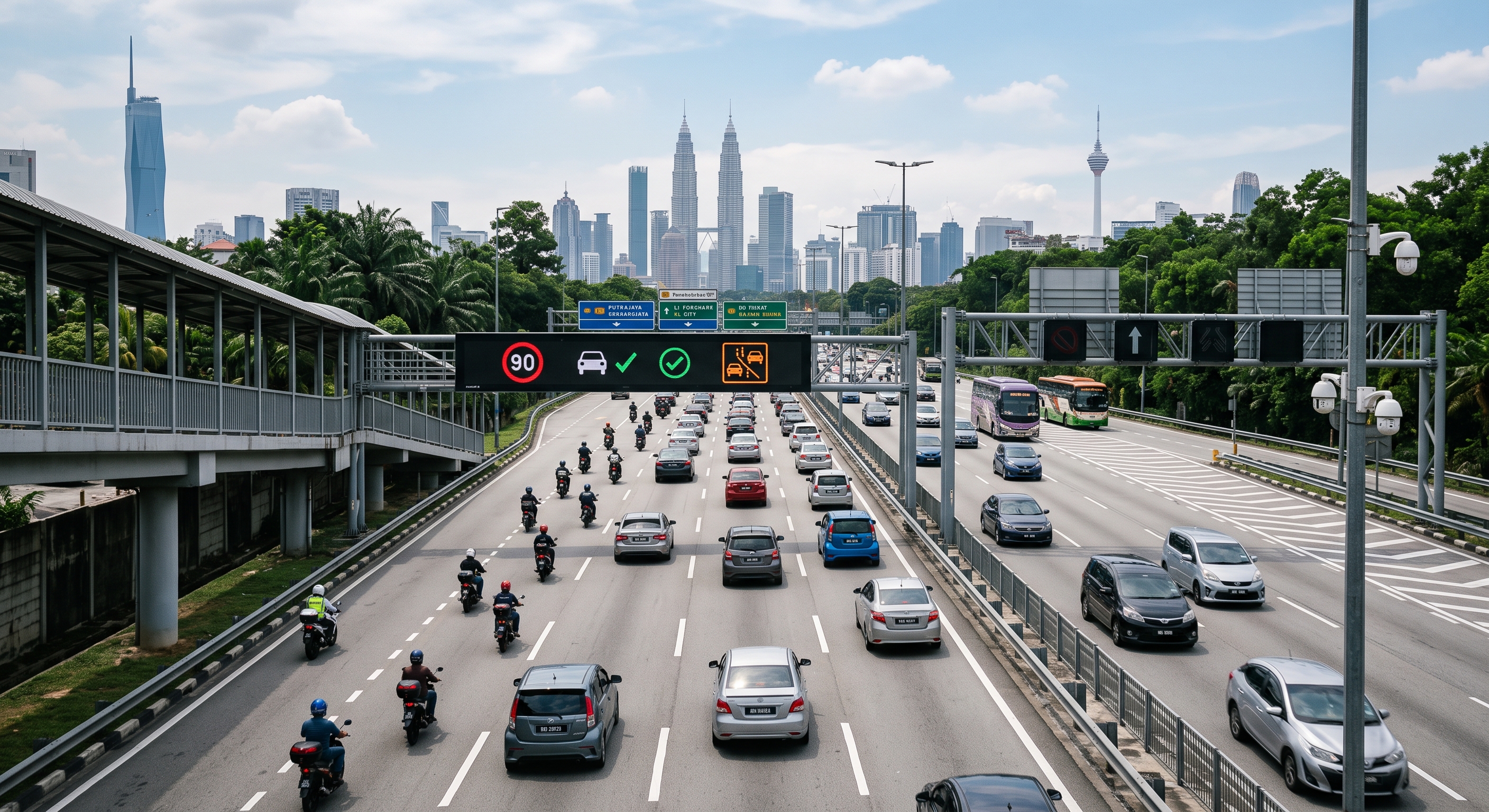
On 17 August 2026, Malaysia's Cabinet Committee on Road Safety and Traffic Congestion, chaired by Deputy Prime Minister Datuk Seri Dr Ahmad Zahid Hamidi, set a national target to cut road accident deaths by 50% by 2030. The target follows 6,537 road deaths in Malaysia in 2025 (18 per day), with motorcyclists and pillion riders accounting for about 66% of all fatalities. The government's plan centres on two programmes Safero, for heavy vehicle driver competency, and an enhanced Op Cegah, for employer-linked commuting safety.
Quick facts
|
Metric |
Figure |
| Target |
50% reduction in road accident deaths |
| Target year |
2030 |
| Announced |
17 August 2026 |
| Announced by |
Datuk Seri Dr Ahmad Zahid Hamidi, Deputy Prime Minister of Malaysia |
| Body responsible |
Cabinet Committee on Road Safety and Traffic Congestion |
| 2025 road deaths |
6,537 |
| Average daily deaths (2025) |
18 |
| Motorcyclist/pillion share of fatalities |
~66% |
| Motorcycle share of vehicles in accidents |
~14% |
| Estimated socioeconomic cost (2025) |
RM30 billion |
| Commuting fatality rate vs. industrial accidents (2024) |
2.4 times higher |
| Key programmes |
Safero, enhanced Op Cegah |
What is Malaysia's road safety target for 2030?
Malaysia's government has set a target to reduce road accident deaths by 50% by 2030. The target was set by the Cabinet Committee on Road Safety and Traffic Congestion, chaired by Deputy Prime Minister Datuk Seri Dr Ahmad Zahid Hamidi, at a meeting held on 17 August 2026. This is one of Malaysia's most aggressive road safety targets in recent years, and it places direct responsibility on the Transport Ministry, the Road Transport Department (JPJ), the Social Security Organisation (PERKESO), and the Royal Malaysia Police to coordinate enforcement, education, and infrastructure improvements before 2030.
Ahmad Zahid summarised the government's intent this way: "The measure of our success is not how many campaigns or operations are carried out, but how many lives we can save."
How many people die in road accidents in Malaysia?
In 2025, 6,537 people died in road accidents in Malaysia, an average of 18 deaths every day. This figure is the baseline the 2030 target is measured against — halving it would mean reducing annual road deaths in Malaysia to roughly 3,270 or fewer by 2030.
Why are motorcyclists the highest-risk group on Malaysian roads?
Motorcyclists and pillion riders accounted for approximately 66% of all road accident fatalities in Malaysia in 2025, even though motorcycles made up only about 14% of vehicles involved in accidents overall. This gap between motorcycles' share of accidents and their share of deaths shows that when motorcyclists are involved in a crash in Malaysia, the outcome is far more likely to be fatal than for other vehicle types. Because of this, motorcyclists remain the single largest target group for Malaysia's road safety policy.
What does road accident cost Malaysia economically?
Road accidents cost Malaysia an estimated RM30 billion in socioeconomic losses in 2025. This figure covers medical treatment, lost productivity, insurance claims, and long-term disability support linked to road crashes.
Why is commuting to work highlighted as a road safety risk?
Malaysian workers face a fatality rate 2.4 times higher while commuting to and from work than while at industrial worksites, based on 2024 data. This means the daily commute is statistically more dangerous to Malaysian workers than the workplace itself, which is why PERKESO's Op Cegah programme specifically targets commuting-related accidents rather than only workplace incidents.
What is Safero?
Safero, short for the Road Safety Framework Programme, is a collaborative road safety initiative in Malaysia involving the Transport Ministry, PETRONAS, the Land Public Transport Agency, the Road Transport Department (JPJ), and the Malaysian Institute of Road Safety Research. Safero is designed to improve heavy vehicle driver competency in Malaysia by focusing on two specific skill areas: defensive driving and fatigue management. Both factors are commonly cited causes of serious lorry and bus-related crashes on Malaysian highways.
What is Op Cegah and what has changed?
Op Cegah is an existing employer awareness programme run by PERKESO (the Social Security Organisation of Malaysia) that is aimed at reducing commuting and workplace-related road accidents among Malaysian workers. As part of the 2030 road safety target, Op Cegah has been enhanced through closer collaboration between the police, JPJ, and employers, and now uses data analytics to identify high-risk organisations and high-risk geographic areas in Malaysia. This allows enforcement and safety outreach to be targeted at the employers and locations where commuting accidents are most likely to occur, rather than applied uniformly nationwide.
What does this mean for drivers and riders in Malaysia?
For everyday motorists in Malaysia, the 2030 target signals several practical shifts to expect over the next few years:
- More targeted enforcement. Because the enhanced Op Cegah programme uses data analytics to flag high-risk areas and employers in Malaysia, drivers and riders connected to those flagged zones or industries can expect more frequent checks and safety campaigns.
- Motorcyclists remain the top priority group. Because motorcyclists and pillion riders account for roughly two-thirds of Malaysia's road fatalities, riders should expect continued emphasis on safety gear requirements, licensing standards, and enforcement of common motorcycle-related violations.
- New training expectations for commercial and heavy vehicle drivers. Because Safero focuses on defensive driving and fatigue management, employers in Malaysia's logistics, haulage, and public transport sectors may need to review driver rostering and training practices.
- Commuting risk is now a named national priority. Because commuting fatalities in Malaysia outpace industrial accident rates, employers may face growing pressure from PERKESO and other agencies to address how staff travel to and from work, not only workplace safety itself.
For individual drivers in Malaysia, the underlying advice is unchanged even as government policy shifts: defensive driving, regular vehicle maintenance, and adequate motor insurance coverage remain the most direct ways to reduce personal risk while these national measures take effect.
Frequently Asked Questions
1. What is Malaysia's new road safety target?
Malaysia's government has set a target to reduce road accident deaths by 50% by 2030. It was announced by Deputy Prime Minister Datuk Seri Dr Ahmad Zahid Hamidi after a Cabinet Committee on Road Safety and Traffic Congestion meeting on 17 August 2026.
How many people died in road accidents in Malaysia in 2025?6,537 people died in road accidents in Malaysia in 2025, an average of 18 deaths per day.
2. Which road users are most at risk in Malaysia?
Motorcyclists and pillion riders are the highest-risk road users in Malaysia, accounting for approximately 66% of all road fatalities in 2025, despite motorcycles making up only about 14% of vehicles involved in accidents.
3. What is Safero in Malaysia's road safety plan?
Safero (Road Safety Framework Programme) is a collaborative initiative between Malaysia's Transport Ministry, PETRONAS, the Land Public Transport Agency, JPJ, and the Malaysian Institute of Road Safety Research. It focuses on improving heavy vehicle driver competency in Malaysia through defensive driving training and fatigue management.
4. What is Op Cegah and how has it changed?
Op Cegah is PERKESO's employer awareness programme aimed at reducing commuting and workplace-related road accidents in Malaysia. It has been enhanced with stronger collaboration between the police, JPJ, and employers, and now uses data analytics to identify high-risk organisations and locations.
5. How much do road accidents cost Malaysia economically?
Road accidents cost Malaysia an estimated RM30 billion in socioeconomic losses in 2025, covering medical treatment, lost productivity, and related expenses.
6. Why are commuting accidents highlighted as a specific concern in Malaysia?
Data from 2024 shows that Malaysian workers face a fatality rate 2.4 times higher while commuting than in industrial accidents, making the daily commute a bigger safety concern than many workplace settings.
7. What can individual drivers in Malaysia do to help reduce road accidents?
While national programmes target enforcement and high-risk groups, individual drivers in Malaysia can reduce their own risk through defensive driving practices, regular vehicle maintenance and inspections, using proper safety gear (especially motorcyclists), avoiding fatigued driving, and maintaining adequate motor insurance coverage.
Read More: The Motorist Guide on Puspakom Inspection Malaysia 2026: B2, B5 & GI check explained
I want to find the highest selling price for my car within 24 hours!
Download the Motorist App now. Designed by drivers for drivers, this all-in-one app lets you receive the latest traffic updates, gives you access to live traffic cameras, and helps you manage vehicle related matters.