Documents needed to sell a car in Malaysia 2027
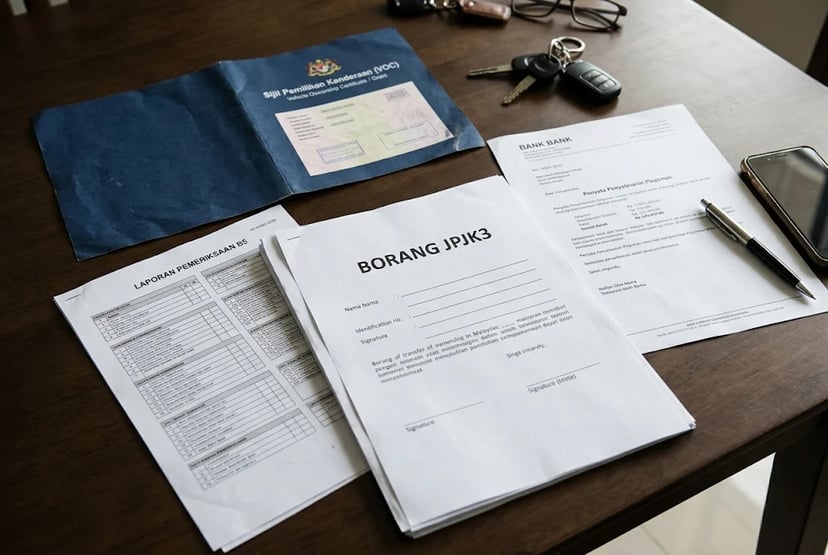
Documents You Need to Prepare Before Selling a Car in Malaysia in 2027
To sell a car in Malaysia, prepare your identification, Vehicle Ownership Certificate (VOC), any required loan settlement documents and the vehicle’s ownership transfer inspection records. The exact paperwork depends on whether you sell as an individual, have an outstanding loan or transfer ownership online.
Table of Contents
2. Vehicle Ownership Certificate
3. PUSPAKOM inspection documents
5. Ownership transfer forms and records
6. Documents for a company-owned car
Key takeaways
- Bring your original identification document for an in-person ownership transfer.
- JPJ’s voluntary transfer guidance lists the VOC and completed JPJK3 form for counter applications.
- Private cars generally need to pass a PUSPAKOM ownership transfer inspection. PUSPAKOM lists the original registration card or VOC as the inspection document.
- PUSPAKOM says the transfer inspection report is valid for 60 days.
- If a financier’s ownership claim is still recorded, contact the lender about settlement and release before proceeding with the transfer.
1. Seller’s identification
For a private sale between individuals, have your original MyKad ready. JPJ also lists MyTentera, MyPR and a passport as identity documents for individuals. If you and the buyer complete the transfer in person, both individuals must attend for biometric identity verification, according to JPJ’s voluntary ownership transfer guide.
For an online application through mySIKAP, the seller needs their identity card number and vehicle information. The government service page also lists valid road tax for the seller’s application. Check the current requirements in mySIKAP before starting, as the online process may differ from a counter application.
2. Vehicle Ownership Certificate (VOC)
Keep the vehicle’s VOC, also known as the Vehicle Ownership Certificate, available. JPJ lists the VOC among the documents required for a voluntary ownership transfer, and PUSPAKOM asks for the original registration card or VOC for the transfer inspection.
If you use myJPJ, the electronic VOC is displayed in the registered owner’s account. JPJ says the eVOC is not shareable and that the previous owner’s display disappears after the transfer is completed. See the MyJPJ FAQ for details. Confirm with JPJ or PUSPAKOM which form of VOC they require for your specific appointment.
3. PUSPAKOM inspection documents
Private cars generally need to pass an ownership transfer inspection before the ownership change. PUSPAKOM currently calls this the Transfer of Ownership Inspection (MV15); older references may call it the B5 inspection. For the inspection, PUSPAKOM lists the original vehicle registration card or VOC as the required document.
PUSPAKOM currently lists the inspection fee as RM30 and says the report is valid for 60 days. If the report expires before the ownership transfer is completed, the vehicle may need another inspection. Check the latest fee, booking instructions and document requirements on the PUSPAKOM inspection fees page and its FAQ page before booking.
Expert tip: Schedule the inspection close enough to the sale that you can complete the transfer within the report’s 60-day validity period.
4. Loan settlement documents
If your car still has hire purchase financing, contact your bank or finance company for the current settlement amount and the steps to release its claim on the vehicle. Keep the settlement statement, payment proof and any release confirmation the lender issues. JPJ’s transfer guidance says there must be no restrictions on the transaction, including a financier’s ownership claim.
The exact documents and settlement process depend on your lender and the sale arrangement. Do not assume that a buyer can take over your loan or that a transfer can proceed while the claim remains active; confirm the sequence with your financier and JPJ.
5. Ownership transfer forms and records
For an in-person voluntary transfer, JPJ lists a completed JPJK3 form. The seller and buyer should bring their identity documents and follow JPJ’s current instructions for identity verification and submission.
For an online transfer, the registered owner can initiate the application through mySIKAP and the buyer must confirm it. The government service page for sellers describes the seller’s step, while the buyer’s service page describes the confirmation step. Follow the portal’s instructions for any biometric verification or supporting documents required for your account.
Prepare a signed sale agreement or receipt showing the vehicle details, agreed price, payment and handover date. This is useful evidence for both parties, but it does not replace JPJ’s ownership transfer process.
Common mistake: Handing over the car after receiving a payment screenshot. Verify that the money has reached your account and keep evidence of the completed ownership transfer.
6. Documents for a company-owned car
If a company owns the car, JPJ requires documents to verify the organisation and the authority to sell or transfer the vehicle. These may include current company information, a board resolution approving the transfer, a letter appointing a representative and the representative’s identification. JPJ’s voluntary transfer guide sets out the relevant documents. Check with JPJ which documents apply to your organisation before attending.
7. Documents to keep for your records
Keep copies of the signed sale agreement or receipt, payment confirmation, loan settlement and release records if applicable, inspection report, and confirmation that the ownership transfer is complete. These records can help clarify the agreed sale terms and the date the vehicle changed hands.
Before the appointment, check whether there are outstanding restrictions, summonses or other issues affecting the transfer. JPJ may not be able to complete a transaction if a restriction or financier claim remains on the vehicle.
Conclusion
For a straightforward private sale, prepare your identification, VOC, inspection documents and JPJK3 form if applying at a counter. If the car is financed or company-owned, gather the relevant lender or company approvals as well. Requirements can change, so confirm the current process with JPJ and PUSPAKOM before your 2027 sale.
When you are ready to sell, you can request a free car valuation from Motorist Malaysia.
Frequently Asked Questions
1. What documents do I need to sell my car in Malaysia?
For a typical private sale, prepare your identity document, VOC, PUSPAKOM transfer inspection records and a completed JPJK3 form if you apply at a JPJ counter. Loan or company-owned cars may require additional documents.
2. Do I need the original VOC to sell my car?
JPJ lists the VOC for voluntary ownership transfer, and PUSPAKOM lists the original registration card or VOC for its transfer inspection. Check with the relevant office about accepted formats for your case.
3. Is PUSPAKOM inspection required before selling a car?
Private cars generally need to pass an ownership transfer inspection before the ownership change. JPJ’s guidance states that motor vehicles other than motorcycles must pass an inspection at an appointed inspection centre.
4. What is the PUSPAKOM transfer inspection called?
PUSPAKOM currently refers to it as the Transfer of Ownership Inspection (MV15). Older articles may refer to the inspection as B5.
5. How long is the PUSPAKOM transfer inspection report valid?
PUSPAKOM says the report is valid for 60 days. If it expires before the transfer is completed, check whether the car needs to be inspected again.
6. Can I sell a car with an outstanding loan?
You can arrange a sale, but contact your financier to obtain the settlement amount and clear its ownership claim before the transfer. Ask the lender which documents and steps apply to your account.
7. Do both seller and buyer need to go to JPJ?
For an in-person voluntary transfer between private individuals, JPJ requires both parties to attend for biometric identity verification. Online mySIKAP applications have separate seller and buyer steps; follow the portal’s current instructions.
8. Can I transfer car ownership online in Malaysia?
The registered owner can initiate a vehicle ownership transfer through mySIKAP, and the buyer must confirm it. Some cases may still require inspection or identity verification at JPJ.
9. Do I need a sale agreement to sell my car?
A signed sale agreement or receipt is useful for recording the vehicle, price, payment and handover details. It does not replace the official JPJ ownership transfer.
10. What should I keep after selling my car?
Keep the sale agreement or receipt, proof of payment, inspection and loan clearance records if applicable, and evidence that the ownership transfer is complete.
Read More: The Motorist Guide to Sell Your Car Online in Malaysia Safely at Best Price
Want to sell your car? Get a free car valuation from Motorist Malaysia.
Download the Motorist App now. Designed by drivers for drivers, this all-in-one app lets you receive the latest traffic updates, access live traffic cameras, and manage vehicle-related matters.


