Negeri Sembilan Adds Street Lights at 71 Road Locations
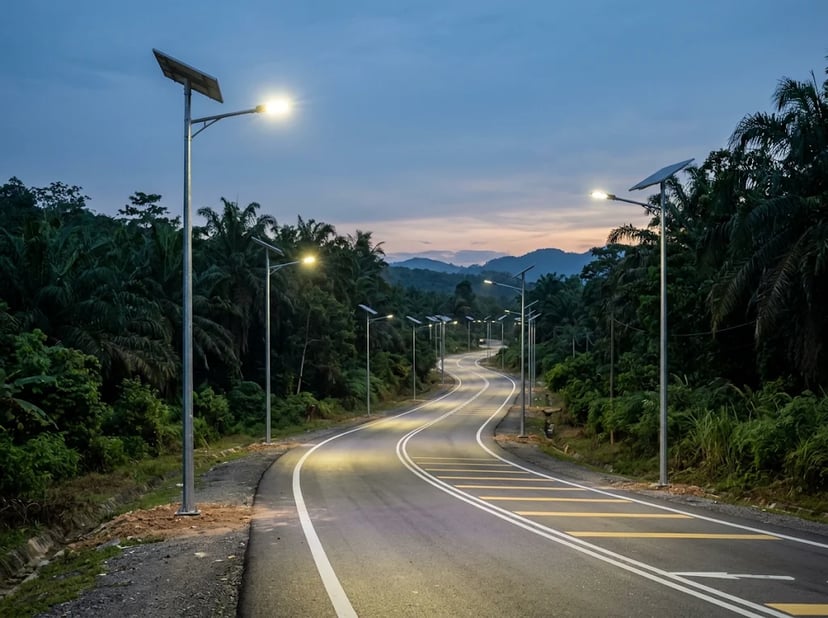 Negeri Sembilan Installs Street Lights at 71 Federal Road Locations for RM7.1 Million
Negeri Sembilan has installed street lights at 71 selected locations along federal roads between 2024 and 2026, involving a total expenditure of RM7.1 million, as part of the government's efforts to improve road safety and reduce accident risks.
Works Minister Datuk Seri Alexander Nanta Linggi announced the development during a Dewan Rakyat session on November 17, 2026. The installations were carried out under the Ministry of Works' (KKR) Road Safety Infrastructure Upgrade Programme, with priority given to locations where poor lighting could contribute to road accidents.
The initiative includes solar-powered LED street lights at selected junctions, bends, bridges and other locations where conventional electricity infrastructure may be unavailable or vulnerable to cable theft and vandalism.
- 71 selected federal road locations in Negeri Sembilan received street lights between 2024 and 2026.
- The overall installation cost amounted to RM7.1 million.
- Jempol received RM1.5 million for installations at 15 locations.
- Solar-powered LED street lights prioritise accident-prone and poorly lit areas.
- Proposed installations along FT11 and FT41 will be considered in a future programme, subject to funding approval.
- The proposed upgrade of Jalan Utama Palong (FT44) under Rolling Plan 2 of the 13th Malaysia Plan was not approved.
Table of Contents
- 71 Federal Road Locations Receive Street Lights
- Jempol Receives RM1.5 Million for 15 Locations
- Why Solar-Powered LED Street Lights Are Installed
- Four Roads in Jempol Still Need Better Lighting
- Jalan Utama Palong Upgrade Not Approved
- National Allocation for Solar Street Lights
- Expert Tip for Driving on Poorly Lit Roads
- What This Means for Malaysian Motorists
- Frequently Asked Questions
1. 71 Federal Road Locations Receive Street Lights
Between 2024 and 2026, the government installed street lights at 71 selected locations along federal roads throughout Negeri Sembilan.
The project involved RM7.1 million in expenditure and forms part of KKR's wider efforts to strengthen road safety infrastructure across the country.
Rather than installing lighting along every kilometre of federal roads, the ministry focuses on locations where better visibility could make a meaningful difference to motorists.
These include junctions, sharp bends, bridges and other areas where darkness may increase the risk of accidents.
2. Jempol Receives RM1.5 Million for 15 Locations
Of the RM7.1 million allocated for Negeri Sembilan, RM1.5 million was spent on installing street lights at 15 selected locations in the Jempol district.
Two federal road sections specifically highlighted by the Works Minister include:
- FT9 Jalan Tampin–Kuala Pilah: Street lights were installed between Sections 51 and 53 in 2025.
- FT10 Jalan Gemas–Kemayan: Street lights were installed between Sections 17 and 19 in 2026.
The combined installation cost for these two road sections was RM200,000.
The improvements are intended to provide better visibility for motorists travelling through these areas, particularly during nighttime and adverse weather conditions.
3. Why Solar-Powered LED Street Lights Are Installed
According to Nanta, the government uses solar-powered LED street lights at selected locations based on safety requirements and technical suitability.
Several factors determine where these installations are prioritised:
- Accident-prone locations: Areas with a history of accidents or a higher risk of collisions due to poor visibility.
- Junctions and bends: Locations where drivers need better visibility to identify approaching vehicles, road layouts and potential hazards.
- Bridges: Sections where additional lighting can help motorists navigate safely.
- Areas without electricity access: Roads located far from the existing electricity grid.
- Cable theft and vandalism: Locations where conventional street lighting infrastructure may be vulnerable to damage or theft.
Solar-powered LED street lights offer an alternative for areas where connecting conventional electrical infrastructure may be difficult.
However, the ministry emphasises that installations must be targeted because it is not financially practical to illuminate every section of every federal road.
Solar-powered street lights can be particularly useful in rural areas where access to the electricity grid is limited. Their suitability still depends on installation costs, battery requirements, maintenance and local conditions.
4. Four Roads in Jempol Still Need Better Lighting
Despite the completed installations, several federal road stretches in Jempol remain a concern for local motorists.
Jempol MP Datuk Shamshulkahar Mohd Deli raised the need for additional solar street lights along four road sections:
- FT9: Batu Kikir to Serting Tengah.
- FT11: Serting Tengah to Keratong.
- FT10: Gemas to Kemayan.
- FT41: Juasseh to Bahau.
In response, Nanta said KKR would consider installing street lights along FT11 and FT41 during a future round of the programme.
However, any implementation will depend on development funding approval from the relevant central agencies.
This means motorists should not assume that the proposed installations have already been approved or that a confirmed completion date is available.
5. Jalan Utama Palong Upgrade Not Approved
Another major road safety concern raised during the parliamentary session involved Jalan Utama Palong (FT44), which serves as an important route for commercial vehicles travelling towards Malaysia's east coast.
According to Nanta, the 33.79-kilometre road connects traffic travelling towards destinations including Muadzam Shah, Kuantan and Rompin.
Shamshulkahar highlighted concerns about the road's narrow layout and reported fatal accidents. The route also passes through 16 FELDA settlements.
The Negeri Sembilan state government had submitted an application to upgrade FT44 from Section 0 to Section 9.10, covering areas in the Tampin and Jempol districts, under Rolling Plan 2 (RP2) of the 13th Malaysia Plan.
However, the proposal was not approved because other development projects in the state were given priority.
Nanta advised that the state government could resubmit the proposal through its State Economic Planning Unit or the state Public Works Department (JKR) for consideration under a future Rolling Plan.
Meanwhile, KKR is focusing on an already approved FT44 improvement project under Rolling Plan 1 (RP1). This involves:
- Upgrading the road structure from Section 10 to Section 25.
- Improving the Palong 7 and Palong 8 junctions in Jempol.
The project remains in the planning stage, following a value management workshop held from October 7 to 9, 2026.
6. Government Allocates RM34.19 Million for Solar Street Lights Nationwide
The Negeri Sembilan project is part of a broader national initiative to improve lighting infrastructure along federal roads.
In August 2026, the government announced an allocation of RM34.19 million for installing solar-powered LED street lights at 362 selected federal road locations nationwide.
The programme prioritises locations where solar lighting is technically suitable, particularly rural and interior roads, areas far from electricity infrastructure and locations affected by cable theft or vandalism.
The nationwide allocation demonstrates the government's continued focus on improving road safety through targeted infrastructure investments.
Expert Tip: How to Drive Safely on Poorly Lit Roads
Even with improvements to road lighting, motorists should remain cautious when travelling through rural roads and poorly illuminated areas.
- Reduce your speed: Drive at a speed that allows sufficient time to react to unexpected obstacles.
- Use your headlights properly: Ensure your headlights are functioning and use high beams responsibly when there is no oncoming traffic.
- Maintain a safe following distance: Allow additional stopping distance when visibility is limited.
- Watch out for pedestrians and animals: Rural roads may have pedestrians, motorcycles and animals crossing unexpectedly.
- Check your vehicle's lighting: Regularly inspect your headlights, brake lights and signal indicators.
Do not assume that an empty or familiar rural road is safe to drive at high speed at night. Poor lighting can make potholes, sharp bends, stationary vehicles and unexpected hazards difficult to identify.
Conclusion: Targeted Road Lighting to Improve Negeri Sembilan's Road Safety
The installation of street lights at 71 federal road locations in Negeri Sembilan represents an important step towards improving nighttime visibility and road safety.
With RM7.1 million spent between 2024 and 2026, the initiative focuses on locations where additional lighting is considered necessary, including accident-prone areas and roads with limited electricity infrastructure.
However, further improvements are still needed, particularly along several rural roads in Jempol and Jalan Utama Palong. Future projects will depend on technical assessments, development priorities and funding approvals.
For motorists, better infrastructure is important, but responsible driving and regular vehicle maintenance remain essential for safer journeys.
Planning to change your vehicle? Explore Motorist Malaysia to discover car-related services and resources for your next motoring decision.
Frequently Asked Questions
1. How many federal road locations in Negeri Sembilan received street lights?
A total of 71 selected federal road locations in Negeri Sembilan received street lights between 2024 and 2026.
2. How much did the Negeri Sembilan street lighting project cost?
The project involved a total expenditure of RM7.1 million for installations at 71 selected locations.
3. How much was allocated for street lights in Jempol?
Jempol received RM1.5 million for installing street lights at 15 selected federal road locations.
4. Which roads in Jempol received new street lights?
The two highlighted sections are FT9 Jalan Tampin–Kuala Pilah, between Sections 51 and 53, and FT10 Jalan Gemas–Kemayan, between Sections 17 and 19.
5. Why is the government installing solar-powered LED street lights?
Solar-powered LED street lights are suitable for selected accident-prone locations, junctions, bends, bridges, areas far from the electricity grid and locations vulnerable to cable theft or vandalism.
6. Will FT11 and FT41 in Jempol receive additional street lights?
KKR will consider the proposed installations along FT11 Jalan Serting Tengah–Keratong and FT41 Jalan Juasseh–Bahau in a future programme, subject to development funding approval.
7. Why was the proposed Jalan Utama Palong upgrade not approved?
The proposed FT44 upgrade from Section 0 to Section 9.10 was not approved under Rolling Plan 2 of the 13th Malaysia Plan because other development projects in Negeri Sembilan were given priority.
8. Is there another approved upgrade project for Jalan Utama Palong?
Yes. An FT44 improvement project under Rolling Plan 1 has been approved. It covers road structure improvements from Section 10 to Section 25 and upgrades to the Palong 7 and Palong 8 junctions. The project is currently in the planning stage.
9. How much has the government allocated for solar street lights nationwide in 2026?
The government allocated RM34.19 million for solar-powered LED street lights at 362 selected locations along federal roads nationwide in 2026.
10. Do new street lights guarantee safer roads?
Street lights can improve visibility and help motorists identify road hazards, but they cannot eliminate all accident risks. Drivers must still follow speed limits, maintain safe distances and remain alert, especially on rural roads at night.
Read More: Malaysia barrier-free tolls: MLFF tech is already here
I want to find the highest selling price for my car within 24 hours!
Download the Motorist App now. Designed by drivers for drivers, this all-in-one app lets you receive the latest traffic updates, access live traffic cameras, and manage vehicle-related matters.


