Malaysia Toll Abolition Could Cost RM400 Billion
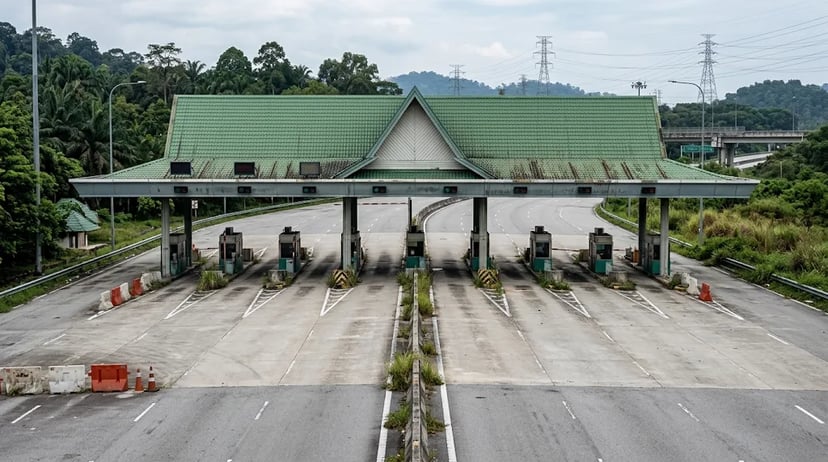 Abolishing All Highway Tolls in Malaysia Could Cost RM400 Billion, Says Ahmad Maslan
Malaysia would need an estimated RM400 billion to take over all 34 tolled highways and abolish toll collections nationwide, Deputy Works Minister Datuk Seri Dr Ahmad Maslan told Parliament on 16 November 2026. The massive estimated cost highlights the financial challenges of making all Malaysian highways toll-free. Meanwhile, the government is looking to introduce the Multi-Lane Free Flow (MLFF) toll collection system, which could eventually eliminate conventional toll barriers and improve traffic flow. Table of Contents
1. Abolishing All Tolls Could Cost RM400 Billion
2. Malaysia Has 34 Tolled Highways Under 28 Concessions
3. Why the Cheras-Kajang Highway Toll Was Raised in Parliament
4. MLFF Implementation Requires Legal Amendments
5. How MLFF Could Benefit Malaysian Motorists
6. What Malaysian Drivers Should Know
Key Takeaways
- Malaysia could need approximately RM400 billion to take over all 34 tolled highways and abolish toll collections.
- The 34 highways are operated under 28 concession agreements.
- The RM400 billion figure is an initial estimate provided by Ministry of Works officials, not a confirmed final acquisition cost.
- The government intends to implement MLFF through a business-to-business (B2B) arrangement without government funding.
- Legal amendments are required before motorists can be pursued for unpaid tolls under a barrier-free system.
1. Abolishing All Tolls Could Cost RM400 Billion
The Malaysian government could require approximately RM400 billion to abolish toll collections by taking over all tolled highways across the country. According to Ahmad Maslan, the estimated amount was provided by his ministry's officials when assessing the financial implications of acquiring all 34 tolled highways. However, he clarified that the figure remains an estimate and that the actual amount has not been established. Ahmad also compared the estimated cost with the RM70 billion required to abolish PTPTN education loans. He highlighted that RM400 billion is approximately equivalent to the government's annual operating budget, which covers expenses including the salaries of 1.61 million civil servants. The comparison illustrates the substantial financial commitment that would be required if the government decided to take over the country's highway concessions.
2. Malaysia Has 34 Tolled Highways Under 28 Concessions
Malaysia currently has 34 tolled highways operating under 28 concession agreements. Some highway concessionaires manage more than one highway, explaining why the number of highways is higher than the number of concession agreements. Taking over these highways would involve more than simply removing toll charges. The government would also need to consider the financial obligations associated with the concession agreements and the costs of acquiring the relevant assets. The proposed abolition of tolls would therefore require substantial financial planning before it could become a reality. For now, the RM400 billion estimate does not represent an approved government spending allocation or a confirmed takeover plan.
3. Why the Cheras-Kajang Highway Toll Was Raised in Parliament
The issue of abolishing tolls was raised by Hulu Langat Member of Parliament Mohd Sany Hamzan, who questioned why toll collection on the Cheras-Kajang Highway could not be abolished. The 11.5 km highway was constructed in 1999 at a reported cost of RM282 million. Mohd Sany questioned whether the highway concessionaire had already recovered its investment and generated sufficient profits after operating the highway for many years. In response, Ahmad explained the broader financial implications of abolishing tolls across the country. Although individual highways may have different construction costs, concession arrangements and operating periods, taking over all 34 highways would involve a much larger financial commitment.
4. MLFF Implementation Requires Legal Amendments
While abolishing tolls entirely could cost hundreds of billions of ringgit, the government is also pursuing another approach to improve the toll collection experience through the Multi-Lane Free Flow (MLFF) system. MLFF is designed to allow vehicles to pass through toll points without stopping at conventional toll barriers. According to Ahmad, the government has decided that MLFF will be implemented through a business-to-business (B2B) arrangement. Under this approach, highway concessionaires and relevant private-sector companies will be responsible for the implementation costs rather than the government. Ahmad also revealed that PLUS has developed an MLFF system and conducted trials at several locations. The system could be rolled out once the necessary preparations are completed. However, a key requirement must be addressed before barrier-free toll collection can be introduced nationwide. Legal amendments are needed to enforce unpaid toll payments. Under the current system, physical toll barriers help ensure motorists pay before proceeding. Without these barriers, some drivers may attempt to pass through without paying. Ahmad said the relevant legislation must therefore be amended in Parliament to allow authorities to take action against motorists who evade toll payments. Under the current law, toll evasion carries a fine of RM2,000 to RM5,000 or imprisonment of up to one year.
5. How MLFF Could Benefit Malaysian Motorists
The introduction of MLFF could significantly change how motorists travel on Malaysian highways. Instead of stopping at toll booths, vehicles would be identified through automated technologies, allowing toll payments to be processed electronically. Some potential benefits include: Reduced congestion at toll plazas Traditional toll plazas can become traffic bottlenecks, particularly during peak hours and festive travel periods. MLFF could reduce congestion by removing the need for vehicles to stop at physical barriers. Smoother highway journeys Motorists could enjoy more continuous traffic movement without having to slow down significantly to enter dedicated toll payment lanes. More efficient toll collection Automated vehicle identification and electronic payment systems could make toll collection more efficient for highway operators. Reduced dependence on physical toll infrastructure A barrier-free system could reduce the need for conventional toll booths and associated infrastructure, although the final implementation arrangements will depend on the highway operators. Importantly, MLFF does not mean that highways will become free to use. Motorists will still be required to pay the applicable toll charges.
6. What Malaysian Drivers Should Know
For Malaysian motorists, the proposed MLFF system could eventually change the way toll payments are made. However, drivers should not assume that all toll barriers will disappear immediately. The implementation still depends on several factors, including legal amendments, technical preparations and cooperation between highway concessionaires. Until the new system is officially introduced on the highways they use, motorists should continue using the existing accepted toll payment methods. Drivers should also ensure their Touch 'n Go cards, RFID accounts or other supported payment methods have sufficient balance before travelling.
Current toll collection vs proposed MLFF
| Feature | Current Toll System | Proposed MLFF |
|---|---|---|
| Toll barriers | Required | No conventional barriers |
| Payment process | Existing electronic toll payment methods | Automated electronic collection |
| Vehicle movement | Vehicles slow down or stop at toll barriers | Vehicles pass through without stopping at barriers |
| Toll charges | Applicable toll fees | Toll fees still apply |
| Implementation | Currently operational | Nationwide framework and preparations ongoing |
7. Expert Tip and Common Mistake
Expert Tip: Keep Your Toll Payment Methods Ready
Even as Malaysia moves towards MLFF, motorists should continue maintaining sufficient balances in their existing toll payment accounts. Do not assume that barrier-free toll collection means toll charges will be abolished.
Common Mistake: Assuming MLFF Means Free Highways
MLFF removes the need for conventional toll barriers, not the obligation to pay toll charges. Motorists will still need to settle their toll payments under the new collection arrangement.
8. Conclusion
The estimated RM400 billion cost of abolishing all highway tolls highlights the financial challenges facing Malaysia if the government intends to take over all 34 tolled highways. While nationwide toll abolition remains a costly proposition, MLFF offers another potential way to improve the highway experience through barrier-free toll collection. However, its implementation will require legal amendments, cooperation between concessionaires and the completion of technical preparations. For now, Malaysian motorists should continue paying their tolls as usual while keeping an eye on official announcements regarding the future of the MLFF system. If you are planning to upgrade your vehicle or sell your current car, use Motorist Malaysia to explore your options and get a competitive offer.
Frequently Asked Questions
1. How much would it cost to abolish all tolls in Malaysia?
According to Deputy Works Minister Ahmad Maslan, abolishing tolls by taking over all 34 tolled highways could cost approximately RM400 billion. This remains an initial estimate from ministry officials.
2. How many tolled highways are there in Malaysia?
Malaysia has 34 tolled highways operated under 28 concession agreements, with some concessionaires managing multiple highways.
3. Who announced the estimated RM400 billion cost?
Deputy Works Minister Datuk Seri Dr Ahmad Maslan disclosed the estimated cost during a Dewan Rakyat session on 16 November 2026.
4. Why would abolishing tolls cost RM400 billion?
The estimated amount relates to the financial commitment required for the government to take over all 34 tolled highways and their concession arrangements.
5. Will Malaysia abolish all highway tolls?
There is currently no confirmed nationwide toll abolition plan. The RM400 billion figure was presented as an estimate of the potential takeover cost.
6. What is the MLFF toll system?
MLFF stands for Multi-Lane Free Flow. It is a barrier-free toll collection system that allows vehicles to pass through toll points without stopping at conventional toll barriers.
7. Will motorists still need to pay tolls under MLFF?
Yes. MLFF changes how tolls are collected but does not automatically make highways free. Motorists will still need to pay the applicable toll charges.
8. Who will pay for Malaysia's MLFF implementation?
According to Ahmad Maslan, the government has decided on a business-to-business model in which the private sector and highway concessionaires will handle the implementation without government funding.
9. Why does MLFF require legal amendments?
Without physical toll barriers, some motorists may attempt to avoid payment. Legal amendments are needed to enable enforcement and action against drivers who fail to pay their tolls.
10. What is the penalty for avoiding toll payments in Malaysia?
Under the current law cited by Ahmad Maslan, toll evasion carries a fine of RM2,000 to RM5,000 or imprisonment of up to one year.
11. Has PLUS tested the MLFF system?
Yes. Ahmad Maslan said PLUS has developed an MLFF system and conducted trials at several locations. Further preparations are required before rollout.
12. Will MLFF reduce traffic congestion at toll plazas?
MLFF is intended to improve traffic flow by removing conventional toll barriers. However, its actual impact on congestion will depend on implementation and overall highway traffic conditions.
Read More: Malaysia barrier-free tolls: MLFF tech is already here
I want to find the highest selling price for my car within 24 hours!
Download the Motorist App now. Designed by drivers for drivers, this all-in-one app lets you receive the latest traffic updates, access live traffic cameras, and manage vehicle-related matters.


