DBKL Considers CCTV Fines for Pedestrians in KL
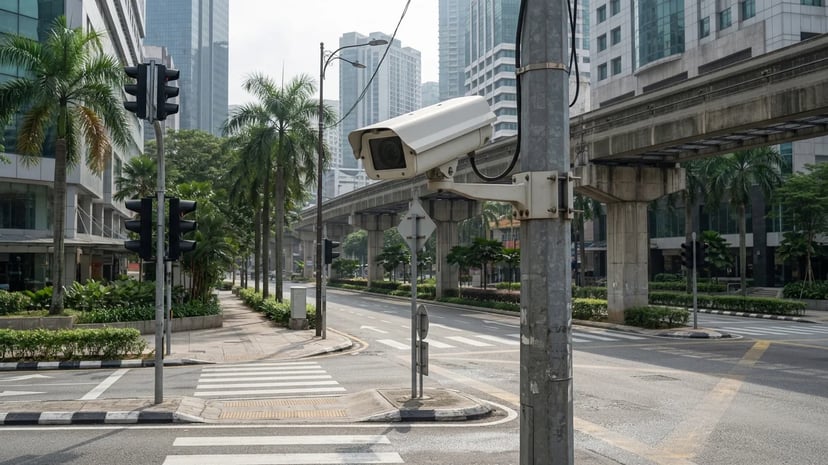 DBKL Considers CCTV Fines for Pedestrians in Kuala Lumpur Following Fatal Accidents
Dewan Bandaraya Kuala Lumpur (DBKL) is considering a proposal to issue fines to pedestrians who disobey safety signage, based on closed-circuit television (CCTV) footage, following 20 fatal pedestrian accidents recorded in Kuala Lumpur in 2025.
The proposal was revealed by Deputy Minister in the Prime Minister's Department (Federal Territories), Datuk Lo Su Fui, when responding to a question in the Dewan Rakyat on 24 November 2026. However, DBKL has yet to announce an implementation date or further details on how the enforcement would be carried out.
The proposal forms part of broader efforts to improve pedestrian safety, particularly by preventing people from crossing roads at unauthorised locations.
Table of Contents
- DBKL considers issuing pedestrian fines through CCTV
- Number of fatal pedestrian accidents in Kuala Lumpur
- High-risk locations and causes of pedestrian accidents
- DBKL's measures to improve pedestrian safety
- What should drivers and pedestrians do?
- Conclusion
- Frequently Asked Questions
Key Takeaways
- DBKL is considering using CCTV footage to issue fines to pedestrians who disregard safety instructions.
- The proposal is still under consideration, and no implementation date has been announced.
- Kuala Lumpur recorded 20 fatal pedestrian accidents in 2025.
- High-risk locations include Jalan Tun Perak near Masjid Jamek, Jalan Sultan Ismail and Seri Petaling.
- DBKL plans to construct more than 22km of covered pedestrian walkways around Kuala Lumpur, with construction expected to begin as early as December 2026.
DBKL Considers Issuing Pedestrian Fines Through CCTV
DBKL is reviewing a proposal to use CCTV footage as the basis for enforcement action against pedestrians who violate safety signage.
The matter was revealed by Datuk Lo Su Fui during a question-and-answer session in the Dewan Rakyat on 24 November 2026. He explained that the proposal is among several approaches being considered to improve pedestrian safety in the capital.
One of the offences authorities hope to address is crossing roads at unauthorised locations, particularly when pedestrian crossing facilities are already available.
However, the public should understand that using CCTV to issue fines to pedestrians remains a proposal. As of the announcement, DBKL has not confirmed an implementation date, procedures for identifying offenders or the amount of any potential compound.
The proposal should also be considered alongside efforts to improve pedestrian facilities so that people have access to safer and more convenient walking routes.
Number of Fatal Pedestrian Accidents in Kuala Lumpur
Data from the Kuala Lumpur Traffic Investigation and Enforcement Department (JSPT) shows that the number of fatal pedestrian accidents in the capital has remained concerning since 2022.
The figures presented in the Dewan Rakyat showed the following number of fatal accidents:
| Year | Number of fatal pedestrian accidents |
|---|---|
| 2022 | 29 cases |
| 2023 | 21 cases |
| 2024 | 23 cases |
| 2025 | 20 cases |
Although the number of fatal accidents in 2025 was lower than in 2022, the 20 recorded cases show that pedestrian safety still requires continuous attention.
According to Lo, men aged between 40 and 70 made up the largest group among identified victims of fatal pedestrian accidents.
He did not provide specific figures for accidents involving serious injuries or complete statistics for 2026 when answering the question in the Dewan Rakyat.
High-Risk Locations and Causes of Pedestrian Accidents
Several locations in Kuala Lumpur have been identified as areas where pedestrian accidents occur frequently. According to Lo, the main locations receiving attention include:
- Jalan Tun Perak near Masjid Jamek: A pedestrian crossing area with heavy road-user activity.
- Jalan Sultan Ismail: One of the main roads in Kuala Lumpur city centre.
- Seri Petaling: An area also identified as having a risk of pedestrian accidents.
He also stated that accidents at these locations frequently occur at night.
Two main causes identified were pedestrians failing to use the available crossing facilities and vehicles being driven above safe speeds.
This highlights that road safety does not depend solely on pedestrian behaviour. Drivers must also observe speed limits, pay attention to pedestrian crossing areas and be prepared to slow down when approaching locations with heavy pedestrian activity.
DBKL's Measures to Improve Pedestrian Safety
Besides considering CCTV-based enforcement, DBKL is also implementing several physical measures and infrastructure plans to reduce the risk of accidents.
1. Reducing Vehicle Speeds to 30km/h
DBKL is introducing additional road safety features, including traffic-calming measures to reduce vehicle speeds to 30km/h in areas requiring greater protection for pedestrians.
2. Providing More Pedestrian Crossing Facilities
Pedestrian crossings are intended to provide safer spaces for people to cross roads. Road users should use the facilities provided and obey traffic signals.
3. Installing Barriers at Selected Locations
Barriers will be installed to prevent pedestrians from crossing at unauthorised locations. This measure aims to direct people towards safer crossing points.
4. Building More Than 22km of Covered Pedestrian Walkways
DBKL also plans to construct more than 22km of covered pedestrian walkways around Kuala Lumpur. Construction is expected to begin as early as December 2026 to provide pedestrians with a safer and more comfortable environment.
5. Improving Monitoring Through an AI Control Centre
DBKL also operates an urban control centre equipped with artificial intelligence (AI)-based traffic light systems to help manage congestion. AI-powered CCTV cameras are also used to monitor pedestrian safety and flood incidents.
Expert Tip
When walking in busy urban areas, always use designated pedestrian crossings or footbridges. At night, make sure you are visible to drivers and wait until traffic conditions are completely safe before crossing.
Common Mistake
Do not assume that an apparently quiet road is safe to cross. Vehicles may be approaching at high speeds or may be outside your field of vision, particularly at night.
What Should Drivers and Pedestrians Do?
Pedestrian safety requires cooperation from all road users. Both drivers and pedestrians have responsibilities in reducing the risk of accidents.
For pedestrians:
- Use designated pedestrian crossings, footbridges or other available crossing facilities.
- Avoid crossing between moving or stationary vehicles.
- Do not cross when the pedestrian traffic light displays a stop signal.
- Pay attention to traffic conditions before stepping onto the road.
- Avoid using mobile phones in a way that distracts you from your surroundings when crossing roads.
For drivers:
- Observe speed limits, particularly in urban areas and near pedestrian crossings.
- Slow down when approaching schools, public transport stations and crowded areas.
- Give way to pedestrians at designated crossings.
- Avoid using mobile phones or engaging in activities that distract you while driving.
- Exercise extra caution at night, as pedestrians may be more difficult to see.
In a related development, DBKL also conducts regular patrols, special operations and integrated operations with the Royal Malaysia Police (PDRM) and the Road Transport Department (JPJ) to address traffic offences and obstructions on public pathways.
As of 2026, when the statement was made, DBKL had issued 295,211 compound notices for traffic offences and 2,566 notices for general offences. A total of 2,655 vehicles had also been towed for traffic offences and causing obstructions.
These enforcement measures are important because vehicles blocking pedestrian pathways may force people to walk on the road, consequently increasing the risk of accidents.
Conclusion: Pedestrian Safety Requires Both Infrastructure and Enforcement
DBKL's proposal to use CCTV footage to issue fines to pedestrians who violate safety instructions highlights the authorities' efforts to address accident risks in Kuala Lumpur.
However, the proposal is still under consideration, and no confirmed implementation date has been announced. At the same time, improvements to pedestrian crossings, road barriers and more than 22km of covered walkways are also important in creating a safer environment.
Drivers and pedestrians must play their respective roles by following road regulations and prioritising safety. Proper infrastructure and responsible road-user behaviour must go hand in hand to reduce the risk of accidents.
For traffic information and road conditions, motorists can use the Motorist App to access traffic updates and live traffic cameras.
Frequently Asked Questions
1. Will DBKL issue fines to pedestrians through CCTV?
DBKL is considering using CCTV footage to take action against pedestrians who violate safety instructions. However, the proposal has not yet been announced as an implemented enforcement policy.
2. When will CCTV fines for pedestrians be implemented in Kuala Lumpur?
As of 24 November 2026, DBKL has not announced an implementation date for the proposed CCTV fines targeting pedestrians.
3. Why does DBKL want to fine pedestrians who cross roads unsafely?
The proposal aims to improve pedestrian safety and discourage people from crossing at unauthorised locations, particularly when designated crossing facilities are available.
4. How many fatal pedestrian accidents occurred in Kuala Lumpur in 2025?
Kuala Lumpur recorded 20 fatal pedestrian accidents in 2025, based on data from the Kuala Lumpur Traffic Investigation and Enforcement Department.
5. Where are the high-risk locations for pedestrian accidents in Kuala Lumpur?
Identified locations include Jalan Tun Perak near Masjid Jamek, Jalan Sultan Ismail and Seri Petaling. Accidents at these locations frequently occur at night.
6. What are the main causes of pedestrian accidents in Kuala Lumpur?
According to the statement in the Dewan Rakyat, the main causes include pedestrians failing to use available crossing facilities and vehicles travelling at excessive speeds.
7. How long are the covered pedestrian walkways planned by DBKL?
DBKL plans to construct more than 22km of covered pedestrian walkways around Kuala Lumpur. Construction is expected to begin as early as December 2026.
8. What speed limit is DBKL planning to introduce in certain areas to protect pedestrians?
DBKL is introducing road safety features aimed at reducing vehicle speeds to 30km/h in areas requiring greater pedestrian protection.
9. Must pedestrians use designated crossings?
Yes. Pedestrians should use designated crossings or footbridges and obey traffic signals to reduce the risk of being hit by vehicles.
10. How can drivers help improve pedestrian safety?
Drivers should observe speed limits, slow down near pedestrian crossings, give way to pedestrians and remain alert, particularly at night.
Read More: Parking on Pedestrian Walkways in Malaysia: Fines and Towing
I want to find the highest selling price for my car within 24 hours!
Download the Motorist App now. Designed by drivers for drivers, this all-in-one app lets you receive the latest traffic updates, access live traffic cameras, and manage vehicle-related matters.