Johor will look into concerns raised by Malaysian cross-border taxi drivers over Singapore’s higher Public Service Vehicle Permit (PSVP) fee
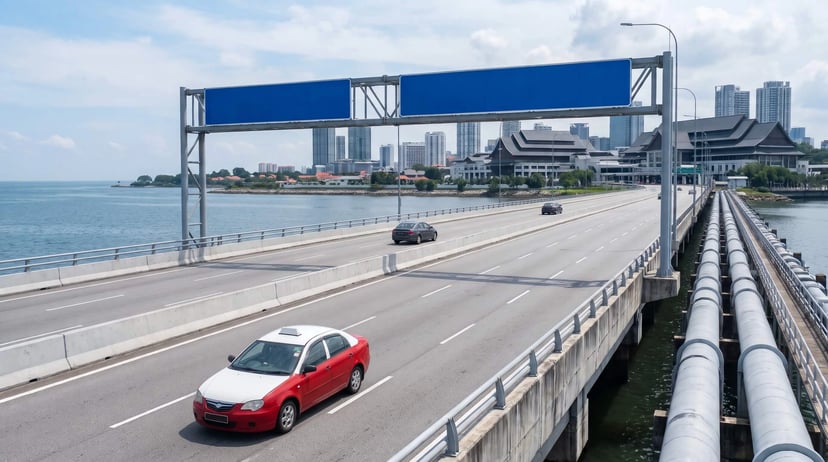
Johor will look into concerns raised by Malaysian cross-border taxi drivers over Singapore’s higher Public Service Vehicle Permit (PSVP) fee, which will increase to S$15 (about RM47.80) per trip from January 1, 2027. The state government will work with relevant transport agencies to better understand the issue and raise it with the authorities if necessary.
Key takeaways
- Singapore will raise the PSVP fee for Malaysia-registered taxis entering Singapore to S$15 per trip from January 1, 2027.
- The current fee is S$2 per month.
- Johor will work with APAD and PAJ to understand taxi drivers’ concerns.
- Complaints involving illegal cross-border taxi operators will also be looked into if the allegations are confirmed.
- The licensed cross-border taxi quota was increased to 500 taxis for each country from November 16, 2026.
What is happening to the cross-border taxi permit fee?
Singapore’s Land Transport Authority (LTA) announced in June 2026 that the PSVP fee for Malaysia-registered taxis entering Singapore will increase from S$2 per month to S$15 per trip from January 1, 2027. The adjustment is intended to narrow the operating cost gap between Malaysia-registered and Singapore-registered taxis operating in Singapore.
The change follows enhancements to the Singapore-Malaysia Cross-Border Taxi Scheme introduced in May 2026. These included more flexible passenger drop-offs, additional designated pick-up points and other changes intended to improve convenience for commuters.
LTA has also said that the revised per-trip charge is intended to better reflect actual usage, while operators can decide whether to pass the additional cost on to passengers. Fare transparency remains required.
Why are Malaysian taxi drivers concerned?
Malaysian cross-border taxi drivers have raised concerns that the higher permit fee could affect their earnings. Under the new system, the charge will be applied each time a Malaysia-registered taxi enters Singapore rather than as a fixed monthly fee.
The Johor government has not confirmed that the concerns will result in any changes to the Singapore fee. Instead, it said the complaints need to be properly understood before the matter can be raised with the relevant authorities.
Expert tip: Passengers using cross-border taxis should check that the vehicle is properly licensed before travelling. LTA advises commuters to use licensed cross-border taxis because these vehicles have the required insurance coverage.
What will the Johor government do?
Johor Works, Transportation, Infrastructure and Communications Committee chairman Mohamad Fazli Mohamad Salleh said the state government would work with the Land Public Transport Agency (APAD) and Johor Public Transport Corporation (PAJ) to look into the complaints.
He said the issue was not raised during the state government’s recent meeting with Singapore authorities. PAJ will also be asked to meet the taxi associations involved to better understand the drivers’ concerns before the matter is potentially raised with the relevant authorities.
Taxi associations in locations including Larkin Sentral, JB Sentral and Senai Airport are among the groups the state government maintains contact with. Complaints are generally collected through these associations before being brought to PAJ or the state government.
What about illegal cross-border taxis?
The Johor government is also aware of complaints concerning illegal cross-border taxi operators, although Fazli said the matter had not yet been formally brought to his attention.
PAJ will be asked to investigate the issue if the allegations are found to be valid. This is separate from the PSVP fee increase and concerns the operation of transport services that do not meet the required licensing conditions.
Common mistake: Do not assume every vehicle offering a ride between Johor and Singapore is an authorised cross-border taxi. LTA states that Malaysia-registered taxis need valid licensing and an ASEAN PSVP to operate authorised cross-border services.
What does this mean for cross-border travellers?
For passengers, the immediate impact is that the higher PSVP fee is scheduled to take effect on January 1, 2027. However, it has not been confirmed whether individual taxi operators will pass the full additional cost to passengers.
The wider cross-border taxi scheme is also expanding. From November 16, 2026, Singapore and Malaysia increased the quota of licensed cross-border taxis from 300 to 500 for each country. Two additional ride-hailing operators were also licensed under the scheme.
The combination of a larger licensed taxi supply and the higher PSVP fee means cross-border transport between Johor and Singapore is continuing to evolve. For now, the Johor government is seeking more information from taxi associations before deciding how the drivers’ concerns should be addressed.
Frequently Asked Questions
1. When will Singapore increase the PSVP fee for Malaysian taxis?
The higher PSVP fee will take effect on January 1, 2027.
2. How much will the new PSVP fee cost?
The fee will be S$15 per trip for Malaysia-registered taxis entering Singapore, compared with the current S$2 per month.
3. Why is Singapore increasing the PSVP fee?
LTA said the adjustment is intended to narrow the operating cost gap between Malaysia-registered and Singapore-registered taxis operating in Singapore.
4. Will passengers definitely pay more for cross-border taxi rides?
Not necessarily. LTA said operators can decide whether to pass the PSVP fee on to commuters, while fares must remain transparent.
5. What is the Johor government doing about the fee increase?
Johor will work with APAD and PAJ to understand the drivers’ concerns and raise the matter with relevant authorities if the complaints are substantiated.
6. Will Johor investigate illegal cross-border taxi operators?
PAJ will look into complaints about illegal operators if the allegations are found to be valid.
7. How many licensed cross-border taxis are allowed under the latest quota?
As of November 16, 2026, the quota was increased to 500 licensed cross-border taxis for each country.
8. Can Malaysian taxis legally operate cross-border services without a PSVP?
No. LTA states that Malaysia-registered taxis need a valid Public Service Vehicle Licence and ASEAN PSVP to provide authorised cross-border services.
9. Why should passengers use licensed cross-border taxis?
Licensed cross-border taxis have the required insurance coverage, while LTA warns that unlicensed vehicles may leave passengers without proper recourse after an accident.
Conclusion
Johor is taking a closer look at Malaysian cross-border taxi drivers’ concerns over Singapore’s upcoming PSVP fee increase. While no changes to the fee have been announced, discussions with taxi associations and transport agencies could provide a clearer picture of the impact on drivers and passengers.
For travellers, using properly licensed cross-border taxis remains important as the Malaysia-Singapore transport system continues to expand and change.
Read More: Johor MP calls for talks to end ban on JB-Singapore e-hailing rides
I want to find the highest selling price for my car within 24 hours!
Download the Motorist App now. Designed by drivers for drivers, this all-in-one app lets you receive the latest traffic updates, access live traffic cameras, and manage vehicle-related matters.