Drivers involved in fatal or serious road accidents should be identified and tested for alcohol and drugs as soon as possible
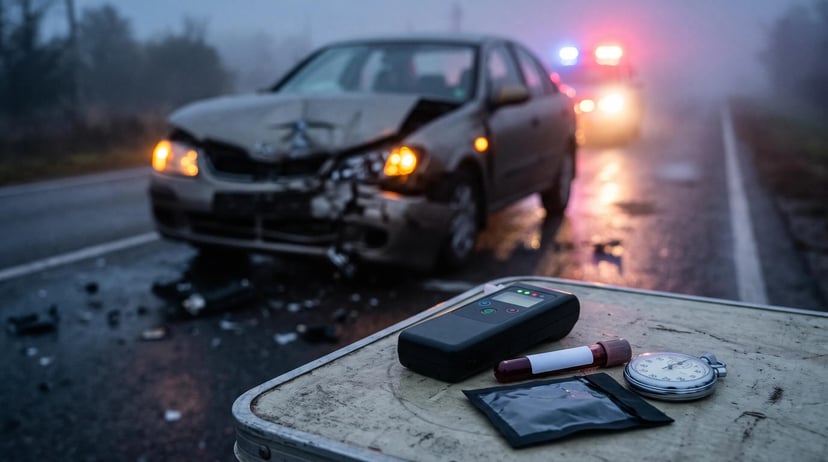
Drivers involved in fatal or serious road accidents should be identified and tested for alcohol and drugs as soon as possible, road safety experts say. The proposal comes as concerns grow that Malaysia’s current 24-hour accident reporting window could allow alcohol levels to fall before testing takes place.
Table of Contents
Key takeaways
- Road safety experts want mandatory alcohol and drug testing for surviving drivers involved in fatal or serious-injury crashes.
- Malaysia currently requires drivers involved in an accident to report it to the nearest police station as soon as reasonably practicable and within 24 hours.
- Police say suspected drivers are already screened as soon as reasonably practicable, including with the EBA 2 device and hospital blood testing where appropriate.
- Experts have proposed shorter reporting periods ranging from immediate reporting to six or 12 hours.
Why experts want faster alcohol and drug tests
Road safety experts say testing should happen quickly because alcohol levels in the body decrease over time. A delay between a crash and testing could make it harder for investigators to determine whether a driver was under the influence when the accident occurred.
Associate Professor Dr Law Teik Hua of Universiti Putra Malaysia’s Road Safety Research Centre said all identified drivers involved in fatal or injury-related accidents should undergo an initial breathalyser test, even if they do not appear intoxicated.
He also suggested that breath tests should be carried out at accident scenes whenever police are present, while blood or urine samples could be collected from injured drivers at hospitals once it is medically safe and authorised. :
Expert tip: If you are involved in a serious accident, prioritise safety and medical treatment first, then cooperate with police and follow the required reporting and investigation procedures.
What Malaysia’s current accident reporting rule says
Under Section 52 of the Road Transport Act 1987, drivers involved in an accident must stop. Section 52(2) requires the driver to report the accident to the nearest police station as soon as reasonably practicable and, in any case, within 24 hours.
The 24-hour period does not mean drivers can simply leave the accident scene and wait until the deadline to make a report. Police have specifically clarified that the duty to stop after an accident is separate from the requirement to make a police report.
Failure to comply with the relevant requirements under Section 52 constitutes an offence. PDRM states that a person convicted for failing to comply with Sections 52(1) or 52(2) may face a fine of up to RM2,000 or imprisonment for up to six months.
Common mistake: Do not interpret the 24-hour reporting window as permission to leave the scene without stopping. The obligation to stop after an accident is separate from the deadline for making a police report.
How testing could be carried out
Malaysia already has provisions allowing police to require breath specimens in certain circumstances. Section 45B of the Road Transport Act 1987 allows a police officer in uniform with reasonable cause to suspect certain offences, including circumstances involving a driver in an accident, to require a breath specimen for testing.
Police have also said suspected drivers involved in fatal or serious-injury accidents may be screened using the EBA 2 device. Where necessary, drivers may be sent to hospital for blood samples to be analysed for drugs or other prohibited substances. :
For injured drivers, medical treatment remains the priority. Experts have said evidence collection should nevertheless take place as early as reasonably possible once the driver is medically safe.
What experts are proposing
Several road safety experts have called for Malaysia to shorten the current reporting period for serious and fatal accidents.
Law suggested Malaysia consider South Australia’s approach, where drivers involved in crashes resulting in death or injury have 90 minutes to report the accident and undergo alcohol or substance testing.
Road Safety Council member Tan Sri Lee Lam Thye proposed reducing Malaysia’s 24-hour window to six hours or preferably requiring immediate reporting for fatal and serious-injury accidents.
Another road safety expert, Professor Dr Romzi Ismail of Universiti Kebangsaan Malaysia, proposed reducing the reporting period to 12 hours for accidents involving injuries or fatalities.
Road Safety Council executive member Datuk Suret Singh also called for Malaysia to consider Japan’s approach to immediate reporting for accidents involving alcohol or substance abuse. He proposed reducing the permissible blood alcohol limit from 50mg to 25mg per 100ml of blood. These are proposals from experts, not confirmed changes to Malaysia’s current law.
What police say about current procedures
Bukit Aman Traffic Investigation and Enforcement Department director Comm Datuk Seri Muhammed Hasbullah Ali said screening suspected drivers is already treated as a priority and is carried out as soon as reasonably practicable.
He said traffic investigators follow established standard operating procedures, while drivers suspected of being under the influence may undergo EBA 2 screening or have blood samples taken at hospitals for analysis.
Police also said investigations have successfully tracked down drivers who attempted to flee serious accident scenes.
The clarification means the current system already provides for testing in relevant cases, while the latest proposals focus on making testing and reporting faster and more consistent after fatal or serious accidents.
What drivers should do after a serious accident
Stop at the scene
Drivers involved in an accident must stop and provide their details when reasonably requested. Leaving the scene without stopping can create a separate legal issue from the 24-hour reporting requirement.
Prioritise safety and medical assistance
Where people are injured, seek emergency assistance and follow medical advice. Evidence collection should not take priority over necessary medical treatment.
Cooperate with the investigation
Drivers should cooperate with police officers and comply with lawful testing requirements where applicable. Malaysia’s existing law allows breath testing in specified accident-related circumstances.
Make the required police report
Under Section 52(2), an accident must be reported to the nearest police station as soon as reasonably practicable and within 24 hours.
Frequently Asked Questions
1. How long do drivers currently have to report an accident in Malaysia?
Drivers involved in an accident must report it to the nearest police station as soon as reasonably practicable and within 24 hours.
2. Does the 24-hour rule mean I can leave the accident scene?
No. Drivers have a separate duty to stop after an accident, and the 24-hour reporting period does not give permission to leave without stopping.
3. Are alcohol tests already allowed after road accidents?
Yes. Section 45B of the Road Transport Act 1987 allows police to require a breath specimen in specified circumstances, including certain accident-related situations.
4. Will every driver involved in a serious accident automatically be tested?
Experts are calling for mandatory testing of all surviving drivers involved in fatal or serious-injury accidents, but this proposal should not be confused with a confirmed change to the current law.
5. What equipment can police use for alcohol screening?
Police have said suspected drivers may be screened using the EBA 2 device.
6. Can injured drivers be tested at a hospital?
Yes. Police said drivers involved in serious accidents may have blood samples taken at hospitals for analysis when appropriate.
7. Why do experts want testing to happen quickly?
Alcohol levels decline over time, so delayed testing can make it harder to establish whether a driver was above the relevant limit when the accident happened. :
8. Has Malaysia reduced the 24-hour reporting period?
No confirmed reduction was reported in the material reviewed. Experts have proposed shorter periods, including six, 12 and 24 hours or immediate reporting depending on the proposal.
9. What should drivers do if they are involved in a fatal accident?
Stop, prioritise safety and medical assistance, cooperate with police, comply with lawful testing requirements and report the accident as required under Section 52 of the Road Transport Act 1987.
10. Are the proposed changes already Malaysian law?
No. The shorter reporting periods and broader mandatory testing discussed by experts are proposals and should not be treated as confirmed changes unless the authorities formally introduce them.
Conclusion
Experts want Malaysia to tighten the response to fatal and serious road accidents by ensuring alcohol and drug testing happens as soon as possible. While the current law requires accidents to be reported within 24 hours, police have stressed that drivers must still stop at the scene and that suspected drivers can already be screened under existing procedures.
For drivers, the safest approach is straightforward: stop, help where possible, cooperate with authorities and report the accident promptly.
Looking to understand what to preserve after an accident? Read our guide on dashcam footage and what drivers should keep as evidence.
Read More: Can a dashcam help after a road accident? What footage drivers should preserve
I want to find the highest selling price for my car within 24 hours!
Download the Motorist App now. Designed by drivers for drivers, this all-in-one app lets you receive the latest traffic updates, access live traffic cameras, and manage vehicle-related matters.