Can a dashcam help after a road accident? What footage drivers should preserve
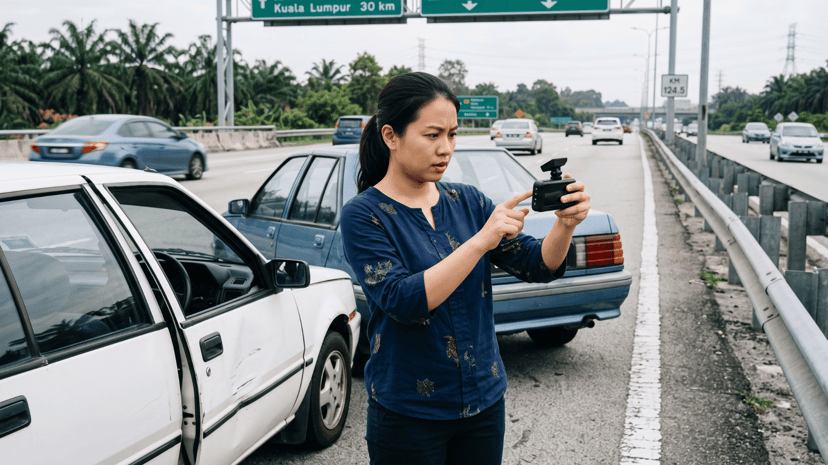
A dashcam can help after a road accident in Malaysia, because footage from it is treated as valid evidence, provided it is relevant, authentic, and unedited. That said, a dashcam does not replace your legal duty: you must still report any accident to the police within 24 hours, regardless of what footage you have. Malaysia records hundreds of thousands of road accidents every year. When two drivers each insist the other was at fault, dashcam footage is often the clearest way to settle it.
Key Takeaways
- Dashcam footage is legally usable as evidence, as long as it's relevant, authentic, and hasn't been edited or tampered with.
- You must still lodge a police report within 24 hours of the accident a dashcam does not replace this legal duty.
- Penalties for late or non-reporting can include a fine and, in some cases, jail time. These amounts are reviewed and updated by lawmakers from time to time, so it's worth checking the current figures if you ever need them.
- Preserve the raw, unedited file and back it up promptly a loop-recording dashcam can overwrite footage within hours or days if you don't lock it.
Why dashcam footage actually matters in a Malaysian accident
It settles disputes over fault. Junction collisions where both drivers claim right of way, or disputes over who braked first, are difficult to resolve on eyewitness accounts alone footage removes the guesswork.
It's recognised as legal evidence. Malaysian law treats visual recordings as a form of documentary evidence, so a dashcam clip can be produced to the police, an insurer, or a court, subject to the same tests as any other evidence: is it relevant, is it authentic, and has it been tampered with.
It does not remove your legal duty to report. Even with clear footage, the law still requires the driver of every vehicle involved in an accident to stop at the scene, exchange particulars if asked, and report to the nearest police station within 24 hours. This applies regardless of fault or how minor the accident seems.
What footage should you actually preserve?
1. The full, unedited original file
Courts and insurers assess dashcam evidence on relevance, authenticity, and whether it has been tampered with. Copy the entire clip from the memory card rather than a trimmed "highlight" an edited file is easier to dispute than the raw original.
2. The moment of impact and the run-up to it
Most disputes hinge on what happened in the seconds before the collision. If your dashcam records in a continuous loop, lock the relevant file immediately most models have an emergency-record button or automatic G-sensor trigger so it isn't overwritten by later footage.
3. Timestamp and location data
If your dashcam supports GPS, make sure location and speed data are embedded in the file itself, not just visible on the display.
4. Photos and a written note as backup
Independently of your dashcam, take photos of vehicle positions, damage, number plates, and road conditions, and note the time, location, and the other driver's details. This is worth doing regardless of whether you have video, in case the footage is ever questioned.
Dashcam footage vs. no footage: What actually changes
| Situation |
Without Dashcam Footage | With Dashcam Footage |
|---|---|---|
| Stopping at the scene | Mandatory for the driver of any vehicle involved, regardless of footage | Same legal duty applies footage doesn't change it |
| Exchanging particulars | Required if reasonably asked by anyone involved | Same legal duty applies footage doesn't change it |
| Reporting to police | Required within 24 hours | Same 24-hour deadline applies footage supports the report, it doesn't replace or extend it |
| Proving who was at fault | Relies on statements, physical evidence, and the investigating officer's assessment | Footage can show directly who had right of way, signalled, or was speeding an independent record of what happened |
| Disputing a false or exaggerated version of events | Your account against theirs | A continuous, unedited, timestamped recording is harder to dispute than a verbal account |
Expert tip
Lock your dashcam's footage the moment an accident happens don't wait until you get home. Most loop-recording dashcams will eventually overwrite older files, and some only protect footage from being overwritten if the G-sensor triggers or you press the emergency-record button. Transfer the file to your phone or a laptop within the same day so you have an independent backup outside the device itself.
Common mistake to avoid
Sending only a trimmed "highlight" clip instead of the full file. Cropping a clip to just the moment of impact may look like it makes your case stronger, but it's also the easiest thing for the other party or an insurer to challenge a continuous, unedited recording with intact timestamp data holds up far better than a selectively cut one.
Conclusion
A dashcam can meaningfully support your case after a Malaysian road accident, but only if you keep the original, unedited footage and only alongside, not instead of, your legal duty to report to the police within 24 hours.
FAQ
1. Can dashcam footage be used as evidence in Malaysia?
Yes. Malaysian law treats visual recordings, including dashcam footage, as a form of evidence, provided it is relevant, authentic, and has not been tampered with.
2. Do I still need to file a police report if I have dashcam footage?
Yes. The law requires the driver of any vehicle involved in an accident to report it to the police within 24 hours, regardless of what footage you have.
3. What happens if I miss the 24-hour police report deadline?
Failing to report without a valid reason is an offence, and penalties can include a fine and, in some cases, jail time. These figures are updated from time to time, so it's best to check the current amounts if you need them.
4. Is a dashcam legally required in Malaysia?
No. Dashcams are legal to use and increasingly common, but they are not currently mandatory for private vehicles.
5. Should I edit my dashcam clip before sending it to my insurer?
No. Send the full, unedited original file. A trimmed or re-encoded clip is easier to dispute than the raw footage from the memory card.
6. What should I do at the scene of an accident before checking my dashcam?
Stop the vehicle, check for injuries, and if asked, exchange your name, address, and vehicle registration details with anyone involved this is a separate duty from reporting to the police.
7. Can dashcam footage protect me if the other driver disputes what happened?
It can help. Continuous, unedited footage showing the moments before a collision gives an independent record of events that written statements alone cannot provide.
Get the Motorist App
Don't let a stressful accident turn into a paperwork headache. The Motorist App helps you stay on top of road tax, insurance renewals, and traffic fines, all in one place download it today to keep your paperwork organised before you ever need it.
Read More: Tyre blowout on highway? How to stay calm & stop safely
I want to find the highest selling price for my car within 24 hours!
Download the Motorist App now. Designed by drivers for drivers, this all-in-one app lets you receive the latest traffic updates, gives you access to live traffic cameras, and helps you manage vehicle related matters.