Is it actually illegal to use a sunshade in your car in Malaysia?
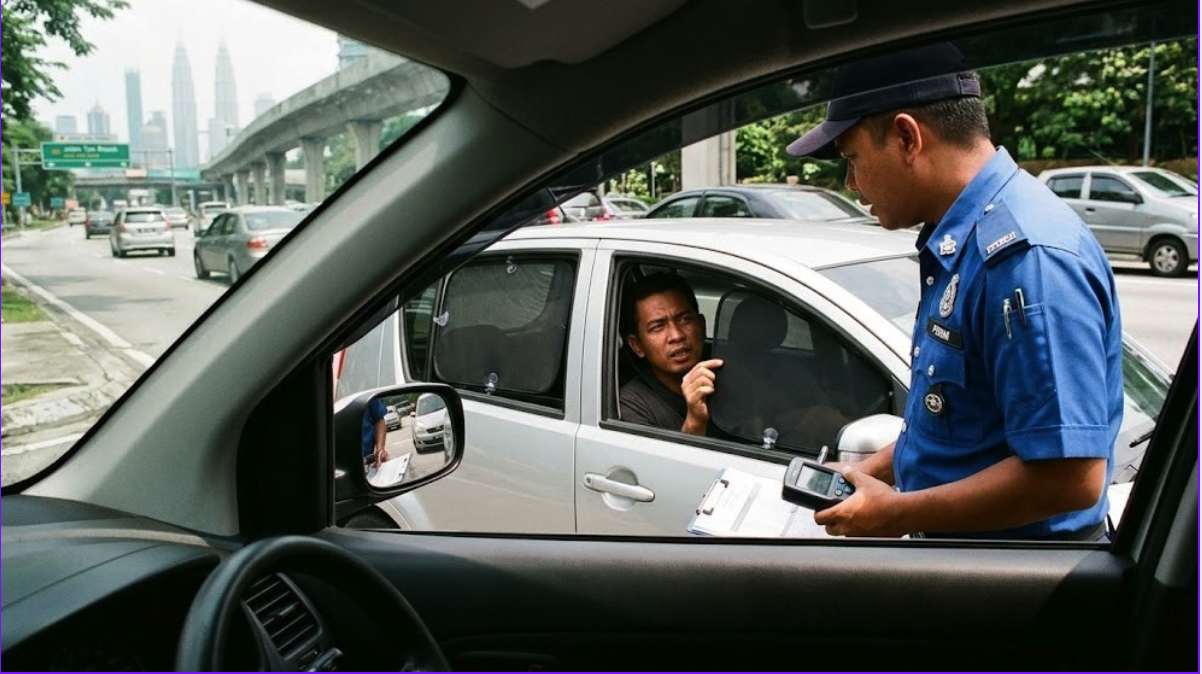
If you have a cheap clip-on or magnetic sunshade stuck to your car windows right now, you have probably seen the confusion online over the past few days. JPJ reminded the public that these sunshades are technically illegal, social media erupted, and within hours Transport Minister Anthony Loke had to step in and clarify what is actually being enforced. Here is the full story and what it actually means for your car.
What Did JPJ Actually Say?
On 18 June 2026, the Road Transport Department (JPJ) confirmed in a report carried by the New Straits Times that removable window sunshades, curtains, and similar window coverings are classified as an offence under existing law when a vehicle is in motion. This was not a new rule. It is something that has technically existed for decades, but the reminder caught many Malaysians off guard since the cheap mesh sunshades sold for as little as RM20 at almost every accessory shop and night market are an extremely common sight on Malaysian roads.
The reaction online was swift. Many drivers pointed out what felt like an obvious contradiction: heavily tinted rear windows are completely legal with no VLT (visible light transmittance) limit at all, yet a thin mesh sunshade clipped onto a front window could technically get you fined. The backlash was strong enough that Loke held a briefing the very same day to clear things up.
What Did Anthony Loke Clarify?
Speaking later on 18 June, the transport minister confirmed that while the rule does technically exist, it is not being enforced unless the sunshade actually obstructs the driver's view out of the vehicle.
Loke was clear that the transport ministry has not instructed JPJ to enforce the rule, and that the JPJ director-general has not issued any directive calling for enforcement against ordinary sunshade use. In other words, no special operation, no new task force, and no instruction has gone out telling officers to start ticketing drivers over sunshades.
He also explained where this sits in JPJ's actual priorities. Enforcement resources are focused on matters that are genuinely critical to road safety, things like illegal racing, mat rempit activity, drunk driving, and reckless driving. Visibility-related issues such as sunshades matter, but they are simply not anywhere near the top of the priority list compared to those bigger safety risks.
So Is It Actually Illegal or Not?
This is the part that confuses most people, so let us be precise about it.
Technically, yes, it remains an offence under the law. Practically, no, you are very unlikely to be stopped or fined for it, as long as your sunshade does not block your own view while driving.
This is sometimes called selective or risk-based enforcement. The law on paper has not changed at all. What has changed is the public confirmation from the minister that officers are not actively targeting this specific offence in the way the initial JPJ reminder seemed to suggest.
The Actual Law Behind the Rule
The sunshade ban falls under the Motor Vehicles (Prohibition of Certain Types of Glass) Rules 1991. This is the same set of regulations that governs window tint darkness in Malaysia, and it has been interpreted over the years to also cover physical obstructions like curtains, blinds, and decorative items stuck onto vehicle glass, not just tint film.
According to past statements from JPJ officials, including the department's automotive engineering director, the installation of any curtain, blind, or decorative sticker on a vehicle's windows is prohibited outright, regardless of whether the item can be removed. The rule is officially listed as offence number 245 on JPJ's enforcement action list, falling under Section K 4(1) of the regulations.
If you are issued a summons for this specific offence, the same tiered discount structure that applies to most compoundable traffic offences in 2026 kicks in. Pay within 15 days and the fine is RM150. Pay between 16 and 30 days and it rises to RM200. Pay between 31 and 60 days and it reaches RM300, the full amount.
One interesting carve-out: caravans, whether registered privately or commercially, are exempt from this rule. Curtains and blinds inside a caravan's living area are explicitly permitted under the same regulations that ban them in ordinary cars.
Why Does This Rule Even Exist?
It is easy to assume this is just an outdated, overly strict rule, but JPJ's stated reasoning goes beyond simple aesthetics. According to a past statement from the department's automotive engineering director, the restriction exists for two main reasons.
The first is straightforward road safety. Any object that blocks a driver's view out of the side or rear windows, even partially, can create dangerous blind spots, particularly when changing lanes or reversing.
The second reason is less obvious: crime prevention. Curtains and blinds that fully obscure the interior of a vehicle can make it harder for the public or authorities to see what is happening inside, which has historically been a concern in discussions around this rule.
What Does This Mean for Your Sunshade Right Now?
If you are currently using a basic mesh, foldable, or clip-on sunshade on your front side windows, here is the practical reality based on Loke's clarification.
You are very unlikely to face enforcement for simply having a sunshade up, as long as it does not block your view while driving. If your sunshade has small mesh holes or perforations that let you see through clearly, you should be fine in practice. If your sunshade is solid, opaque, or positioned in a way that genuinely blocks your line of sight, particularly while the car is moving, that is exactly the scenario where the rule is still being actively enforced.
It is also worth being sensible about where you place a sunshade. A shade across your windscreen while driving, or one that blocks your side mirrors from view, is a completely different situation from a partial side window shade that still leaves you a clear line of sight.
What About Window Tint? Is That a Separate Rule?
Yes, this is a different but related set of regulations under the same 1991 rules. Malaysia's tint law requires a minimum VLT of 70% for the front windscreen and at least 50% for the front side windows. There is currently no VLT restriction at all for rear side windows or the rear windscreen, which is exactly the inconsistency many Malaysians pointed to during this latest controversy. You can legally have a pitch-black rear windscreen, but a semi-transparent front side sunshade is technically against the rules.
Violating the tint VLT requirements carries significantly steeper penalties than the sunshade offence. A first offence can carry a fine of up to RM2,000 or imprisonment of up to six months, while repeat offences can reach RM4,000 or up to 12 months in jail. The sunshade offence, by comparison, sits in the much lower RM150 to RM300 compoundable fine range.
What This Means If You Get Stopped
If you are stopped at a roadblock or checkpoint and an officer raises the sunshade issue, the key question they are assessing is whether your view is genuinely obstructed. Given Loke's public clarification, the official position is that ordinary, non-obstructive sunshades are not a current enforcement priority.
That said, official ministerial statements about enforcement priorities can still differ from how individual officers choose to apply the rule on the ground in any specific situation. If you do receive a summons for this offence, the 2026 tiered discount structure means paying quickly within the first 15 days keeps your fine to RM150 rather than the full RM300.
Keeping Your Car Compliant and Covered
Whether it is a window sunshade reminder or a new road tax rule, staying on top of changing regulations is part of owning a car in Malaysia. The same applies to keeping your insurance and road tax current, since outstanding summons or an invalid road tax can complicate matters significantly more than a sunshade ever would.
Motorist Malaysia makes it simple to compare car insurance quotes from multiple insurers and renew your road tax digitally through MyJPJ, all from one platform. With over 1.53 million motorists already using the app and a 4.9 out of 5 star rating, it takes the hassle out of staying compliant so you can focus on the road ahead.
Frequently Asked Questions
1.Is it illegal to use a sunshade in my car in Malaysia?
Technically yes, under the Motor Vehicles (Prohibition of Certain Types of Glass) Rules 1991. However, Transport Minister Anthony Loke confirmed on 18 June 2026 that the rule is not being enforced unless the sunshade obstructs the driver's view.
2.Has JPJ started a new crackdown on car sunshades?
No. Loke clarified that the transport ministry has not instructed JPJ to enforce this rule, and the JPJ director-general has not issued any enforcement directive on the matter.
3.What is the fine for using an illegal window covering in Malaysia?
The offence is listed as number 245 under JPJ's enforcement list. Fines start at RM150 if paid within 15 days, rising to RM200 within 16 to 30 days, and reaching the full RM300 if paid between 31 and 60 days.
4.Are caravans exempt from the sunshade and curtain rule?
Yes. Curtains and blinds in a caravan's living area are permitted under the same regulations, whether the caravan is registered privately or commercially.
5.Why is rear window tint unlimited but front sunshades restricted?
Malaysia's tint rules set no VLT limit for rear windows but require at least 50% VLT for front side windows and 70% for the windscreen. This is a separate but related regulation under the same 1991 rules, and the inconsistency between tint and sunshade rules has been a major source of public confusion.
6.Can I still use my magnetic clip-on sunshade?
Based on the minister's clarification, using a sunshade that does not block your view while driving is unlikely to attract enforcement. Avoid placing any shade across your windscreen or in a position that blocks your mirrors or line of sight.
Information is accurate as of 19 June 2026 based on official statements from the Ministry of Transport and JPJ. Enforcement practices can vary and may be subject to change. Always exercise caution and ensure your view is never obstructed while driving.
Read More: EV road tax 2026: how much will you pay now that the exemption has ended?
I want to find the highest selling price for my car within 24 hours!
Download the Motorist App now. Designed by drivers for drivers, this all-in-one app lets you receive the latest traffic updates, gives you access to live traffic cameras, and helps you manage vehicle related matters.