The Motorist guide on e-hailing driver's to Puspakom & Insurance in Malaysia 2026
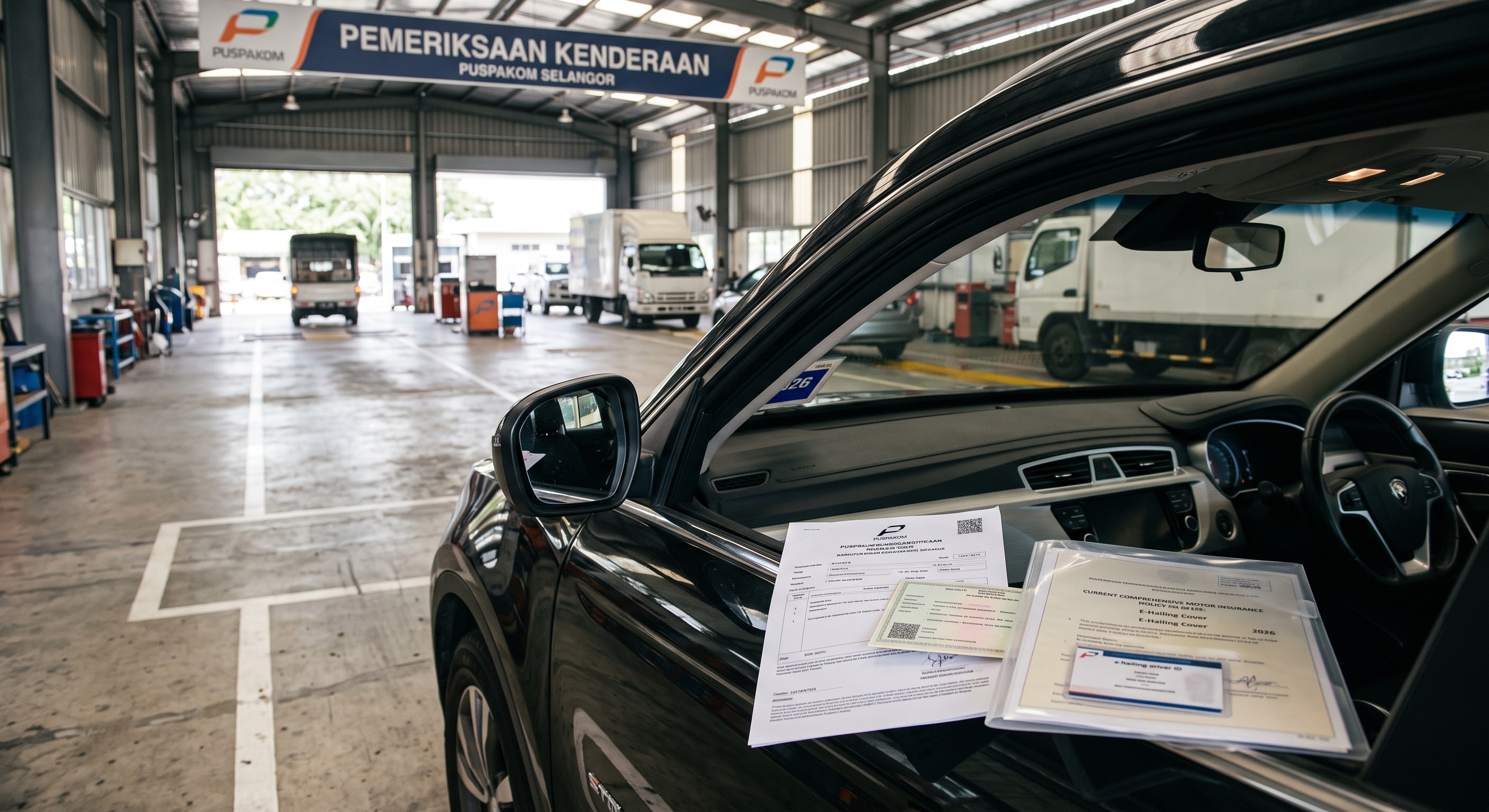
If you've recently signed up to drive for Grab, or you're thinking about it, you've probably noticed that the paperwork looks a little different from what you dealt with as a private car owner. That's because the moment you start carrying passengers for a fare, your car stops being a private vehicle in the eyes of the law and becomes a vehicle used for "public service" or hire-and-reward purposes. That single change triggers a chain of extra requirements: a vocational or e-hailing driving licence, a specific Puspakom inspection, and critically a different category of car insurance. Skipping any one of these doesn't just risk a fine. It can leave you personally on the hook for tens of thousands of ringgit if something goes wrong on the road. This guide walks through what e-hailing drivers in Malaysia actually need to have in place, why the rules exist, and what to check before you go online to accept your next trip.
Why E-Hailing Vehicles Need a Different Inspection and Licence
Under Malaysian land transport law, a vehicle used to carry paying passengers is treated as a public service vehicle, not a private car, even if it's your own car and you only drive part-time. This distinction matters because private cars are approved and insured on the assumption they'll be driven occasionally by the owner or family members for personal trips not used for hours a day, carrying strangers, racking up commercial-level mileage. E-hailing platforms like Grab are required by the Land Public Transport Agency (APAD) and JPJ to ensure their drivers hold a valid PSV (Public Service Vehicle) licence or the specific e-hailing driver's licence/badge, and that the vehicle itself carries a valid e-hailing or PSV-related inspection certification. This is the regulatory logic behind why you can't simply use your everyday private registration and driving licence to drive commercially the law wants assurance that both the driver and the vehicle have been vetted to a higher standard given the higher exposure to risk and the general public relying on that trip being safe.
What the E-Hailing Puspakom Inspection Covers and How Often to Renew I
Once your vehicle is used for e-hailing, it generally needs to go through a Puspakom inspection specific to vehicles used for hire and reward, in addition to (or in place of) the standard periodic inspection private cars sometimes require. In broad terms, this inspection checks the same core roadworthiness items you'd expect brakes, tyres, steering and suspension, lights and signals, seatbelts, the condition of the chassis and body, and emissions but it's carried out with the understanding that the car is doing significantly more mileage and carrying passengers regularly, so inspectors tend to look closely at wear-and-tear items that fail faster under commercial use. You'll typically need to bring your vehicle registration card, identification, and any existing e-hailing permit documentation to the inspection centre. As for how often you need to renew this inspection, the frequency has been adjusted by the authorities over time and can depend on the age of the vehicle and current APAD/JPJ rules, so rather than quote a specific number of months here, the safest approach is to check the current requirement directly with Puspakom or JPJ, or confirm with your e-hailing platform, since driving with an expired inspection certificate can get your e-hailing account suspended even before JPJ catches up with you on the road.
Why Your Normal Private Car Insurance Won't Cover You
This is the part that catches out the most drivers, and it's worth understanding properly rather than just taking on faith. A standard private car insurance policy in Malaysia is underwritten on the basis that the car is used for social, domestic, and pleasure purposes commuting to work, running errands, weekend trips. Buried in the policy wording is almost always a "commercial use" or "hire and reward" exclusion, which says the insurer will not pay out if the vehicle was being used to carry passengers or goods for payment at the time of an incident. In plain English: if you're logged into the Grab app with a passenger in the back seat, or even sometimes just logged in and waiting for a booking, and you get into an accident, your private policy can treat that as a breach of the terms of use and refuse the claim entirely not just refuse to pay for a dented bumper, but potentially refuse to cover third-party injury or death claims too. This is precisely why the insurance industry created a separate class of policy for hire-and-reward driving, so that e-hailing drivers aren't operating uninsured in practice while believing they're covered on paper.
How E-Hailing Insurance Differs From Private Cover
E-hailing (sometimes called hire-and-drive or PHV public hire vehicle insurance, depending on the insurer) is priced and structured differently from a standard private policy because the underlying risk is different. Because the car covers far more kilometres, spends more hours on the road including peak-hour and late-night driving, and carries paying passengers, insurers generally price these policies higher than an equivalent private policy reflecting a genuinely higher likelihood of a claim over the course of a year. In terms of coverage, a proper e-hailing policy is built to remain valid specifically while you're carrying passengers or waiting for a booking, and typically includes appropriate passenger legal liability cover so that anyone injured in your car while you're working is protected, alongside your own third-party and (if you choose) own-damage protection. Some policies also distinguish between cover while you're actively driving a paying passenger versus cover while you're driving to pick one up or driving home after logging off, so it's worth reading the policy wording or asking the insurer directly how those different phases of an e-hailing shift are treated, rather than assuming every moment you're in the car is automatically covered the same way.
What Happens If You're Under-Insured and Have an Accident
If you're driving for Grab on a private policy, or on no valid policy at all, and you're involved in an accident, the practical fallout can be severe. The insurer can decline the claim outright once they establish the car was being used for hire and reward at the time, which means repairs to your own car come out of your own pocket, and far more seriously any compensation owed to an injured passenger, another road user, or their vehicle becomes your personal financial liability rather than something the insurer absorbs. Malaysian courts have dealt with cases where drivers found themselves liable for substantial sums after this exact scenario. On top of the financial exposure, driving commercially without the correct permit, inspection, or insurance in place can also result in fines and other enforcement action from JPJ or APAD, and can jeopardise your standing with the e-hailing platform itself, since most platforms require proof of correct insurance as a condition of staying active on the app. In short, the cost of getting this wrong is rarely limited to a single bad day it can follow you for years.
Checklist: What to Have in Order Before You Start Driving
Before you switch on the app for your first (or next) trip, it's worth running through a short checklist:
- Valid vehicle registration in your name (or written permission from the registered owner to use the vehicle for e-hailing)
- A current e-hailing driver's licence or PSV licence/badge as required by APAD/JPJ
- A valid Puspakom inspection certificate for the vehicle's commercial/hire-and-reward use, renewed on time
- An active insurance policy specifically underwritten for e-hailing or hire-and-reward use, not a standard private policy
- Road tax that's current and matches the vehicle's registered use
Keep digital or physical copies of all of these in the car, since both JPJ enforcement checks and the e-hailing platform's own audits can ask for them at short notice.
Frequently Asked Questions
1. Do e-hailing drivers need a special Puspakom inspection?
Yes. Because e-hailing turns your car into a vehicle used for hire and reward rather than private use, it generally needs to pass a Puspakom inspection geared toward that commercial use, on top of whatever licensing your e-hailing platform requires. The exact scope can be adjusted by the authorities from time to time, so it's worth confirming the current inspection requirements directly with Puspakom or JPJ before you assume your last inspection still applies.
2. Is my existing car insurance valid if I drive for Grab?
In most cases, no. Standard private car insurance policies typically exclude use of the vehicle for hire and reward, meaning a claim can be rejected if the insurer finds you were carrying a paying passenger, or in some cases even just logged into the app, at the time of an accident. You need a policy specifically designed for e-hailing or commercial passenger use to be properly covered.
3. How is e-hailing insurance priced differently?
E-hailing policies are generally priced higher than equivalent private policies because the vehicle is on the road more often, covers more distance, and carries a higher exposure to risk from passengers and traffic conditions. The exact pricing varies by insurer and by how the policy defines coverage during different phases of a shift, so it's worth comparing a few quotes rather than assuming one insurer's approach matches another's.
4. What happens if I get into an accident without the right coverage?
You risk the insurer declining your claim entirely, leaving you to personally cover repair costs and any compensation owed to injured passengers or other road users. This can also trigger enforcement action from the authorities and put your e-hailing account at risk, since platforms typically require proof of appropriate insurance to keep driving.
5.How often do e-hailing permits and inspections need renewal?
Renewal cycles for e-hailing permits, licences, and inspections are set by JPJ and APAD and have changed over time, so rather than relying on a fixed number of months, treat this as something to actively track and reconfirm with the relevant authority, Puspakom, or your e-hailing platform, since driving on an expired permit or inspection certificate can affect both your legal standing and your ability to stay active on the app.
Getting the Right Cover Sorted With Motorist Malaysia
Sorting out the right insurance shouldn't be the hardest part of becoming an e-hailing driver it's just a different product from what you're used to buying for a private car, and getting it right the first time saves a lot of stress later. Motorist Malaysia lets you compare car insurance options side by side, including policies suited to hire-and-reward and e-hailing use, so you can see how coverage and pricing stack up before you commit rather than discovering the gaps after an accident has already happened.
Beyond insurance, staying compliant as an e-hailing driver also means keeping the everyday admin current road tax renewal being the one that's easy to let slip when you're focused on driving hours and passenger ratings. Motorist Malaysia's platform is built to make renewing road tax straightforward, so it's one less thing competing for your attention between trips.
If you're just starting out on the e-hailing side of driving, it's worth treating your insurance and inspection paperwork with the same seriousness as your vehicle's condition both are part of what keeps you, your passengers, and your income protected. Comparing your options properly at the outset, through Motorist Malaysia or by speaking directly with insurers, puts you in a much stronger position than finding out the hard way that a policy didn't cover what you assumed it did.
Read More: The Motorist Guide on Puspakom Inspection Malaysia 2026: B2, B5 & GI check explained
I want to find the highest selling price for my car within 24 hours!
Download the Motorist App now. Designed by drivers for drivers, this all-in-one app lets you receive the latest traffic updates, gives you access to live traffic cameras, and helps you manage vehicle related matters.