How to spot a flood damaged used car in Malaysia (2026 checklist)
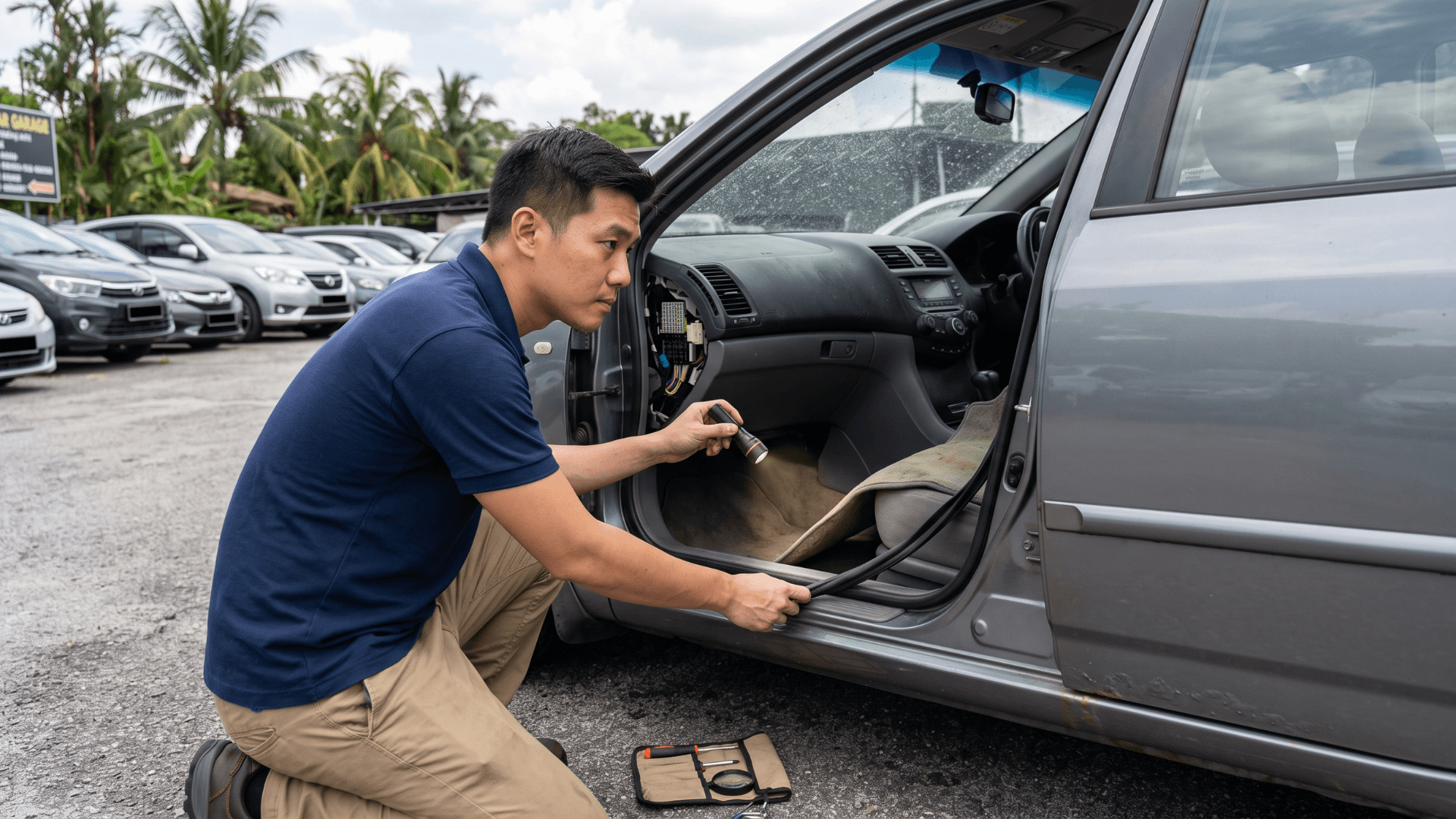
Every year, monsoon season and the occasional flash flood leave parts of Malaysia underwater, from the usual hotspots in Kelantan and Terengganu to unexpected flooding in urban areas like Klang Valley and Penang. When the water recedes, some of the cars that were submerged don't get written off they get cleaned up, dried out, and quietly sold on. If you're shopping for a used car, there's a real chance you'll come across one of these vehicles without any indication in the listing that it was ever near a flood, let alone underwater. This guide walks you through what to look for, what a Puspakom inspection can and can't tell you, and what steps to take if you're unsure about a car's history.
Why flood damaged cars seep showing up in Malaysia's used car market
Malaysia's geography and weather patterns mean flooding isn't a rare, one-off event it happens somewhere in the country almost every rainy season, and increasingly in places that didn't used to flood. When a large number of vehicles are affected at once, insurers, workshops, and individual owners all have to decide what to do with them. Some cars are properly written off and scrapped or sold for parts. Others, especially ones that only had water reach the floor pan rather than the dashboard, get dried, cleaned, and put back on the road.
The problem for buyers is that a flood damaged car doesn't always look damaged. A skilled detailer can shampoo the carpets, replace the seat covers, and mask the smell well enough to fool a casual viewing. Unless the seller discloses the history and there's no guarantee they will, especially if the car changed hands once or twice already you're relying on your own inspection to catch what they didn't tell you. This is exactly why buyers need to know what physical evidence flooding leaves behind, because that evidence is often the only warning you'll get.
Warning signs you can see and smell
The easiest clues to pick up on are sensory ones, and they're worth checking before you even start the engine. Water that has soaked into a car's interior and been "cleaned up" tends to leave a signature that's hard to fully erase, no matter how good the detailing job is.
Start with your nose. A musty, damp, slightly sour smell like a wet towel left in a gym bag is one of the strongest indicators of past water intrusion, especially if it lingers under the carpet or in the boot rather than the general cabin. Be equally suspicious of the opposite problem: an overpowering blast of air freshener or a strong new car scent spray in an otherwise older vehicle can be a sign someone is trying to cover something up rather than genuinely maintain the car.
Next, get down and look closely at the upholstery, carpet, and boot lining. Flood water leaves tide-lines faint horizontal watermarks where the waterline sat for a period of time on seat fabric, door cards, and carpet edges. These can look like subtle discolouration bands rather than an obvious stain, so you may need to look at an angle in good light to catch them. Check under the carpet and floor mats too, not just the visible surface, since sellers often replace mats but skip the carpet underneath.
Finally, look for mismatched or inconsistent interior trim: a rear seat that looks newer or a different shade than the front seats, replacement carpet that doesn't quite match the original colour, or door panels that seem to have been swapped out. A used car with several interior components that look freshly replaced, without a clear accident history to explain it, deserves a harder look.
A quick checklist to run through during a viewing:
1. Musty or damp odour, especially in the boot, under seats, or in air-con vents
2. Overly strong air freshener use, particularly on an older car
3. Faint tide-lines or watermarks on carpet edges, seat fabric, or door card bases
4. Carpet or upholstery that looks newer or different in shade to the rest of the interior
5. Rust or staining on the underside of floor mats
6. Silt, sand, or grit in hard-to-reach interior crevices like seat rail tracks or under the spare tyre
The harder-to-spot mechanical and electrical signs
Once a car has been cleaned inside, the more reliable evidence often lives in places a casual buyer never checks. Water travels into every gap in a car's structure, and it tends to leave rust behind in spots that don't naturally corrode from normal use.
Get a torch and look underneath the car and inside the engine bay at bolts, brackets, and seat rail mounts. Rust that forms evenly across a component, or rust on bolts that are otherwise shielded from rain and road spray, is a red flag these areas simply shouldn't corrode under normal driving conditions within a few years. Check the seat rail mechanisms specifically, since they sit low in the cabin and are one of the first things submerged in even shallow flooding.
Headlights and taillights are another good tell. Open them up (or shine a light in) and look for a foggy haze, water droplets, or a visible tide-line on the inside of the lens this suggests water got into a sealed unit that should otherwise stay dry. Corroded electrical connectors are harder to check yourself, but a workshop can inspect wiring harnesses and connector plugs for white or greenish corrosion, which is a strong sign that water reached the electrical system rather than just the cabin surfaces.
Test every electronic feature during your viewing rather than assuming it works: power windows, central locking, infotainment screen, air-conditioning, power seats, and all dashboard warning lights. Flood-affected cars often develop electrical gremlins weeks or months after being dried out and sold, as corrosion inside connectors and modules worsens over time so a system that works fine today isn't a guarantee it'll behave the same way in six months.
Why a Puspakom inspection alone isn't enough
Many buyers assume that if a car passes its Puspakom inspection, it must be free of major issues, including flood damage. That's not quite how it works. Puspakom's standard used-vehicle inspection is built around safety and roadworthiness brakes, steering, chassis condition, emissions, and similar mechanical checks rather than a forensic assessment of whether the vehicle was ever submerged. A car can have corroded connectors, water-damaged carpet padding, or early-stage rust in hidden brackets and still pass because none of those issues fall squarely within what the inspection is designed to catch.
This is why it's worth arranging your own inspection at an independent workshop before finalising a purchase, ideally one with no relationship to the seller. A mechanic who knows what to look for can lift carpets, check under seats, inspect connector plugs, and take a proper look at the underbody the kind of close, targeted checking that a routine Puspakom check simply isn't set up to do. It costs a bit of time and money upfront, but it's far cheaper than discovering electrical faults or corrosion six months after you've already paid.
Checking paperwork and service history for red flags
The paper trail on a car can tell you almost as much as a physical inspection, provided you know what to look for. Ask for the full service history and see whether there are any gaps, particularly around known flood periods in the area the car was previously registered or used. A car that suddenly had several components replaced at once carpets, seats, an infotainment unit, multiple sensors without a clear reason like an accident is worth questioning directly.
Where possible, try to find out where the car has been registered and used over its life. A car with a history in a flood-prone state or district isn't automatically flood-damaged, but it raises the odds enough that you should be more thorough with your physical inspection. Also ask the seller directly whether the car has ever been in a flood a straightforward question, and their reaction (or refusal to answer clearly) can tell you a lot on its own.
What to do If you suspect flood damage after buying
If you've already bought a car and start noticing musty smells, unexplained electrical faults, or rust in places it shouldn't be, don't ignore it and hope it resolves itself. Get the car to an independent workshop as soon as possible for a proper assessment, and keep a written or photographed record of what they find. If you bought from a dealer, check what warranty or return terms applied to the sale, since some protections may still be available depending on how the deal was structured. If you believe the seller knowingly misrepresented the car's condition, it's worth seeking advice on your options, as misrepresentation in a vehicle sale can carry consequences depending on the circumstances.
FAQ
1. What are the telltale signs of a flood-damaged car?
Look for a musty or damp smell, unusually heavy use of air fresheners, water tide-lines on carpets or seat fabric, mismatched interior trim, rust on bolts and brackets that shouldn't normally corrode, foggy moisture inside headlight or taillight housings, and electronics power windows, infotainment, dashboard warning lights that behave inconsistently.
2. Can a flood-damaged car pass a Puspakom inspection?
Yes, it's possible. Puspakom's standard inspection focuses on roadworthiness and safety items like brakes, steering, and emissions rather than a dedicated check for past water submersion, so a car can pass while still carrying hidden flood-related issues. This is why an independent workshop inspection focused specifically on water damage is a useful additional step.
3. Is it safe to buy a car that was flood-damaged and repaired?
It depends heavily on the extent of the damage and the quality of the repair, and it's genuinely hard for a buyer to verify either without expert help. Even a well-repaired flood car can develop electrical or corrosion issues later, since water damage to wiring and hidden components isn't always fully reversible. If you know a car was flood-damaged, it's worth getting a thorough independent inspection and factoring the risk into your price negotiation, or considering a different car altogether.
4. How can I check a car's flood history in Malaysia?
There isn't a single definitive public database that guarantees a car's flood history in Malaysia, so you'll need to combine a few approaches: ask the seller directly, review the service history for gaps or unusual repairs, consider where the car has previously been registered or used, and get an independent workshop to physically check for the warning signs described above.
5. Does car insurance cover a flood-damaged car I unknowingly bought?
This depends on your policy and the specific circumstances, so it's best to check directly with your insurer or read your policy wording carefully. Comprehensive policies with flood coverage generally protect against future flood events affecting your car, but coverage for pre-existing damage you weren't aware of at the time of purchase is a different question and isn't something you should assume without confirming it.
Finding a clean car (and protecting It once you do)
Spotting flood damage takes patience, a good torch, and a willingness to look past a clean-smelling interior but you don't have to do all of it alone. Motorist Malaysia's used car marketplace lists vehicles that go through an inspection process before they're listed, which gives you a more solid starting point than sifting through unverified classifieds ads on your own. It doesn't replace your own due diligence, but it does mean you're not starting from zero.
Once you've found a car you're confident in, it's worth spending a few minutes comparing insurance options before you drive off. Motorist's insurance comparison tool lets you check coverage and pricing across several insurers side by side, including flood coverage where relevant, so you're not just taking the first quote a dealer hands you. Between careful buying and the right policy, you're in a much better position to enjoy your next car rather than worry about what it might be hiding.
Read More: Malaysia targets 50% cut in road deaths by 2030: What drivers need to know
I want to find the highest selling price for my car within 24 hours!
Download the Motorist App now. Designed by drivers for drivers, this all-in-one app lets you receive the latest traffic updates, gives you access to live traffic cameras, and helps you manage vehicle related matters.