Fuel prices fall four weeks in a row: Who benefits?
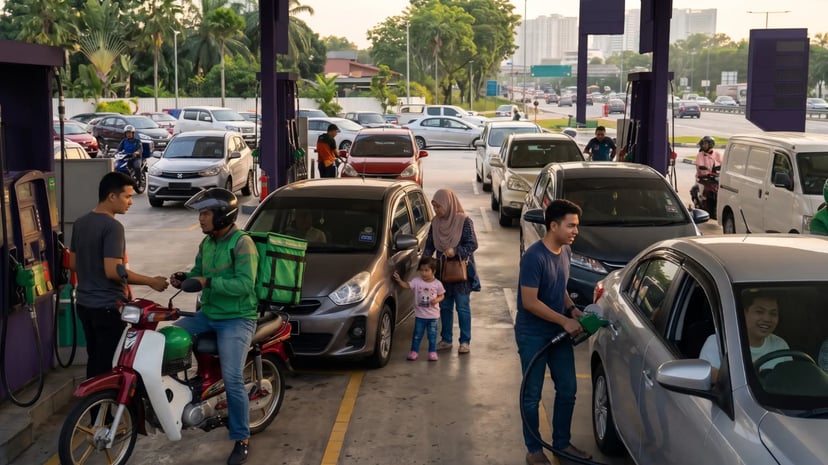
Fuel prices in Malaysia have fallen for four consecutive weeks, with RON97, unsubsidised RON95 and unsubsidised diesel prices dropping by another 25 sen per litre from 26 November to 2 December 2026. However, motorists purchasing subsidised RON95 under BUDI95 will continue to pay RM1.99 per litre, meaning not everyone will enjoy additional savings.
While cheaper fuel is generally welcome news, the benefits vary considerably depending on the type of vehicle you drive, your fuel subsidy eligibility and your monthly fuel consumption.
With RON97 becoming RM1.15 cheaper per litre compared with the beginning of November, who really benefits from these consecutive price reductions, and will ordinary Malaysians eventually see a lower cost of living?
Table of Contents
- Latest fuel prices in Malaysia
- How much have fuel prices fallen in four weeks?
- Why are fuel prices falling?
- Who really benefits from lower fuel prices?
- Why are BUDI95 users still paying the same price?
- How much can Malaysian motorists save?
- Will lower fuel prices reduce the cost of living?
- Will fuel prices continue to fall?
- How to reduce your fuel expenses
- Frequently Asked Questions
Key takeaways
- Malaysia's unsubsidised fuel prices have fallen for four consecutive weeks in November 2026.
- RON97, unsubsidised RON95 and unsubsidised diesel prices have decreased by another 25 sen per litre.
- RON97 users can now save RM57.50 on a 50-litre refill compared with 4 November 2026.
- Eligible BUDI95 users continue to pay RM1.99 per litre despite falling market prices.
- Businesses purchasing unsubsidised fuel and the government may also benefit from lower petroleum prices.
Latest fuel prices in Malaysia (26 November to 2 December 2026)
According to the latest announcement by the Ministry of Finance Malaysia (MOF), market-priced petrol and diesel will be cheaper by 25 sen per litre for the period from 26 November to 2 December 2026.
This marks the fourth consecutive week of reductions in Malaysia's unsubsidised fuel prices.
| Fuel type | Previous price | Latest price | Change |
|---|---|---|---|
| RON97 | RM4.00 | RM3.75 | -25 sen |
| Unsubsidised RON95 | RM3.72 | RM3.47 | -25 sen |
| RON95 (BUDI95) | RM1.99 | RM1.99 | Unchanged |
| Unsubsidised diesel (Peninsular Malaysia) | RM4.72 | RM4.47 | -25 sen |
All prices are per litre and apply to the stated pricing period. Subsidised fuel prices are subject to the relevant eligibility requirements.
How much have fuel prices fallen in four weeks?
Although the latest reduction is 25 sen per litre, the cumulative savings from four consecutive weeks of price reductions are considerably larger.
RON97 has recorded the biggest overall reduction among the three market-priced fuels, falling by RM1.15 per litre compared with 4 November 2026.
| Pricing period | RON97 | Unsubsidised RON95 | Unsubsidised diesel |
|---|---|---|---|
| 29 October - 4 November (Baseline) | RM4.90 | RM4.42 | RM5.27 |
| 5 - 11 November (Week 1) | RM4.70 | RM4.27 | RM5.12 |
| 12 - 18 November (Week 2) | RM4.20 | RM3.87 | RM4.87 |
| 19 - 25 November (Week 3) | RM4.00 | RM3.72 | RM4.72 |
| 26 November - 2 December (Week 4) | RM3.75 | RM3.47 | RM4.47 |
| Total reduction per litre | RM1.15 | RM0.95 | RM0.80 |
Source: Ministry of Finance Malaysia weekly fuel price announcements dated 4 November, 11 November, 18 November and 25 November 2026.
For drivers who regularly purchase unsubsidised fuel, the difference between refuelling at the beginning and end of November is substantial, particularly for vehicles with larger fuel tanks or higher monthly mileage.
Why are fuel prices falling in Malaysia?
Malaysia determines market-based retail fuel prices through the Automatic Pricing Mechanism (APM), which takes international petroleum market conditions into account.
The Ministry of Finance attributed the latest reductions to easing price pressures in the international petroleum market.
When international refined petroleum prices decline, Malaysian motorists purchasing fuel at market rates may benefit from lower retail prices. Exchange rate movements, global supply and demand, and geopolitical developments can also influence fuel costs.
However, four consecutive weeks of reductions do not necessarily indicate that fuel prices will remain low permanently. The international petroleum market remains subject to fluctuations.
Who really benefits from lower fuel prices?
While falling fuel prices may appear beneficial to all road users, the biggest direct savings go to those purchasing fuel at unsubsidised market rates.
1. Motorists who regularly use RON97
RON97 users are among the biggest direct beneficiaries of the recent price reductions.
With RON97 falling from RM4.90 to RM3.75 per litre, a motorist purchasing 50 litres now pays RM187.50 instead of RM245 for the same quantity of fuel.
That represents a saving of RM57.50 for a single refill.
Owners of vehicles that require higher-octane petrol may find these reductions particularly helpful in managing their monthly running costs.
2. Motorists purchasing unsubsidised RON95
Drivers who are not eligible for BUDI95 or who purchase fuel beyond their applicable subsidy allocation will benefit directly from the lower unsubsidised RON95 price.
For frequent travellers, long-distance commuters and other high-mileage drivers purchasing market-priced fuel, the cumulative reductions can help ease monthly transportation expenses.
Unsubsidised RON95 is now RM0.95 cheaper per litre compared with the beginning of November.
3. Diesel vehicle owners
Owners of pickup trucks, diesel-powered SUVs and other vehicles purchasing unsubsidised diesel in Peninsular Malaysia can also enjoy lower refuelling costs.
With unsubsidised diesel falling from RM5.27 to RM4.47 per litre over four weeks, a 70-litre refill now costs RM56 less than it did at the beginning of November.
The benefits are particularly noticeable for motorists who regularly travel long distances or use their vehicles for business purposes.
4. Logistics and transportation businesses
Fuel represents a significant operating expense for many logistics companies, delivery businesses and commercial vehicle operators.
Businesses purchasing unsubsidised diesel may benefit from lower transportation costs, particularly when operating multiple vehicles.
For example, a company purchasing 2,000 litres of unsubsidised diesel at the latest price would spend RM1,600 less than it would have spent on the same quantity at the beginning of November.
However, businesses already receiving fuel at unchanged subsidised rates would not necessarily experience the same direct savings.
5. The Malaysian government
The government may also benefit from declining international petroleum prices.
When market fuel prices fall while subsidised retail prices remain unchanged, the difference between the two becomes smaller. This may reduce the subsidy expenditure required to maintain affordable fuel prices for eligible Malaysians.
The actual impact on government expenditure depends on fuel consumption, prevailing market prices and the applicable subsidy arrangements.
Why are BUDI95 users still paying the same price?
Despite four consecutive weeks of declining unsubsidised fuel prices, many Malaysian motorists may not notice any difference when visiting the petrol station.
This is because the subsidised RON95 price under BUDI95 remains unchanged at RM1.99 per litre for eligible motorists.
A driver purchasing 50 litres of subsidised RON95 continues to pay RM99.50, regardless of the recent reductions in unsubsidised RON95 prices.
However, the difference between subsidised and unsubsidised RON95 has narrowed significantly.
| RON95 pricing | 4 November | 26 November |
|---|---|---|
| Unsubsidised RON95 | RM4.42 | RM3.47 |
| BUDI95 | RM1.99 | RM1.99 |
| Price difference per litre | RM2.43 | RM1.48 |
Although BUDI95 users are not paying less than they did four weeks ago, they continue to enjoy substantially lower fuel prices than motorists purchasing unsubsidised RON95.
Common mistake: Assuming that every fuel price reduction applies to all motorists. Always distinguish between subsidised and unsubsidised fuel prices before calculating your potential savings.
How much can Malaysian motorists save after four weeks of fuel price reductions?
The amount you save depends on your fuel type and how many litres you purchase.
Based on the cumulative price reductions between 4 November and 26 November 2026, motorists purchasing unsubsidised fuel could enjoy the following savings when buying the same quantity of fuel.
| Fuel quantity | RON97 savings | Unsubsidised RON95 savings | Unsubsidised diesel savings |
|---|---|---|---|
| 40 litres | RM46 | RM38 | RM32 |
| 50 litres | RM57.50 | RM47.50 | RM40 |
| 100 litres | RM115 | RM95 | RM80 |
| 200 litres | RM230 | RM190 | RM160 |
| 300 litres | RM345 | RM285 | RM240 |
These figures compare the cost of purchasing identical fuel quantities at the prices on 4 November and 26 November 2026. They do not represent guaranteed monthly savings, as fuel prices may change weekly.
Expert tip: Calculate your fuel expenses based on cost per kilometre instead of the cost of a full tank. This gives you a clearer picture of how much your vehicle actually costs to drive and helps you identify whether your fuel consumption is increasing.
Will lower fuel prices reduce the cost of living in Malaysia?
Cheaper petrol and diesel could help ease cost-of-living pressures, particularly when businesses experience lower transportation and logistics expenses.
Industries such as agriculture, manufacturing, retail and delivery services depend heavily on transportation. When market-priced fuel becomes cheaper, businesses that purchase it may experience lower distribution costs.
However, lower fuel prices do not automatically translate into cheaper groceries, restaurant meals or delivery fees.
Businesses must also account for wages, rental, electricity, raw materials and vehicle maintenance. Some businesses may use their fuel savings to offset these expenses rather than reduce consumer prices.
Furthermore, companies already operating under unchanged fuel subsidy arrangements may experience little direct benefit from the recent market price reductions.
Consumers could eventually benefit from easing transportation costs, but the extent and timing of any savings remain uncertain.
Will fuel prices continue to fall in Malaysia?
Four consecutive weeks of reductions are encouraging, but there is no guarantee that petrol and diesel prices will continue falling in December.
Future fuel prices may be influenced by several factors:
- International crude oil and refined petroleum prices.
- Global fuel supply and demand.
- Changes in the Malaysian ringgit against the US dollar.
- Geopolitical developments and shipping disruptions.
- Government fuel pricing and subsidy policies.
Motorists should avoid making long-term financial decisions based solely on the latest fuel price trend.
For the latest official petrol and diesel price announcements, refer to the Ministry of Finance Malaysia website.
How to reduce your fuel expenses regardless of petrol prices
Whether fuel prices rise or fall, developing better driving and vehicle maintenance habits can help reduce your overall transportation expenses.
Maintain the correct tyre pressure
Underinflated tyres increase rolling resistance, forcing your vehicle to use more fuel. Check your tyre pressure regularly and follow the vehicle manufacturer's recommendations.
Avoid aggressive acceleration and braking
Sudden acceleration and frequent hard braking can increase fuel consumption. Drive smoothly and anticipate traffic conditions whenever possible.
Remove unnecessary weight from your car
Carrying unnecessary heavy items increases the amount of energy your vehicle needs to move. Remove items that you do not regularly use.
Use the recommended fuel grade
Always follow your vehicle manufacturer's fuel requirements. Using RON97 in a vehicle designed to run efficiently on RON95 does not automatically provide better fuel economy or enough additional performance to justify the higher price.
Keep up with regular vehicle maintenance
Following your manufacturer's recommended servicing schedule can help maintain engine efficiency and identify mechanical issues that may increase fuel consumption.
Consider a more fuel-efficient vehicle
If your current vehicle consumes significantly more fuel than you can comfortably afford, consider whether a more fuel-efficient petrol car, hybrid or electric vehicle would better suit your daily driving needs.
Before switching vehicles, compare the total ownership costs, including depreciation, financing, insurance, maintenance and energy expenses. Lower fuel consumption alone does not necessarily make a replacement vehicle more economical.
Frequently Asked Questions
1. Have fuel prices fallen for four consecutive weeks in Malaysia?
Yes. As of 26 November 2026, Malaysia's RON97, unsubsidised RON95 and unsubsidised diesel prices have recorded four consecutive weekly reductions.
2. What is the latest RON95 petrol price in Malaysia?
From 26 November to 2 December 2026, unsubsidised RON95 costs RM3.47 per litre, while eligible BUDI95 users continue to pay RM1.99 per litre.
3. What is the latest RON97 petrol price in Malaysia?
RON97 costs RM3.75 per litre from 26 November to 2 December 2026, following the latest reduction of 25 sen per litre.
4. What is the latest diesel price in Peninsular Malaysia?
Unsubsidised diesel costs RM4.47 per litre in Peninsular Malaysia from 26 November to 2 December 2026.
5. How much has RON97 fallen over the past four weeks?
RON97 has fallen by RM1.15 per litre, from RM4.90 on 4 November to RM3.75 on 26 November 2026.
6. Why is subsidised RON95 still RM1.99 per litre?
The BUDI95 price remains unchanged at RM1.99 per litre for eligible motorists despite fluctuations in unsubsidised RON95 prices.
7. Who benefits most from falling fuel prices in Malaysia?
Motorists purchasing RON97, unsubsidised RON95 and unsubsidised diesel receive direct savings. Businesses consuming large quantities of market-priced fuel may also experience significant reductions in operating expenses.
8. Does cheaper diesel mean groceries will become cheaper?
Lower diesel prices may reduce transportation expenses for businesses purchasing unsubsidised fuel. However, grocery prices also depend on labour, supply, rental and other operating costs.
9. When are petrol prices updated in Malaysia?
Malaysia's weekly fuel price announcements are typically issued on Wednesdays, with updated prices taking effect on Thursdays.
10. Will fuel prices fall again next week?
Further fuel price reductions are not guaranteed. Upcoming prices depend on international petroleum markets, exchange rates and government policies.
11. How can I save money on petrol if I already use BUDI95?
You can reduce your fuel expenses by maintaining the correct tyre pressure, driving smoothly, avoiding unnecessary idling and keeping your vehicle properly serviced.
Conclusion: Lower fuel prices do not mean equal savings for everyone
Malaysia's four consecutive weeks of fuel price reductions offer significant relief to motorists and businesses purchasing unsubsidised petrol and diesel. RON97 users have experienced the largest cumulative price reduction per litre, while eligible BUDI95 users continue to enjoy their existing subsidised price.
Although cheaper market-priced fuel may eventually help ease broader living costs, immediate savings are not guaranteed for every Malaysian.
For motorists, the most sustainable way to reduce transportation expenses is to improve fuel efficiency and understand the overall cost of owning and maintaining a vehicle.
Want to stay updated on the latest petrol and diesel prices? Download the Motorist App to check fuel prices and stay informed about weekly price changes in Malaysia.
Read More: KTM to Revive ASEAN Express Rail Freight Service
I want to find the highest selling price for my car within 24 hours!
Download the Motorist App today for a smarter and more convenient car ownership experience.