JPJ stepping up enforcement against touts at KLIA
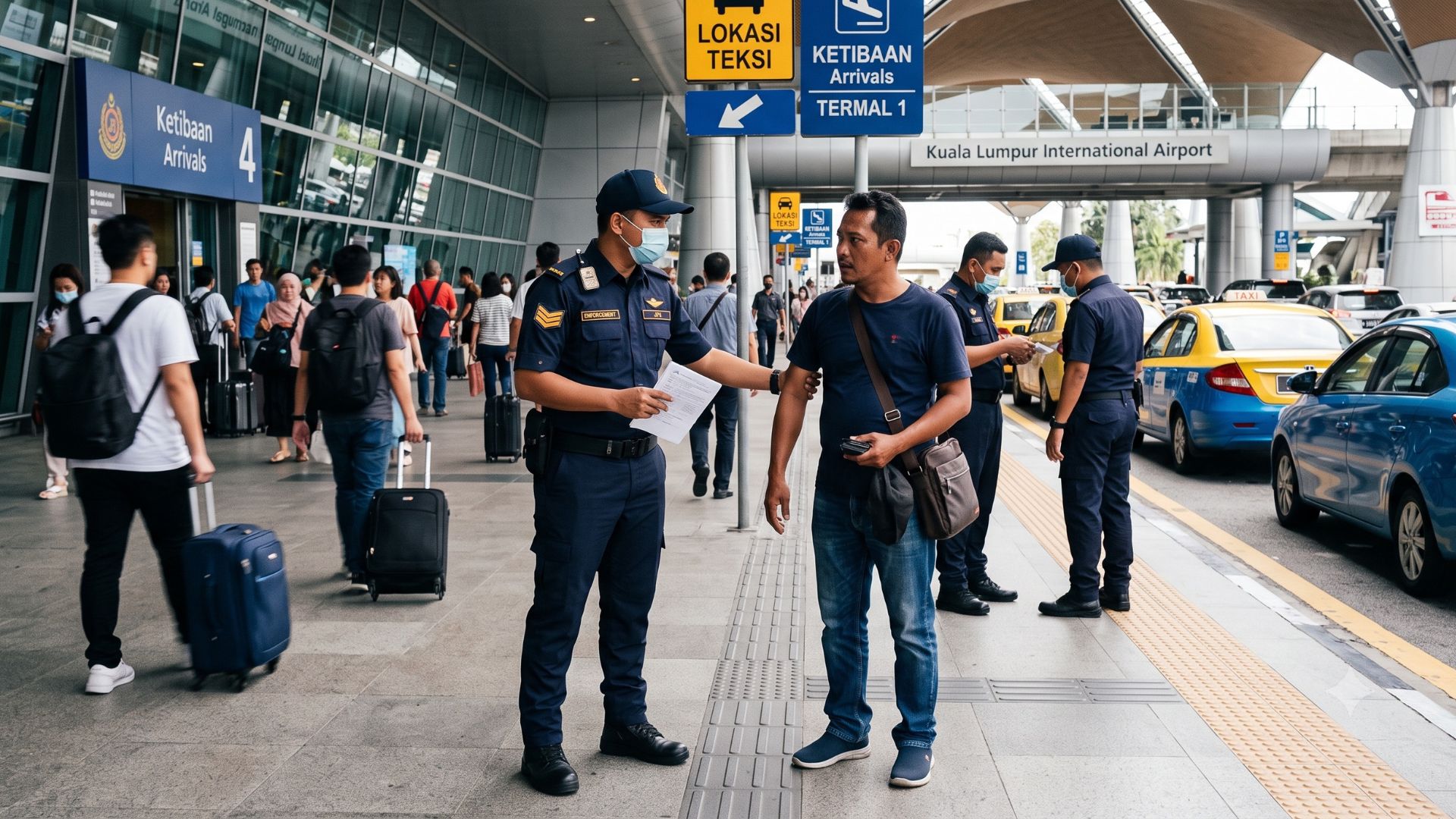
The Kuala Lumpur International Airport (KLIA) serves as the "front door" to Malaysia. Whether you are a tourist arriving for a tropical getaway or a local returning from a long business trip, the transition from the arrival hall to the transit zone should be seamless, professional, and, above all, safe.
However, a persistent shadow has loomed over the KLIA terminals for years: the illegal transport tout. Often referred to locally as "ulat" (maggots) or "kereta sapu" operators, these unlicensed individuals loiter in the arrival halls of Terminal 1 and Terminal 2, soliciting passengers for unlicensed rides.
As of July 2026, the Road Transport Department (JPJ) has declared a state of "Zero Tolerance." In a major enforcement drive recently highlighted by The Sun and other news outlets, JPJ is significantly stepping up operations at KLIA to protect travelers from scams and ensure the integrity of Malaysia’s transport industry.
This is the comprehensive guide to Ops Tauk 2026, the legal ramifications for drivers, and the safety precautions every traveler needs to know.
The Anatomy of Ops Tauk: How JPJ is Fighting Back
In mid-2026, JPJ Selangor and the Bukit Aman Traffic Enforcement Department launched a coordinated effort specifically targeting the "hotzones" of KLIA. This operation, internally dubbed Ops Tauk, represents a shift from passive patrolling to proactive "sting" operations.
Undercover Enforcement
The most significant change in 2026 is the use of plainclothes officers. JPJ personnel are now deployed within the airport terminals disguised as international travelers, complete with luggage and travel attire.
When a tout approaches an undercover officer and offers a ride for a fixed fee, the offense is captured via body-worn cameras. The officer then signals a nearby uniformed team to intercept the driver at the vehicle, leading to an immediate arrest and vehicle seizure.
Digital Surveillance
JPJ is now utilizing the KLIA Smart Security Feed. High-definition CCTV cameras equipped with AI-facial recognition and Automated Number Plate Recognition (ANPR) are used to track repeat offenders. If a vehicle is seen loitering at the arrival pick-up zone multiple times without a valid e-hailing permit, the system flags the vehicle for inspection.
The Legal Hammer: Section 205 and Section 80
For those considering "making a quick buck" by picking up passengers at the airport without the proper permits, the legal landscape in 2026 has become unforgiving. JPJ is utilizing the full weight of the Land Public Transport Act (APAD) 2010.
Section 205: Soliciting and Enticing
This is the primary charge used against touts. Section 205 makes it an offense for any person to solicit or entice any other person for the purpose of hire or reward.
The Penalty: If convicted, the offender faces a fine not exceeding RM50,000, imprisonment for a term not exceeding five years, or both.
2026 Enforcement: In previous years, fines were often settled with a few thousand ringgit. In 2026, the courts are increasingly handing out maximum fines and short jail terms to serve as a public deterrent.
Section 80: The Power of Seizure
Under Section 80, JPJ has the authority to seize the vehicle used in the commission of the offense.
The "Permanent Blacklist": Once a vehicle is seized during Ops Tauk, it is placed on a permanent JPJ Blacklist. This means the owner cannot renew the road tax, and more importantly, they cannot sell the car or perform a car valuation until the court case is fully resolved—a process that can take years.
The Chilling Reality for Travelers: Why "Kereta Sapu" is Dangerous
To the weary traveler, a tout’s offer might seem like a convenient shortcut to avoid long e-hailing queues. However, the hidden dangers of entering an unlicensed vehicle in 2026 are significant.
The Insurance Void
This is the most critical risk. Standard private motor insurance in Malaysia strictly excludes commercial usage.
The Scenario: If you are a passenger in a "kereta sapu" and an accident occurs on the MEX Highway, the driver’s insurance will be automatically voided the moment the insurer discovers money was exchanged for the ride.
The Consequence: You, the passenger, will have no medical coverage. You cannot claim against the driver’s insurance for injuries, disability, or loss of property. You are left entirely on your own in a legal and financial nightmare.
Security and Vetting
Licensed e-hailing and taxi drivers must undergo a Criminal Record Check and a PSV (Public Service Vehicle) medical exam. Touts operate entirely outside this system. There is no record of who is driving you, whether they have a criminal history, or if the vehicle is mechanically sound. In 2026, with the rise of "digital kidnappings" and petty theft, the risk is simply too high.
Pricing Scams
The "RM80 to KL City" offer often comes with hidden "luggage fees," "toll charges," or "waiting fees" that are only revealed once you have reached your destination. Unlike official apps, there is no digital receipt and no way to dispute the fare.
How to Spot a Tout: The 2026 Red Flags
Touts are becoming more sophisticated, often dressing in "smart casual" to blend in with legitimate drivers. However, travelers can protect themselves by watching for these four signs:
Solicitation Inside the Terminal: Under Malaysian law, no legitimate driver—not even premier taxi drivers—is allowed to approach you inside the arrival hall. If someone asks "Where are you going?" or "Need a taxi?" before you reach the official counters, they are a tout.
The "Follow Me" Gesture: Touts will try to lead you to the standard parking levels (Level P) rather than the designated pick-up points (Level 1).
No Visible PSV Lanyard: Licensed drivers are required to have their PSV ID (often digital via the MyJPJ app or a physical lanyard) accessible. Touts will always evade questions about their licensing.
Avoiding the App: If a driver claims to be from a major e-hailing company but asks you to "cancel the booking and pay cash," they are operating illegally. This is a common tactic to bypass the platform's safety features and insurance.
A Guide for Drivers: How to Stay Legal at KLIA
If you are an honest driver looking to earn a living at KLIA, the increased JPJ presence is actually your best friend—it removes illegal competition. However, you must ensure your compliance is 100% up to date to avoid being caught in the crossfire.
The Mandatory E-hailing Checklist:
PSV License: Ensure your Public Service Vehicle license is active and visible in your MyJPJ app.
E-Hailing Vehicle Permit (EVP): Your vehicle must be registered with APAD. JPJ officers at KLIA can check your EVP status in real-time by scanning your road tax.
Insurance Endorsement: You must have the e-hailing add-on in your car insurance. If you are caught picking up a passenger and your policy doesn't show this endorsement, you are legally categorized as a "kereta sapu."
Designated Zones: Only pick up passengers at the designated E-hailing Pick-up points (e.g., Door 3 & 4 at Terminal 1, Level 1). Picking up at the "Drop-off" zone is a high-priority trigger for a JPJ inspection.
The Impact on Tourism and Malaysia’s Image
Why is the government so aggressive about KLIA touts in July 2026? It’s about the national economy.
As Malaysia enters a peak travel season, the "first impression" of the country is paramount. Touting creates an atmosphere of chaos and insecurity. By eradicating these illegal operators, JPJ is supporting the legitimate taxi and e-hailing industry, ensuring that drivers who pay for licenses and insurance are the ones who get the business.
Furthermore, the crackdown helps stabilize pricing. When touts undercut legitimate drivers, it creates a "race to the bottom" that compromises vehicle maintenance and driver safety.
Motorist Malaysia: Your Compliance Partner
At Motorist Malaysia, we believe in a safe and transparent automotive ecosystem. As JPJ intensifies enforcement at our nation’s gateways, we provide the tools to ensure you are never on the wrong side of the law.
Saman & Blacklist Check: Worried that a past loitering warning at KLIA has turned into a blacklist? Use the Motorist App to run a comprehensive JPJ/PDRM status check.
Insurance with E-Hailing Add-ons: Don't risk a RM50,000 fine. Compare car insurance Malaysia quotes that specifically include e-hailing protection.
Selling Your Vehicle: If you have been blacklisted and need to resolve your legal standing to sell your vehicle, our team can provide a professional car valuation and guidance on how to clear your record.
Navigating KLIA with Confidence
The JPJ crackdown at KLIA is a win for travelers and a win for legal drivers. By stepping up enforcement and utilizing the Land Public Transport Act 2010, authorities are making it clear that the era of the "ulat" is coming to an end.
For Travelers: Stick to the official apps and taxi counters. The RM20 you might save by taking an unlicensed ride is not worth the risk of being uninsured in a foreign country or a strange city.
For Drivers: The RM50,000 fine and vehicle seizure are real. Ensure your EVP, PSV, and insurance are in order before you accept an airport job.
[Check Your Saman & Blacklist Status Now]
FAQ: Everything You Need to Know About KLIA Touts
Q: Is it illegal to pick up a friend or family member at KLIA?
A: No. JPJ identifies touts based on the "intent to solicit." If you are meeting a family member at the designated pick-up point and no commercial transaction is taking place, you are perfectly safe.
Q: Why is the fine so high (RM50,000)?
A: The fine is set by the Land Public Transport Act 2010 to reflect the gravity of the offense. Touting is seen as an act that compromises public safety and economic stability.
Q: Can I pay a KLIA tout via an e-wallet?
A: Touts often use e-wallets to look "official." However, a digital payment does not make the ride legal. If the ride was not booked via a licensed platform (like Grab, AirAsia Move, etc.), it is still an illegal "kereta sapu" service.
Q: What happens if JPJ seizes my car at KLIA?
A: Your vehicle will be towed to a JPJ impound lot. You will be issued a notice to appear in court. You cannot sell your car or renew its road tax until the case is concluded and the "Blacklist" is lifted by a JPJ officer.
Q: How do I report a tout at KLIA?
A: You can report touting activities directly via the e-Aduan@JPJ app or notify any of the auxiliary police officers stationed within the terminal.
Read More: How one JPJ blacklist record can increase your 2027 insurance by 20%
I want to find the highest selling price for my car within 24 hours!
Download the Motorist App now. Designed by drivers for drivers, this all-in-one app lets you receive the latest traffic updates, gives you access to live traffic cameras, and helps you manage vehicle related matters.